

The Minimalist Marigold Circle
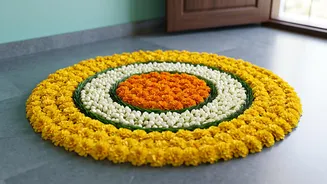
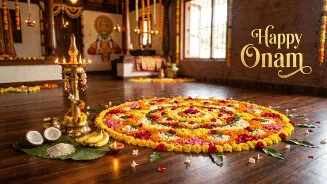
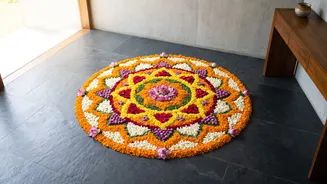
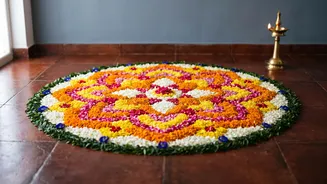
You can never go wrong with the classics. Marigolds (jamanthi) are affordable, widely available during Onam, and their vibrant orange and yellow hues instantly evoke a festive spirit. For a simple yet striking design, create concentric circles using alternating
colours of marigold petals. This is perfect for beginners and small spaces, as it's easy to execute and doesn't require a wide variety of flowers. Start with a small centre and add a new ring each day to follow tradition, making the design grow as the festival progresses.
The Eco-Friendly Foliage Pookalam
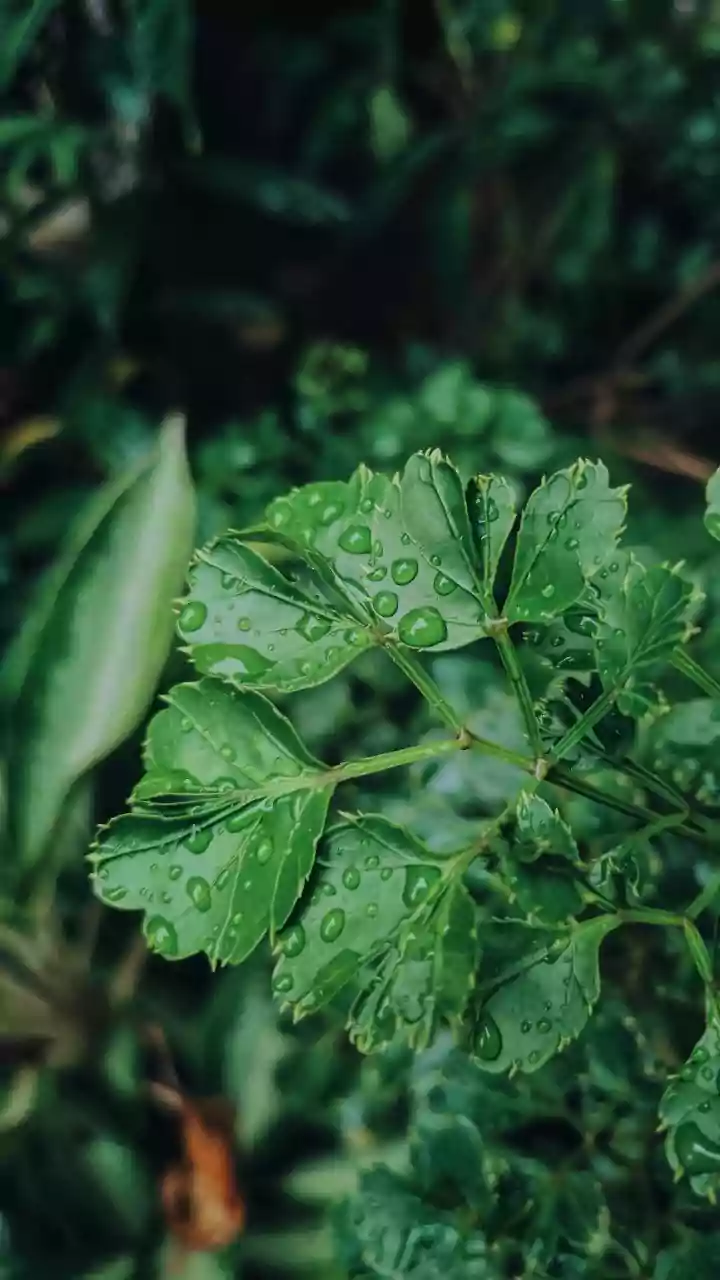
Flowers can be expensive, but nature offers a free and beautiful alternative: leaves. Create a lush, green base for your pookalam using different kinds of leaves from your own garden or neighbourhood. Finely chopped leaves can form a rich background, while whole mango leaves can create beautiful patterns. Use just a sprinkle of colourful flower petals as highlights against the green canvas. This not only cuts costs dramatically but also gives your pookalam a unique, earthy aesthetic that is both traditional and sustainable.
The Kitchen Cabinet Creation
Look no further than your pantry for a splash of colour. Kitchen ingredients offer a fantastic and fragrant alternative to flower petals. You can create sections of your design with yellow turmeric powder, red chilli powder, or different coloured pulses and lentils for texture. Coloured rice, which you can prepare yourself with food dye, is another great option for filling in patterns. Use mustard or sesame seeds to create sharp, dark outlines for a truly creative and cost-effective pookalam.
The Single-Flower Statement
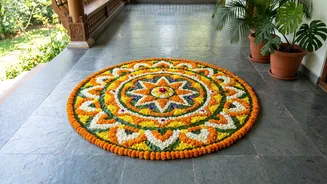
Who says you need a dozen flower types? A pookalam made with just one type of flower can be incredibly elegant. Choose an affordable flower like jasmine or globe amaranth (vadamalli) and focus on creating an interesting shape or pattern. This approach encourages you to play with density and texture. You can create a simple spiral, a star shape, or a geometric design. The beauty lies in its simplicity and the focus on the form of the design itself, proving that less can often be more.
The Apartment-Friendly Floating Pookalam
If you live in an apartment with limited floor space, this idea is for you. A floating pookalam is a smaller, more contained version created in a wide, shallow vessel of water, traditionally an 'uruli' (a brass bowl). Because the surface area is small, you need far fewer flowers to create a dense, vibrant design. It’s a perfect solution for a compact entryway or balcony and adds a serene, elegant touch to your decor. You can place a floating candle or a traditional diya in the centre to make it even more special in the evening.
The Smart Outline Design
Intricate pookalams can consume a surprising amount of petals. A budget-friendly trick is to focus on the outline rather than filling the entire design. Start by drawing a beautiful, complex pattern with chalk. Then, use flower petals to create only the outline, leaving the inside spaces empty or placing a single flower or a small diya in the centre of each section. This technique gives the impression of a large, elaborate pookalam without the high cost and is a great way to make a small number of flowers go a long way.
The Sawdust and Petals Hybrid
For larger designs, consider using coloured sawdust or salt as a filler material. Sawdust, often available for free from local carpenters, can be dyed in various colours to fill large sections of your pookalam. This creates a uniform base that you can then accent with flower petals. Use petals for the more detailed parts of the design or as a border around the sawdust sections. This hybrid approach allows you to create a grand, colourful pookalam that looks impressive but is significantly lighter on your wallet.