









The Balcony Gardener’s Dilemma
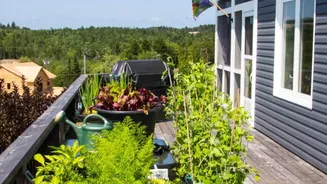
Anyone who has tried to maintain a garden on a balcony knows it’s a unique challenge. Unlike a garden on the ground, pots on a balcony are exposed to intense, direct sunlight, and drying winds. Small pots and containers have a limited volume of soil,
which means they can dry out incredibly fast. One day your plants are fine, the next they are wilted. The most common mistake for new and experienced gardeners alike is watering: either too much, leading to root rot, or too little, causing the plant to wither. Simply sticking a finger in the topsoil isn't always a reliable guide, as the soil deeper down where the roots are can have a completely different moisture level. This constant guessing game is where many aspiring green thumbs give up.
Enter the Smart Plant Sensor
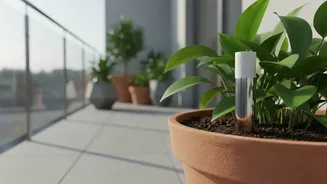
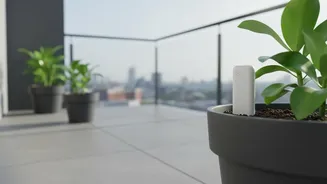
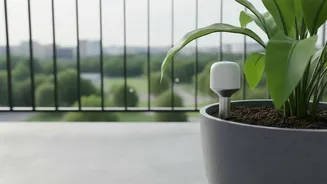
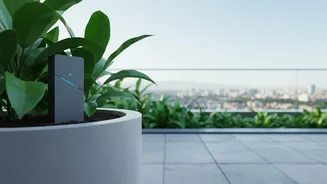
This is where the Internet of Things (IoT) comes to the rescue. IoT simply means connecting everyday objects to the internet, allowing them to send and receive data. An IoT soil moisture sensor is a small probe you stick into the soil of your potted plant. This device continuously monitors the conditions in the pot and sends that information directly to an app on your smartphone. It’s like having a tiny, dedicated botanist for each of your plants, reporting for duty 24/7. This technology, once reserved for large-scale agriculture, is now affordable and accessible for home gardeners, making it a key trend in urban gardening.
How They Actually Work
The technology sounds complex, but its application is simple. The sensor has a probe that measures the electrical conductivity or capacitance of the soil. Since water affects these electrical properties, the sensor can translate its readings into a precise soil moisture percentage. This data is then transmitted wirelessly, usually via Bluetooth or Wi-Fi, to a dedicated app on your phone. The app doesn’t just give you a raw number; it often presents the information on a simple scale from 'Dry' to 'Wet', and sends you a notification when the moisture level drops below the ideal threshold for that specific plant. It removes all ambiguity, telling you exactly when it's time to water.
More Than Just Moisture
While knowing the exact moisture level is a game-changer, many modern smart sensors don’t stop there. More advanced models are equipped to measure a range of environmental factors crucial for plant health. They can monitor the intensity of sunlight your plant is receiving, the ambient temperature and humidity, and even the level of nutrients or fertilizer in the soil. This provides a complete, holistic view of your plant's living conditions. The companion app often contains a vast database of plants, allowing you to select your specific plant—be it a marigold, a tomato plant, or a fiddle-leaf fig—and receive customized care recommendations based on its unique needs.
The Real-World Benefits
Using a smart sensor moves plant care from being a reactive chore to a proactive, data-driven hobby. The primary benefit is preventing both over- and under-watering, the number one cause of houseplant death. This not only leads to healthier, more vibrant plants but also conserves water, as you only irrigate when necessary. For busy urban professionals, these sensors provide peace of mind. You can check on your plants from the office or even while on vacation. Ultimately, they empower you to understand your plants' needs more deeply, turning you into a more confident and successful gardener. By taking the guesswork out of the equation, these smart tools make the joy of urban gardening more accessible to everyone.