









The New Frontier in Job Skills
Once the exclusive domain of organisations like the Indian Space Research Organisation (ISRO), satellite data analysis is rapidly becoming a mainstream career path. This shift is powered by a surge in available data, falling costs, and a booming private
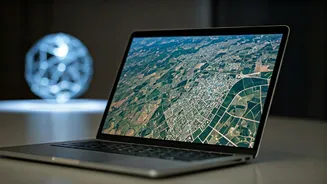
space-tech industry in India. Technologies like Geographic Information Systems (GIS) and Remote Sensing (RS) are at the heart of this trend. In simple terms, remote sensing is the science of gathering information about the Earth from a distance using satellites, while GIS is the system used to capture, analyse, and display that spatial data. This combination is creating powerful tools for industries ranging from agriculture to urban planning, driving a massive demand for skilled professionals who can turn satellite images into actionable insights.
Universities Bridge the Skill Gap
Indian educational institutions are responding to this demand by integrating geospatial technologies into their curricula. Institutes like the Indian Institute of Remote Sensing (IIRS) in Dehradun, various IITs and NITs, and private universities like Symbiosis Institute of Geoinformatics are offering specialised postgraduate, diploma, and certificate courses. These programmes are no longer just for aerospace engineers. Students from civil engineering, agriculture, geography, and even computer science are learning to work with geospatial data to solve real-world problems. For instance, some universities are collaborating directly with ISRO and retired scientists to train students on satellite design and data analysis, with some even planning to launch their own nano-satellites. This hands-on approach ensures graduates are not just theoretically sound but also industry-ready.
A Universe of Career Opportunities
The career paths for graduates with satellite data skills are diverse and expanding. The demand is not just from government bodies but increasingly from a burgeoning private sector. India is now home to over 200 space-tech startups, many of which are aggressively hiring. Companies like SatSure are recruiting for roles in satellite image processing and data science to serve sectors like agriculture and insurance. The applications are vast: in agriculture, satellite data helps in crop monitoring, yield estimation, and issuing farmer advisories for irrigation and pest control. In urban development, it's used for infrastructure planning, monitoring urban sprawl, and managing resources under initiatives like the Smart Cities Mission. Job titles include GIS Analyst, Remote Sensing Specialist, Geospatial Data Scientist, and GIS Developer, with opportunities in fields as varied as disaster management, logistics, and environmental conservation.
The Driving Force: A National Push
This educational and career trend is supported by strong government initiatives and policy reforms. Programs like Digital India, PM Gati Shakti, and the Pradhan Mantri Fasal Bima Yojana (crop insurance scheme) heavily rely on geospatial data for planning, monitoring, and assessment. Furthermore, policy changes allowing greater private participation and foreign direct investment in the space sector have created a vibrant ecosystem for startups. This has led to a hiring spree, with Bengaluru and Hyderabad emerging as major hubs for space-tech talent. The goal is to grow India's share of the global space economy significantly, and a skilled workforce trained on campus is the foundational block for this ambition.