





Keep Your Gear Simple
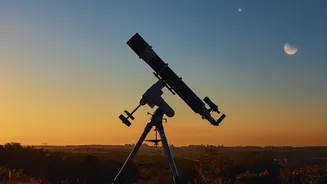
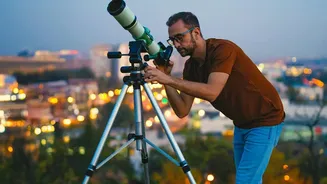
The biggest barrier to starting a new hobby is often the belief that you need expensive equipment. For stargazing, this isn't true. Your most important tool is your own eyes. To enhance the experience, a simple pair of binoculars (7x50 or 10x50 are great)
can reveal stunning details of the Moon, star clusters, and even the moons of Jupiter. A comfortable reclining chair and a warm blanket will make your viewing sessions much more pleasant. Finally, download a free stargazing app on your smartphone. Apps like Star Walk 2 or SkyView use your phone's GPS to create a live map of the sky, helping you identify constellations, planets, and satellites with ease. Just be sure to switch the app to its red-light mode to preserve your night vision.
Location, Location, Darkness
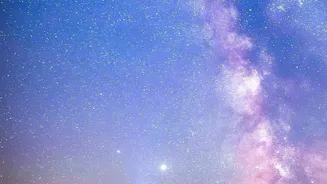
To see the stars, you need to escape the glare of artificial lights. While a trip to the countryside is ideal, it’s not always practical. You can still have a rewarding experience in a suburban or even urban environment. Find the darkest spot you can access, whether it's your backyard, a nearby park, or a rooftop with an unobstructed view. The key is to give your eyes time to adapt to the dark. It takes about 20 to 30 minutes for your pupils to fully dilate and for you to start noticing the fainter stars. During this time, avoid looking at bright screens, especially your phone (unless it's in red-light mode). This period of adjustment is a perfect time to simply sit back, breathe, and let the universe slowly reveal itself.
October's Celestial Highlights
October 2026 is a fantastic month for skywatchers. Two of the solar system's giants, Jupiter and Saturn, will be visible in the evening sky. Look towards the south and southeast after sunset to spot these bright, steady lights that don't twinkle like stars. Saturn will appear as a bright, yellowish point of light, while Jupiter will be unmistakably brilliant. To find them easily, use your stargazing app to pinpoint their exact location. This month is also great for spotting classic autumn constellations. Look for the great square of Pegasus, a large asterism that forms the body of the mythical winged horse. Nearby, you'll find the 'W' shape of Cassiopeia in the northern sky, a constellation that is easy to identify and visible all year round from our latitudes.
Catch a Couple of Meteor Showers
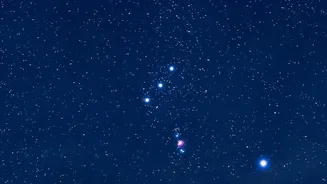
October hosts two notable meteor showers. First up are the Draconids, which are expected to peak around October 8-9. This is an unusual shower because the best viewing time is in the early evening, right after nightfall, rather than the pre-dawn hours. While it's often a quiet shower, it has been known to produce surprise outbursts of hundreds of meteors per hour. Later in the month, the Orionids will light up the sky. This shower, produced by debris from Halley's Comet, is active throughout October but will peak around October 21-22. For the best show, find a dark spot after midnight and look towards the constellation Orion. You can expect to see around 15 to 20 fast-moving meteors per hour in a dark sky.
Turn It Into a Consistent Routine
The goal is to build a habit, not to create another chore. You don't need to spend hours outside every night. Start small. Dedicate just 15-20 minutes, two or three times a week, to stepping outside and looking up. Tie it to an existing habit, like taking the dog out for the last time or having a cup of tea before bed. The consistency is more important than the duration. Keep a simple journal to note what you saw, the phase of the Moon, or even just how you felt. Over time, you'll develop a comforting and awe-inspiring ritual that connects you to the natural rhythms of the universe. It becomes a moment of mindfulness, a chance to disconnect from daily stress and gain a grander perspective.