





Why Your Palate Gets Bored
Our enjoyment of food is about more than just taste and aroma; it's a full sensory experience. Scientists refer to this as 'mouthfeel', the way food feels as we eat it. A dish that is uniformly soft, like many dals, curries, or sabzis, can lead to what
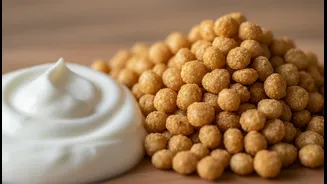
is known as palate fatigue. Even if it's delicious, your brain gets bored without variety. Introducing contrasting textures—like crunchy, creamy, and chewy elements—keeps your brain engaged and makes each bite more satisfying and memorable. It is this complexity that transforms a good dish into a great one.
The Instant Gratification of Crunch
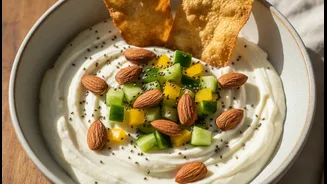
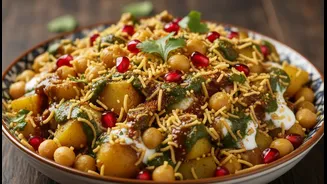
The easiest way to elevate a soft dish is to add a layer of crunch. This contrast is immediately noticeable and deeply satisfying. Think beyond just a simple salad on the side. For Indian cooking, this can be as simple as a final flourish before serving. A tempering of mustard seeds and urad dal, fried curry leaves, or crispy fried onions can add a powerful textural punch to a simple lentil soup. Toasted nuts like almonds and cashews or seeds like pumpkin and sunflower add both crunch and nutrition to curries and rice dishes. Even crushed, roasted papad or a sprinkle of savoury sev can provide that much-needed crispy finish.
Building a Creamy, Luxurious Base
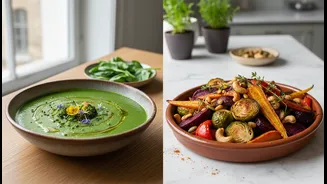
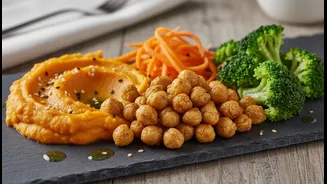
Creaminess provides a comforting and rich counterpart to crunchy and chewy textures. It acts as the canvas upon which other textures can pop. In vegetarian cooking, this doesn't have to mean heavy dairy creams. Plant-based ingredients can create incredible creaminess. Coconut milk is a classic choice for South Indian and Thai-inspired curries, while a paste of soaked cashews or almonds can thicken and enrich North Indian gravies. Blended silken tofu creates a neutral, protein-rich creamy base for sauces and soups. Even something as simple as well-cooked potatoes or puréed white beans can add a velvety smoothness to a dish, making it feel more substantial and luxurious.
The Importance of a Satisfying Chew
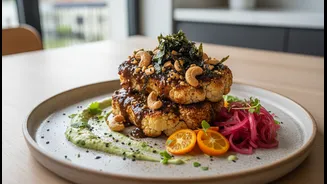
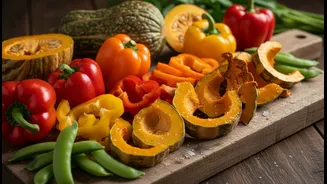
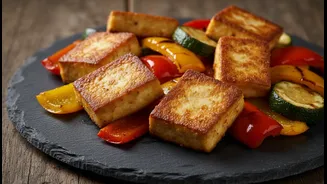
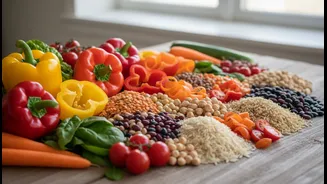
Chewiness provides substance and makes a meal feel more robust and filling. It’s the texture that often stands in for the 'meaty' quality in vegetarian food. Ingredients like paneer and extra-firm tofu, especially when pressed and pan-fried, offer a fantastic chewy bite. Vegetables can also be a great source of this texture; think of roasted broccoli, whole mushrooms, or cauliflower florets cooked until tender but still firm. Grains like pearl barley or wheat berries, when added to salads or used as a base for a sabzi, introduce a delightful chew that soft rice or flatbreads lack. Green lentils can also add a pleasant bite to dishes where you might otherwise expect a softer pulse.
Putting It All Together
The magic truly happens when you start layering these textures in a single meal. It doesn't have to be complicated. Imagine a simple weeknight dinner: a creamy palak paneer (creamy and chewy) topped with a handful of crispy fried onions (crunch). Or a bowl of dal tadka (soft and creamy) served with a side of roasted aloo gobi for bite and a crunchy kachumber salad of raw onion, cucumber and tomato. By thinking about each component, you can create a meal that is balanced not just in flavour but in feeling. The goal is to ensure each spoonful offers a little variety, preventing any single note from becoming monotonous.