
A World Defined by Scent
To understand a cat, you must first understand that they experience the world very differently from us. While we are visual creatures, cats are masters of scent. Their sense of smell is their primary tool for gathering information, and their entire social
structure is built around it. Cats have scent glands on their cheeks, forehead, chin, paws, and tail. When your cat rubs against your legs or the furniture, it's not just a sign of affection; it's a deliberate act of marking territory. This behaviour, known as 'bunting', deposits their unique pheromones, creating a scent profile of the home that says, "This is mine, this is safe." This scented map is crucial for a cat's sense of security. An environment rich with their own scent is comforting, while a new, un-marked space is a source of anxiety and stress.
The Concept of 'Home Base'
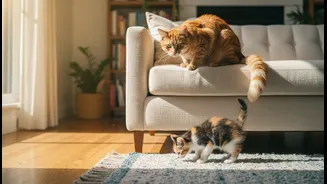
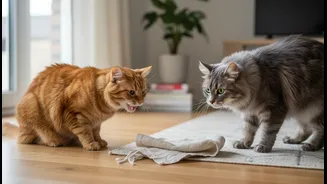
In the wild, a cat's territory is its kingdom, providing everything needed for survival: food, shelter, and safety. Domestic cats, though well-cared for, retain these powerful instincts. Your home is not just a house to your cat; it's their core territory. They view this space as the centre of their universe, a sanctuary to be patrolled and protected. The introduction of a new cat is therefore not seen as getting a new friend, but as an intruder invading their most sacred space. This can trigger defensive and territorial aggression, as the resident cat feels its resources and safety are under threat. Understanding this perspective is the first step to managing a successful introduction.
Making the Best First Impression
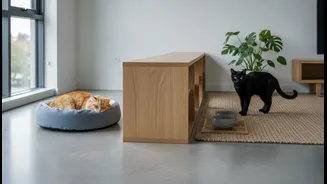
Because first impressions are so lasting for felines, you cannot simply let a new cat and a resident cat 'figure it out'. This approach almost always leads to conflict, fear, and long-term behavioural problems. The key to success is a slow, gradual introduction that respects their territorial nature. This starts with creating a 'sanctuary room' for the newcomer. This is a separate, quiet room—a spare bedroom or office is ideal—equipped with its own food, water, litter box, toys, and hiding spots. This allows the new cat to decompress from the stress of a new environment in a small, manageable space where it can start to establish its own scent markers and feel secure. For the first week, the cats should have no physical contact, only interacting through the smells and sounds from under the door.
The Art of Scent Swapping
Once the new cat is comfortable in its sanctuary room, you can begin the crucial process of scent swapping. This is the foundation of a peaceful feline relationship. Take a blanket or toy that the new cat has been sleeping on and place it in the resident cat's area. At the same time, give the new cat an item with the resident cat's scent. This allows them to investigate each other's 'scent profile' without the threat of a face-to-face confrontation. They are learning about each other through the most important medium they have. You can also brush each cat with the same brush, one after the other, to mingle their scents. Positive associations are key. Feed each cat their favourite treats on either side of the closed door, so they begin to associate the other's scent with something pleasant.
The First Visual Meeting
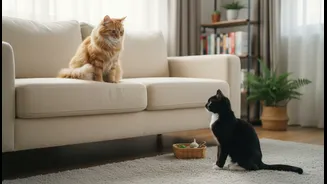
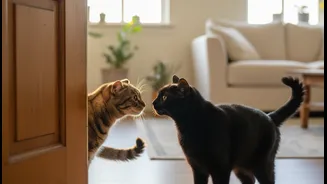
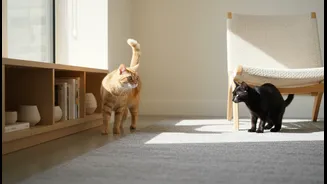
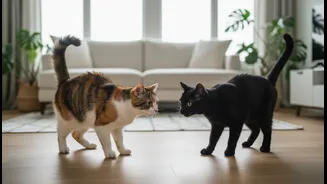
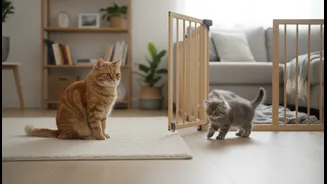
Only when both cats are calm and curious about each other's scent should you consider a visual introduction. This should be brief and controlled. Propping a door open just a crack or using a baby gate covered with a blanket allows them to see each other without full contact. Watch their body language closely. A little hissing or growling is normal, but if it escalates, end the session immediately and go back a step. The goal is to build a series of short, positive encounters. Over time, you can increase the duration and decrease the barrier until they can be in the same room together under supervision. This process can take weeks, or even months. Patience is not just a virtue; it is a requirement.