




A Familiar Face, A Hidden Side
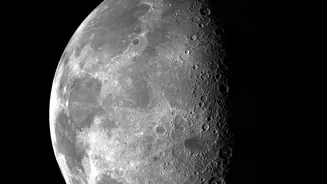
Since the dawn of the space age, we have known the Moon has two dramatically different personalities. The side that perpetually faces Earth is marked by vast, smooth, dark plains called 'maria'. These are the remnants of ancient volcanic lava flows. This
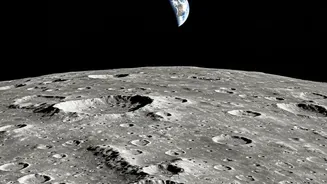
near side also has a thinner crust and is home to a strange concentration of specific elements. By contrast, the far side, first photographed in 1959, is a different world. It is almost entirely covered in pale, heavily cratered highlands and is virtually devoid of the large maria that define the near side. Its crust is also significantly thicker. For decades, scientists have debated why our Moon should be so lopsided. Was it hit by a second, smaller moon early in its history? Or was something else at play? The answer, it seems, lies buried in its oldest and largest crater.
The Tale of a Giant Impact
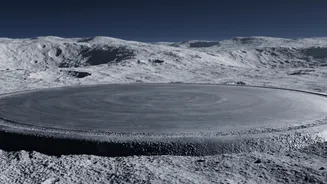
The prime suspect behind the Moon's asymmetry is the South Pole-Aitken (SPA) basin. Located on the far side, the SPA basin is an immense impact crater, stretching roughly 2,500 kilometres in diameter, making it one of the largest and oldest known impact craters in the entire Solar System. Formed by a cataclysmic collision around 4.3 billion years ago, the event was so powerful that it didn't just scar the surface; it fundamentally reshaped the Moon's interior. For years, the leading hypothesis has been that this single, colossal impact was the trigger for the cascade of events that ultimately made the near and far sides so distinct. However, connecting the dots between a far-side impact and the near-side's unique geology required more than just theory; it required physical evidence.
New Clues from Ancient Rocks
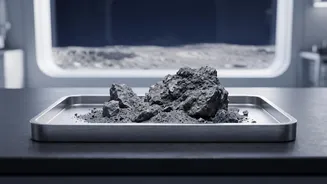
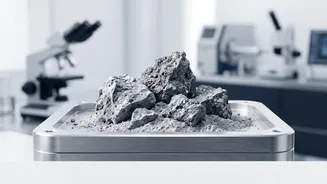
That crucial evidence has now arrived, thanks to the first-ever samples returned from the Moon's far side by China's Chang'e-6 mission. By analysing these precious grains of rock and dust, scientists have found compelling new details that strengthen the giant impact theory. Recent studies, including computer simulations based on the new sample data, show the SPA impact would have created a massive plume of heat that propagated through the Moon's mantle. This plume would have carried a unique cocktail of materials with it. This material is known as KREEP—an acronym for potassium (K), rare-earth elements (REE), and phosphorus (P). These elements are also radioactive and heat-producing. According to the models, this KREEP-laden material essentially rode a wave of heat from the impact site, flowing through the lunar interior.
Solving the Asymmetry Puzzle
The new research suggests this plume of hot, KREEP-rich material settled beneath the crust of the near side. This concentration acted like a giant stove burner under the surface, keeping that hemisphere warmer for much longer. This sustained heat explains the extensive and long-lived volcanism that created the dark maria we see today, and it also helps explain why the crust on the near side is thinner. The far side, meanwhile, was left without this internal heat source. Its mantle was depleted of volatile elements that would have promoted magma generation. It simply cooled down, its thicker crust preserving the billions of years of craters that scar its surface. The new analyses of the Chang'e-6 samples show a clear chemical difference in key elements between the near and far sides, providing the first hard evidence from lunar rocks to support this elegant explanation. The same mantle appears to have produced two very different crusts.