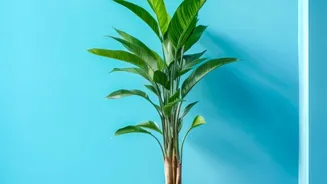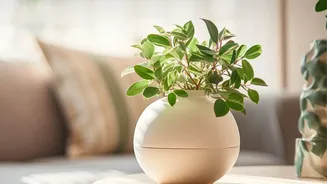





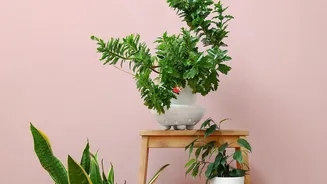
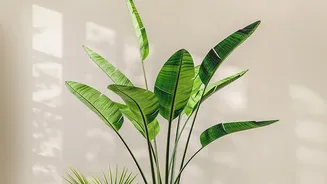
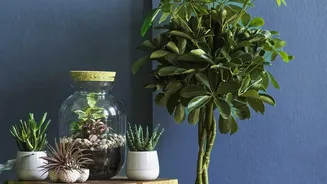
The Myth's Green Roots
The popular belief that houseplants are effective air purifiers stems largely from a well-known 1989 NASA study. Researchers, looking for ways to clean the air in sealed space stations, placed common houseplants in small, airtight chambers and injected
volatile organic compounds (VOCs) like benzene and formaldehyde. The results were promising: the plants did absorb a significant percentage of these pollutants. This finding quickly grew into a widespread conviction that filling our homes with plants like spider plants, peace lilies, and English ivy could naturally detoxify our living spaces. For decades, this has been accepted as a simple, green solution to indoor air pollution.
A Reality Check: From Lab to Living Room
The problem is that our homes are not small, sealed space-station chambers. Subsequent analysis by environmental scientists has revealed a major flaw in applying the NASA study to real-world conditions. A typical home or office has constant air exchange from windows, doors, and ventilation systems, which dilutes pollutants far more rapidly than a few plants can absorb them. The rate at which plants remove VOCs is incredibly slow. A 2019 meta-analysis concluded that the natural ventilation of a building does most of the work in removing these compounds, making the contribution from plants almost negligible in comparison.
The Numbers Don't Lie: A Jungle in Your Home
To understand the scale of the difference, we can look at the Clean Air Delivery Rate (CADR), a metric used to measure an air purifier's efficiency. A single, mid-range air purifier can have a CADR of over 100 cubic metres per hour, meaning it cleans a large volume of air very quickly. In contrast, studies estimate a typical houseplant has a CADR of less than 1. Researchers have calculated that to achieve the same air-cleaning effect as a building's standard ventilation system—let alone a dedicated air purifier—you would need an astonishing number of plants. Estimates range from 10 to 1,000 plants per square metre of floor space. For an average-sized room, this would mean turning your living space into an impractical jungle of hundreds or even thousands of plants.
The Power of Mechanical Filtration
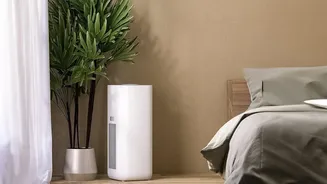
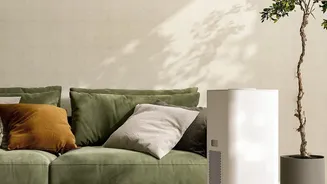
This is where air purifiers demonstrate their clear superiority. A quality air purifier uses a fan to actively draw in room air and force it through a series of filters. The most effective of these is the High-Efficiency Particulate Air (HEPA) filter. A true HEPA filter is certified to remove 99.97% of airborne particles down to 0.3 microns in size. This includes common irritants that plants have little to no effect on, such as dust, pet dander, pollen, mould spores, and even some bacteria and virus-carrying droplets. Many purifiers also include activated carbon filters, which are designed to trap gases, odours, and the very VOCs that the original plant studies focused on, but at a much faster and more effective rate.
Where Plants Still Shine
This doesn't mean you should discard your green companions. While they aren't powerful air-scrubbing machines, houseplants offer numerous other benefits that an air purifier cannot. Studies have shown that the presence of indoor plants can reduce stress, lower blood pressure, and improve focus and overall well being. They add natural beauty and a sense of vitality to a space, can slightly increase humidity, and contribute to a pleasant atmosphere. Think of them as a complementary piece of your home's wellness puzzle, providing psychological and aesthetic benefits, rather than a primary tool for air purification.