
A New Window on the Cosmos
Launched in late 2021, the James Webb Space Telescope (JWST) represents a monumental leap in our ability to observe the universe. While its predecessor, the Hubble Space Telescope, primarily viewed the cosmos in visible and ultraviolet light, Webb is designed
to see in infrared. This is not just a minor upgrade; it is a fundamental shift in perspective. Infrared light is a longer wavelength of light that can penetrate through the dense clouds of gas and dust that are opaque to visible light. This unique capability allows Webb to peer into regions of space that have been completely obscured until now, effectively giving humanity a new set of eyes to witness the universe's most concealed events.
Inside the Cosmic Nurseries
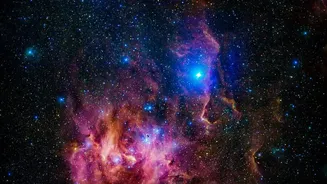
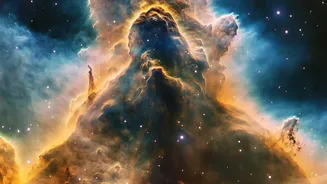
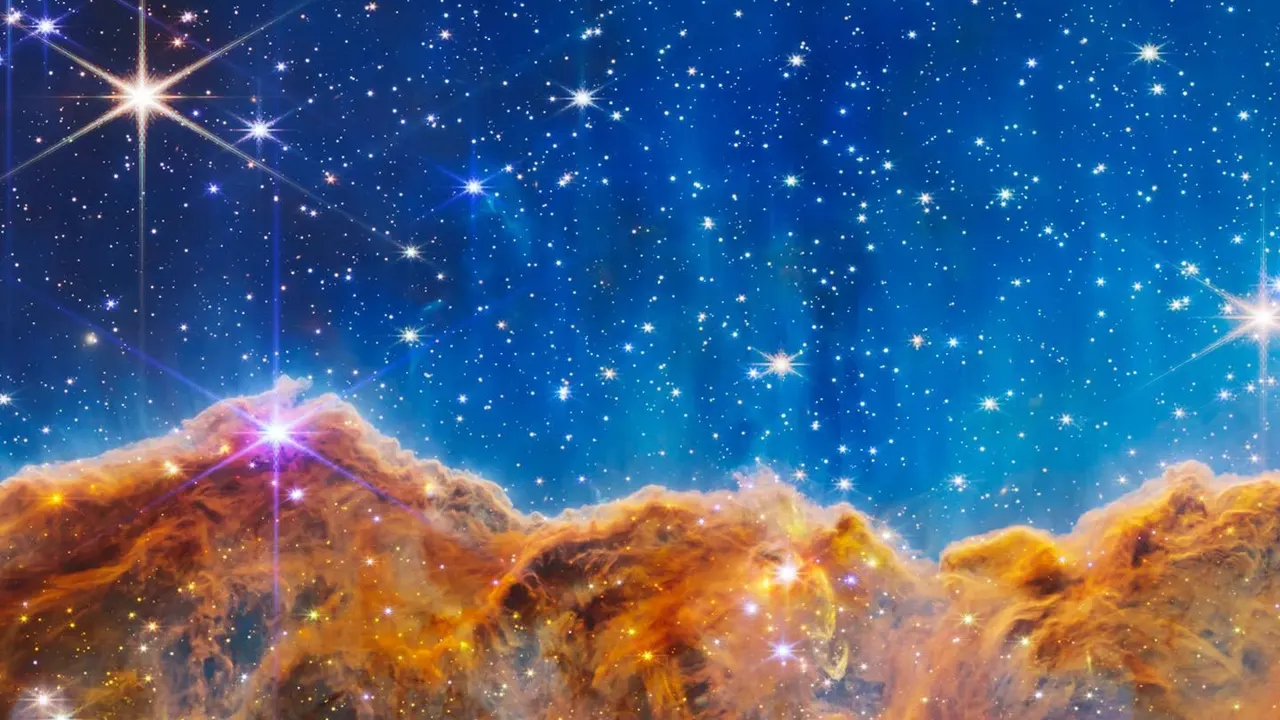
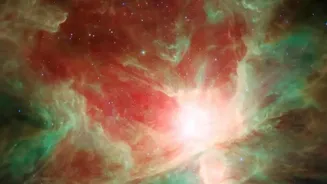
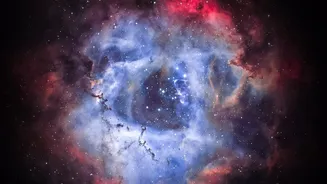
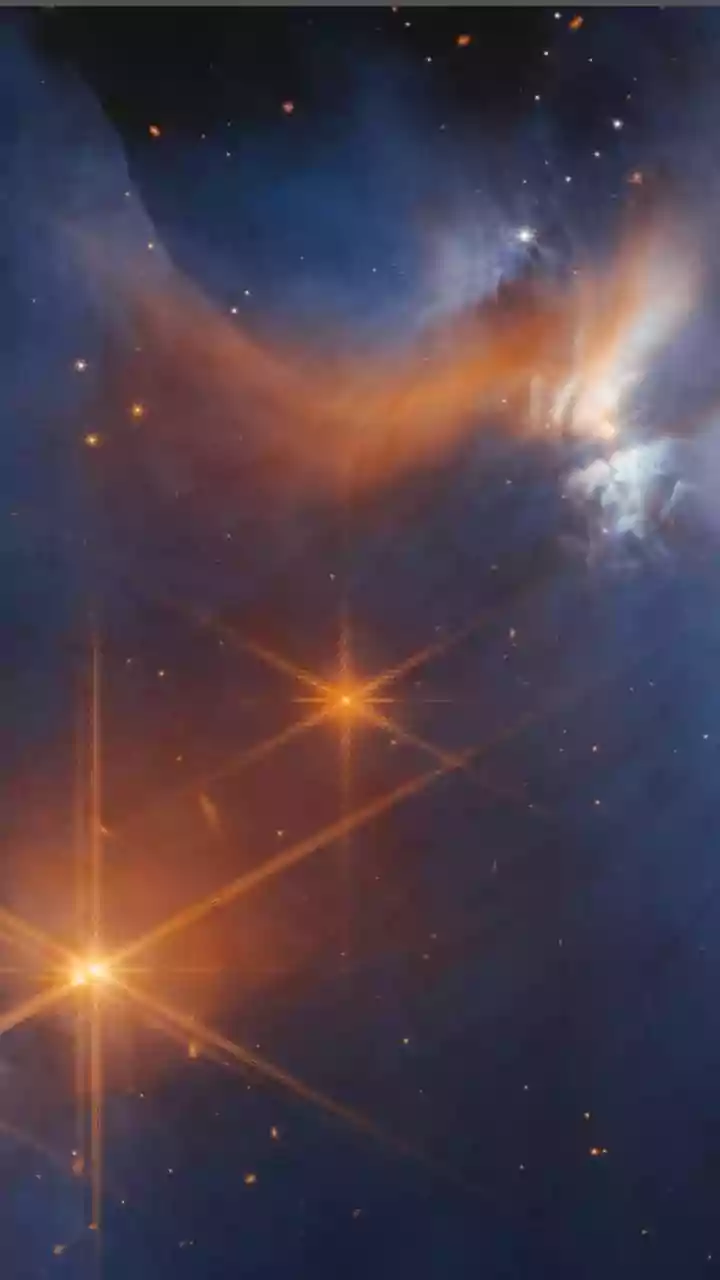
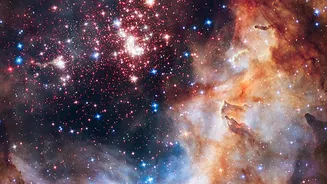
At the heart of this new vision are stellar nurseries. These are not serene, quiet places, but rather chaotic and turbulent clouds of gas and dust where new stars are born. These regions, like the famous Pillars of Creation or the Carina Nebula, are where gravity pulls massive amounts of material together, eventually collapsing into dense cores that ignite into protostars. For millennia, these nurseries have kept their secrets well. The very dust that serves as the raw material for star birth also acts as a shroud, blocking visible light from escaping. This meant that while we could see the periphery of these stellar nurseries, the crucial early stages of star formation happening deep inside remained largely invisible. Webb’s infrared instruments, like the Near-Infrared Camera (NIRCam) and Mid-Infrared Instrument (MIRI), change that completely, allowing astronomers to see the baby stars within their dusty cocoons for the first time.
Unveiling Ancient Star Birth
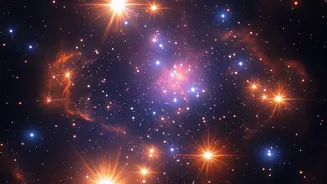
Recent observations have provided breathtaking examples of Webb's power. In a star-forming region called NGC 604, located 2.73 million light-years away, Webb revealed more than 200 of the hottest and most massive types of young stars. These stellar infants, some over 100 times the mass of our sun, were seen carving out huge cavities in the surrounding gas with their powerful stellar winds. Similarly, studies of Sagittarius B2, the most active stellar nursery in our own Milky Way, uncovered stars that had been completely invisible before. The telescope's instruments captured light slipping through narrow tunnels carved by stellar outflows, giving an unprecedented look at how massive star clusters take shape. By observing these processes, scientists are gaining new insights into how stars gain mass, which appears to happen in episodic bursts rather than a steady flow.
Rewriting Cosmic History
These discoveries are more than just pretty pictures; they are fundamentally changing our understanding of cosmic evolution. By studying stellar nurseries in nearby galaxies, which resemble conditions in the distant past, astronomers can better understand how the first stars and galaxies formed. Some recent findings have even challenged long-held assumptions. For instance, Webb's data suggests that early galaxies may have had a much larger proportion of smaller, fainter stars than previously believed, meaning these ancient galaxies could be up to four times more massive than we thought. Furthermore, Webb has shown that bursts of star formation were crackling through the universe much earlier than models predicted, reshaping the timeline of how the cosmos became the star-filled expanse we see today. It helps us understand how the universe was seeded with the heavier elements that are essential for the formation of planets and, ultimately, life.