


A Groundbreaking Achievement
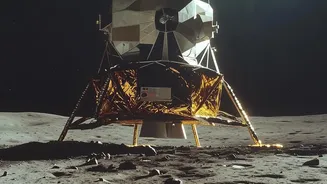
In a feat of precision engineering, China's Chang'e-6 mission touched down in the vast South Pole-Aitken basin, one of the largest and oldest impact craters in the entire solar system. The lander didn't just visit; it performed a complex operation, drilling
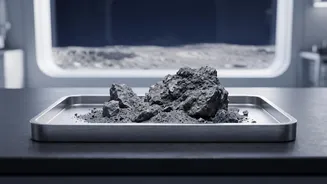
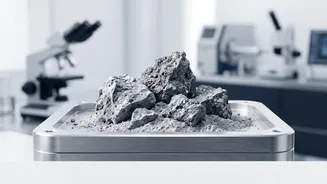
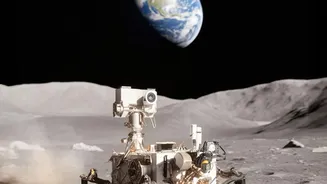
and scooping up nearly two kilograms of precious lunar rock and soil. An ascent vehicle then lifted off from the Moon's surface, rendezvoused with an orbiter, and transferred the samples for their long journey back to Earth. This marks the first time material from the Moon's enigmatic far side has been retrieved. The entire multi-stage mission, which required a dedicated relay satellite to communicate with Earth, highlights a massive leap in robotic space exploration capabilities.
Why the Farside is a Scientific Prize
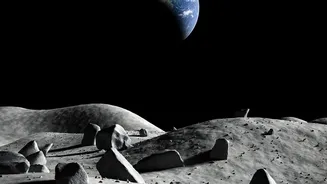
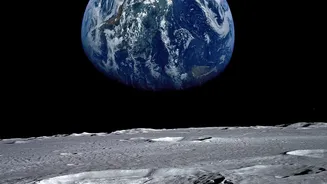
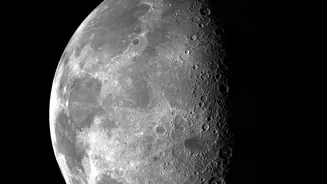
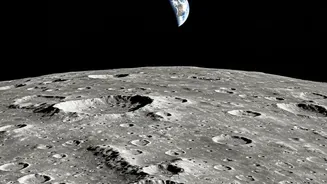
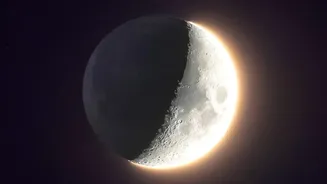
The Moon is 'tidally locked' with Earth, meaning it rotates exactly once for each orbit it completes, which is why we only ever see one side. For decades, the farside was a complete mystery. While we now have maps, it remains far less explored than the familiar nearside. The two hemispheres are dramatically different. The nearside is characterized by vast, dark plains of volcanic basalt, while the farside is dominated by ancient, heavily cratered highlands and has a much thicker crust. Scientists believe these differences hold fundamental clues about how the Moon—and by extension, the Earth-Moon system—formed and evolved. The South Pole-Aitken basin, the landing site, is particularly special as it's so immense and ancient that the impact that created it may have punched through the Moon's crust, exposing material from the lunar mantle below.
The Secrets Locked in the Samples
These aren't just any rocks. Scientists are eager to analyze their composition and age to solve some of the biggest puzzles in planetary science. Preliminary analysis of the Chang'e-6 samples is already yielding fascinating insights. Studies suggest the farside crust is richer in magnesium and contains less of the heat-producing elements commonly found on the nearside. One leading theory proposes that after the Moon became tidally locked, gravitational heating from Earth was stronger on the nearside. This could have driven massive flows in the ancient lunar magma ocean, effectively pushing crustal material toward the farside and concentrating molten material on the nearside. By dating these farside rocks, scientists can also create a more accurate timeline of the 'Late Heavy Bombardment,' a period of intense asteroid impacts that shaped the early solar system. Understanding this history is crucial, as it set the stage for life to eventually emerge on Earth.
The Radio-Quiet Zone
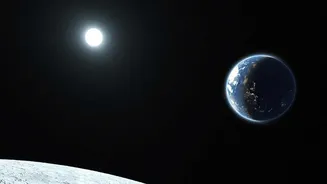
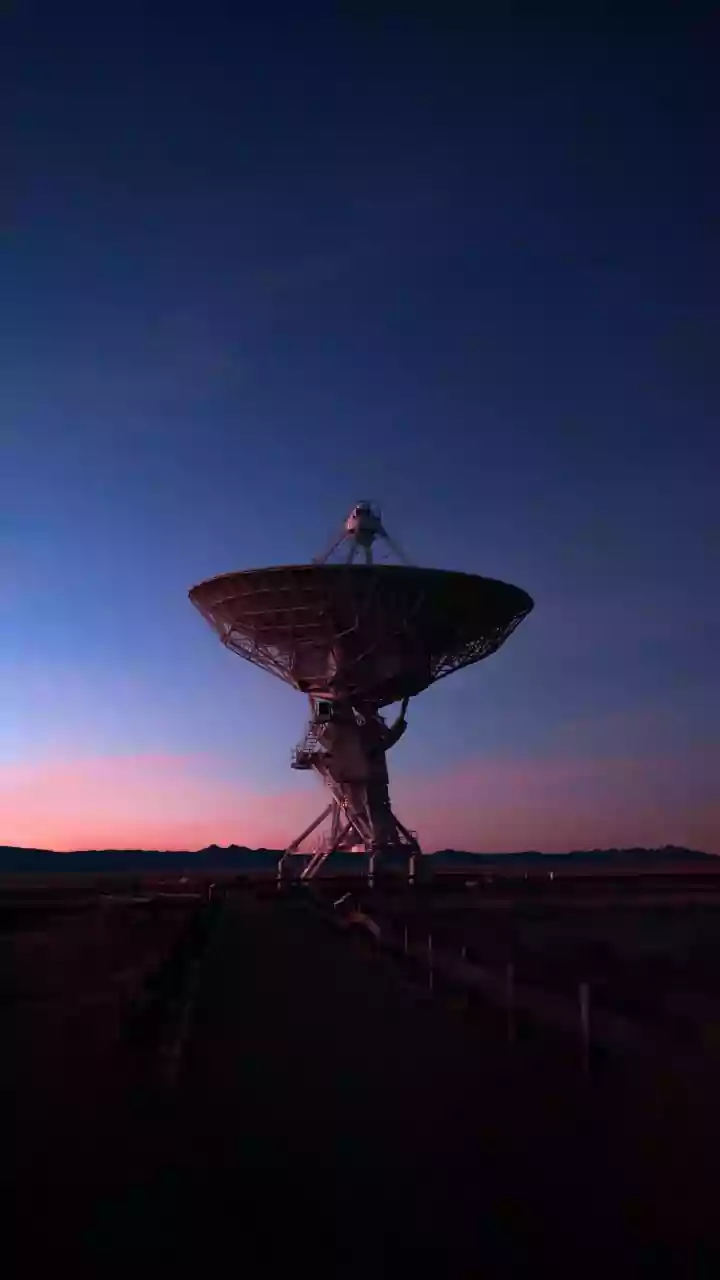
Beyond geology, the lunar farside offers a unique advantage for a different kind of science: radio astronomy. Here on Earth, our view of the low-frequency radio universe is hopelessly obscured by the constant noise from our own technology and our planet's ionosphere. The Moon itself acts as a perfect shield, blocking all of that interference. This makes the farside the most radio-quiet place in the inner solar system, an ideal location to build telescopes that could listen for faint signals from the 'Cosmic Dawn'—the era just after the Big Bang when the first stars began to form. While the Chang'e-6 mission focused on sample return, it carried instruments from France, Sweden, and Italy, underscoring the international interest in conducting science from this pristine environment.
A New Era of Lunar Exploration
This successful mission by China's National Space Administration (CNSA) solidifies its position as a major player in space. While the United States plans its own return to the Moon with the Artemis program, aiming for human landings near the south pole, China is methodically advancing its own lunar ambitions, which include a planned crewed landing in the 2030s and a potential robotic research station. The Chang'e program has demonstrated increasing technical sophistication with each mission. The success of Chang'e-6 is not just a national victory but a scientific one for the world, with China indicating a willingness to share access to the samples with global partners. It signals a new, more multi-polar era of space exploration, where collaboration and competition will both drive humanity's next steps into the cosmos.