





The Unseen Engine of the Digital Economy
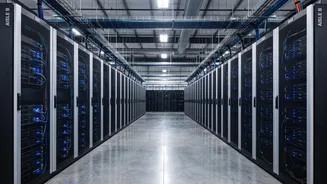
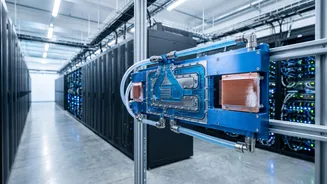
Data centres are the physical heart of our digital lives. They are secure, temperature-controlled buildings filled with thousands of computer servers and data storage systems that process, store, and distribute the information that powers everything from
social media and e-commerce to complex corporate networks. To ensure uninterrupted service, these facilities are designed for continuous, 24/7 operation. This always-on requirement means they consume vast amounts of electricity, not just to run the servers themselves, but also for the extensive cooling systems needed to prevent overheating. This constant power draw has made them one of the fastest-growing sources of new electricity demand globally.
The AI and Cloud Accelerant
While data demand has been rising for years, the recent explosion in Artificial Intelligence (AI) has dramatically accelerated energy consumption. Training and running complex AI models, like those behind generative AI, requires immense computational power, primarily from energy-intensive graphics processing units (GPUs). According to the International Energy Agency (IEA), the global expansion of AI could account for three-quarters of the growth in data centre electricity use by 2030. A single query on an AI chatbot like ChatGPT can consume nearly ten times the electricity of a simple Google search. This surge means that traditional data centres are evolving into 'AI factories' that require power on an unprecedented scale, with some new campuses demanding as much energy as a small city.
A Demand Doubling by 2030
The numbers are staggering. The IEA projects that global electricity consumption from data centres could roughly double between now and 2030, climbing from around 460 terawatt-hours (TWh) in 2024 to nearly 1,000 TWh. This would represent almost 3% of total global electricity demand. In India, the growth is even more pronounced. The country's data centre capacity is growing faster than the global average, with consumption projected to increase nearly fivefold to 57 TWh by 2030. This growth is fueled by massive investments from global tech giants like Amazon, Microsoft, and Google, who are pouring billions into building new cloud and AI infrastructure across the country to serve the burgeoning digital economy.
Straining Grids and Raising Questions
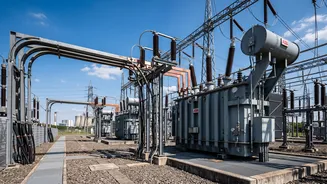
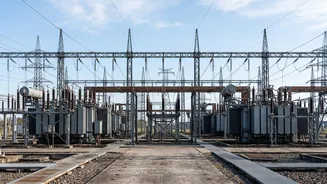
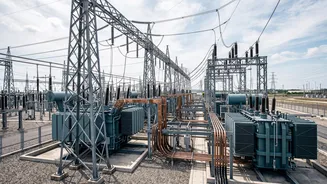
This relentless demand places significant strain on national and regional power grids, which must expand to accommodate these massive new loads. In some regions, the speed of data centre construction is outstripping the ability of utilities to supply power, leading to connection delays. This has even led some developers, particularly in the US, to propose building their own on-site gas-fired power plants to guarantee supply. The environmental implications are significant. While the industry is a major investor in renewable energy, the sheer pace of growth means that fossil fuels like natural gas and coal are expected to meet over 40% of the additional electricity demand from data centres until 2030.
The Push for Sustainable Solutions
In response to these challenges, the tech industry is aggressively pursuing sustainable solutions. Major operators are among the world's largest corporate buyers of renewable energy, signing long-term power purchase agreements (PPAs) for solar and wind power. On-site innovations are also critical. These include designing more energy-efficient hardware, implementing advanced cooling techniques that use less water and power, and improving overall efficiency, measured by a metric called Power Usage Effectiveness (PUE). Looking ahead, the industry is exploring a range of technologies from battery storage and on-site microgrids to green hydrogen and even small modular nuclear reactors (SMRs) to provide clean, reliable, 24/7 power.