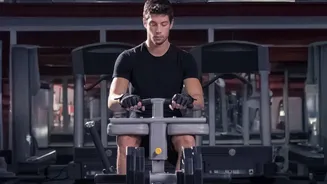






When the days get shorter and colder, finding the motivation for fitness can be a challenge. Enter the step-up: a simple, powerful exercise that requires minimal equipment and can be the cornerstone of an effective indoor winter workout.
Why Lower-Body Strength Matters in Winter
Strong legs are
your foundation for almost every movement. During winter, this becomes even more critical. Well-conditioned quadriceps, hamstrings, and glutes provide the stability needed to navigate potentially slippery surfaces, reducing the risk of falls. Furthermore, since these are some of the largest muscle groups in your body, working them effectively boosts your metabolism and helps maintain overall fitness when outdoor activities might be limited. Building functional lower-body strength is not just about aesthetics; it is about enhancing your daily movement and resilience.
The Power of a Simple Step-Up
The step-up is a compound exercise, meaning it engages multiple muscles and joints simultaneously, including your quads, glutes, hamstrings, and core. Its primary advantage lies in its unilateral nature—working one leg at a time. This approach is excellent for identifying and correcting strength imbalances between your left and right sides, which can improve overall symmetry and coordination. Unlike some high-impact exercises, step-ups are joint-friendly, placing less stress on the lower back and knees while still delivering significant strength and cardiovascular benefits.
How to Perform a Perfect Step-Up
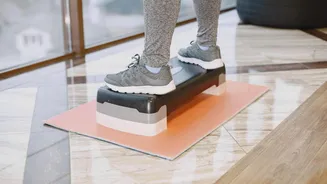
Proper form is crucial to maximize benefits and prevent injury. Start with a sturdy, stable platform like a workout bench, a solid chair, or the bottom steps of a staircase. The ideal height is one where your knee forms roughly a 90-degree angle when you place your foot on it. To perform the exercise: Stand facing the platform. Place your entire right foot firmly onto the surface. Keeping your chest up and core engaged, drive through your right heel to lift your body up until your right leg is straight. Bring your left foot to meet the right on the platform. To descend, step back down with your left foot first, followed by the right, in a controlled manner. Complete all repetitions on one side before switching to the other.
Common Mistakes to Avoid
Many people make a few common errors that reduce the effectiveness of the stepup. The most frequent is pushing off with the back leg. The work should come from the leg on the platform, not the one on the floor. To fix this, consciously lift the toes of your back foot slightly before you push up. Another mistake is leaning too far forward, which can strain your back. Keep your torso relatively upright throughout the movement. Finally, avoid using a step that is too high; this compromises form and can put undue stress on your hips and knees. If you cannot maintain control, choose a lower platform.
Variations for Every Fitness Level
The beauty of the stepup is its versatility. For beginners, the focus should be on mastering the bodyweight movement with a low step. As you get stronger, you can progress the exercise in several ways. Increase the height of the step to challenge your range of motion and engage your glutes more. You can also add resistance by holding dumbbells in each hand. For a more advanced challenge, try a lateral stepup by standing sideways to the platform, which targets the inner and outer thigh muscles and improves stability. Another progression is to drive the non-'working'- knee up high at the top of the movement for an added balance challenge.
Integrating Step-'Ups' Into Your Routine
To build strength, consistency is key. Aim to incorporate stepups into your workouts two to three times per week on non-'consecutive'- days to allow for muscle recovery. A good starting point is to perform 3 sets of 10-'15'- repetitions per leg. As this becomes easier, you can increase the weight, the height of the step, or the number of reps. Pair stepups with other lower-'body'- exercises like squats and lunges, and remember to include upper-'body'- and core work for a balanced, full-'body'- winter fitness plan.