



A Golden Thread of Heritage
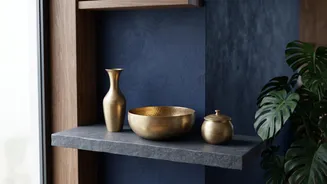
Walk into the home of a style-conscious young Indian today, and you might notice something gleaming amidst the minimalist furniture and leafy houseplants. Traditional brassware, or 'peetal,' once associated with grandparents' homes and pooja rooms, is experiencing
a remarkable revival. For a generation often defined by digital fluency and global trends, these objects serve as a tangible connection to their roots. This isn't about recreating the past, but curating a personal narrative. Each brass piece, whether a vintage lamp from a family collection or a handcrafted urli sourced from an artisan, tells a story of culture and continuity. In a world of fleeting digital experiences, these solid, timeless objects offer a sense of grounding and authenticity that resonates deeply with young decorators.
The Ultimate Rental-Friendly Decor
For renters, major design changes are often off the table. You can't repaint walls or swap out fixtures, making it difficult to inject personality into a space. This is where brassware shines. These pieces are portable, impactful, and don't require any permanent installation. A single, elegant brass planter can transform a dull corner, while a collection of small brass bowls on a coffee table can add texture and warmth. The reflective surface of polished brass also works wonders in smaller rental apartments, bouncing light around to create an illusion of brightness and space. Unlike bulky furniture, these items are easy to pack up and move, making them a wise investment for those whose address might change but whose style remains constant.
Sustainability in a Throwaway World
Perhaps the most significant driver of this trend is Gen Z's commitment to sustainability. In an era of 'fast furniture' and disposable decor, brass stands out as a beacon of longevity. It is exceptionally durable, resistant to corrosion, and can last for generations. This directly counters the wasteful cycle of buying and discarding trendy but poorly made items. Furthermore, brass is one of the most recyclable metals in the world; it can be melted down and repurposed indefinitely without losing its quality. By choosing a vintage or handcrafted brass piece, young consumers are consciously rejecting mass production in favour of an eco-friendly mindset that values craftsmanship and a circular economy.
Redefining Traditional Spaces
What makes this trend truly modern is how Gen Z is re-contextualizing these traditional items. A brass 'lota' (water pot) is repurposed as a chic vase for fresh flowers. A large 'urli' (a wide, shallow cooking vessel) becomes a stunning floating candle centrepiece on a dining table. Intricately designed brass platters and trays are hung on walls as part of a curated gallery wall, mixing with modern prints and mirrors. These items are moving beyond their traditional, often ritualistic, contexts and are being integrated into the secular, everyday fabric of the home. This creative reinterpretation allows for a fresh expression of Indian identity that is both respectful of tradition and confidently contemporary.
An Investment in Authenticity
Ultimately, the turn towards brassware is part of a larger quest for authenticity and personal expression. For Gen Z, luxury isn't about brand names or high price tags; it's about uniqueness, emotional value, and storytelling. A handcrafted brass piece from Moradabad, India's 'Brass City,' carries with it a legacy of artisanal skill passed down through generations. Choosing such an item is not just a decor decision; it's an ethical choice to support local artisans and preserve cultural heritage. In a world saturated with uniformity, these decorators are proving that a home filled with meaningful objects is the greatest luxury of all.