

The New Festive Go-To
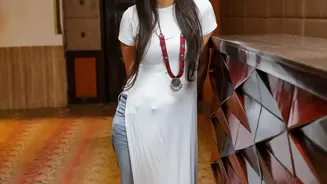
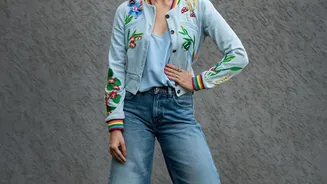
Walk into any college festival, casual Diwali party, or Navratri gathering, and you'll see it everywhere: a beautifully embroidered Chikankari kurti paired with skinny jeans, a short, block-printed top with flared denim, or even a statement ethnic jacket
thrown over a simple t-shirt and jeans. This isn't just a niche trend; it's a widespread movement. For many young Indians, especially Gen Z and millennials, this fusion look has become the default choice for celebrations that call for a festive but relaxed dress code. It's a style that says 'I'm here to celebrate', but on my own terms. The formula is simple but effective, blending the timeless appeal and comfort of denim with the rich textures, colours, and craftsmanship of Indian textiles.
Comfort and Practicality Reign Supreme
One of the biggest drivers of this trend is practicality. Festive days are long, often involving travel, socialising, and dancing. The heavy, restrictive nature of traditional wear doesn't always align with the dynamic lifestyle of today's youth. Denim offers unparalleled comfort and freedom of movement. Pairing it with a kurti or an ethnic top allows the wearer to stay comfortable all day without sacrificing the festive spirit. It's a solution for young people who may be celebrating in college hostels or with friends in a metropolitan city, far from the more rigid rituals of home. They want outfits that are repeatable and versatile, not pieces that will be worn once and then relegated to the back of the wardrobe.
A Statement of Modern Indian Identity
Beyond comfort, this fashion choice is a powerful form of self-expression. For many, it represents a confident blending of global and local identities. It's a visual declaration that being modern doesn't mean abandoning tradition, and honouring one's heritage doesn't require rejecting contemporary style. Gen Z, in particular, wears ethnic attire because they want to, not because they feel obligated to. This mix-and-match approach treats Indian and Western wear as part of the same, single wardrobe, breaking down outdated fashion binaries. The resulting look is personal, experimental, and a true reflection of a generation that is unapologetically both Indian and global.
The Art of Styling
The beauty of this trend lies in its versatility. The same kurti-and-jeans combination can be dressed up or down with ease. For a casual daytime event, the look is often completed with sneakers or juttis and minimal jewellery like silver hoops. To elevate it for an evening party, one might swap the footwear for block heels or embellished mojaris and add statement accessories like chunky oxidised necklaces or layered bangles. The choice of denim also plays a key role; skinny jeans create a sleek silhouette with long kurtis, while wide-leg or flared jeans offer a more relaxed, bohemian vibe with shorter tops. Even the colour of the denim—from classic blue to stark white or black—can dramatically change the outfit's mood.
More Than Just Kurtis
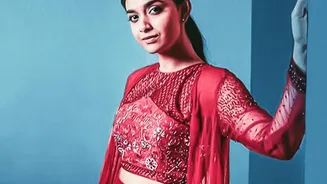
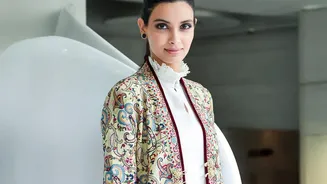
While the kurti-jean pairing is the most common expression of this trend, the fusion doesn't stop there. Designers and fashion-forward individuals are pushing the boundaries even further. We're seeing intricately embroidered jackets and even denim sarees on couture runways. On the street, young women are pairing crop tops and cholis with high-waisted jeans, or layering long, sheer ethnic jackets over denim. Statement dupattas, like a vibrant Banarasi or Phulkari, are sometimes added to a simple top-and-jeans outfit to instantly make it festive. This experimental spirit shows that the trend is less about a specific formula and more about an attitude of creative and personal styling.