






A Personal, Pressurised Bubble
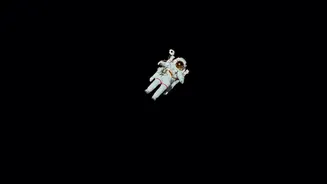
The most immediate danger in space is the vacuum. On Earth, the atmosphere exerts a constant pressure on our bodies that we never notice. Without it, the gases dissolved in our body fluids would bubble out, a fatal condition known as ebullism. A spacesuit,
or Extravehicular Mobility Unit (EMU), counteracts this by creating a pressurised environment. It is typically filled with pure oxygen at a pressure of about 4.3 pounds per square inch (psi). This is lower than Earth's 14.7 psi but enough to keep an astronaut alive while ensuring the suit remains flexible enough for them to work. This internal pressure is maintained by a urethane-coated nylon 'bladder' layer, held in shape by a tougher restraint layer to stop it from ballooning.
Surviving Extreme Temperatures
Space has no air to moderate temperature, leading to violent swings. An object in direct sunlight can heat up to 121°C (250°F), while in shadow it can plummet to -157°C (-250°F). To survive this, a spacesuit is a marvel of insulation. Multiple layers of aluminized Mylar, separated by fabric, act like a high-tech thermos to slow heat transfer. But insulation isn't enough, because a working astronaut generates significant body heat. The first garment an astronaut dons is the Liquid Cooling and Ventilation Garment (LCVG). This spandex suit has about 300 feet of tubes woven into it, through which cool water circulates to draw excess heat away from the body, keeping the astronaut comfortable for hours.
A Life-Sustaining Backpack
The boxy backpack, known as the Primary Life Support System (PLSS), is the engine that runs the suit. It contains tanks of high-pressure oxygen for breathing and pressurization, and a system to remove the carbon dioxide (CO2) an astronaut exhales. Early Apollo missions used lithium hydroxide canisters to scrub CO2, while modern suits on the International Space Station (ISS) use systems that can be regenerated and reused. The PLSS also holds the battery that powers the suit's electronics, the fan that circulates air, the pumps for the cooling water, and the two-way radio for communication with the station and mission control.
Shielding from Invisible Dangers
Beyond the vacuum and temperatures, space is filled with invisible threats. One is radiation, from both the sun and deep-space cosmic rays, which can damage DNA and increase long-term health risks like cancer. While a spacesuit's layers offer only limited protection against the most energetic particles, every bit helps. The helmet's visor has a special gold coating that reflects harmful ultraviolet and infrared radiation, acting like a powerful pair of sunglasses to protect the astronaut's eyes. Another threat comes from micrometeoroids—tiny particles of rock or debris, often smaller than a grain of sand, travelling at speeds of thousands of kilometers per hour. A direct hit could puncture a suit, causing a fatal depressurization. To counter this, the suit’s outer layers are made of incredibly tough, puncture-resistant materials like Kevlar, Gore-Tex, and Nomex, designed to break up these particles before they can reach the inner pressure bladder.
Designed for Work
A spacesuit isn't just a survival bubble; it's a tool. Every element is designed for functionality. The modular design of NASA's EMU allows arms, legs, and torso sections of different sizes to be assembled to fit various astronauts, making them reusable and cost-effective. The helmet provides a wide field of view, while the gloves are designed to offer as much dexterity as possible for handling tools, though astronauts often compare it to working in thick winter gloves. To stay hydrated during spacewalks that can last over eight hours, astronauts have an 'in-suit drink bag' with a straw positioned near their mouth. Communication is handled by a fabric cap worn under the helmet, fitted with earphones and microphones.