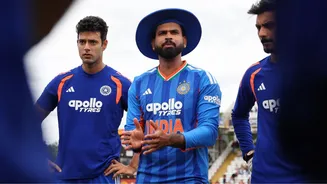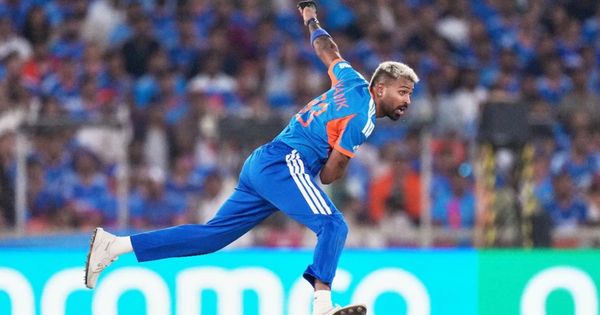




A Controversial Claim
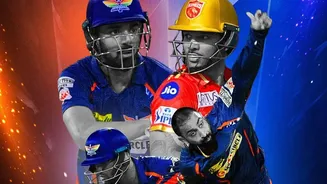
Whenever a national squad is announced, controversy is never far behind. This time, accusations of an agenda against Royal Challengers Bengaluru (RCB) players have surfaced. However, the premise of the headline is flawed. Of the four players named—Krunal
Pandya, Rajat Patidar, Bhuvneshwar Kumar, and Rasikh Salam—recent reports and team rosters suggest three have been associated with RCB. Patidar is their current captain, leading them to back-to-back titles. Both Kumar and Pandya have had successful recent stints with the franchise, with Pandya playing a key role in their two title wins. Salam has also previously played for RCB. This connection, strong for some and historical for another, has fueled the fire, shifting the debate from a simple selection grievance to a question of whether a pattern exists.
The Puzzling Case of Rajat Patidar
The most glaring omission is arguably that of Rajat Patidar. As the captain who led RCB to consecutive IPL titles in 2025 and 2026, his exclusion is baffling for many fans. Patidar has been a consistent run-scorer in domestic cricket and the IPL, known for his aggressive style and ability to perform under pressure. His non-selection raises questions about what more a player needs to do. Having proven his mettle both as a batsman and a leader in the most high-stakes T20 league, his absence from the national T20I setup is seen by many as a significant oversight, especially when the team is looking to build a dynamic middle order.
Experience and Utility Ignored
The selectors' decision to overlook veterans Krunal Pandya and Bhuvneshwar Kumar has also raised eyebrows. Kumar, one of India's most experienced T20 pacers, recently became only the second Indian to take 350 T20 wickets. His unique ability to swing the new ball and execute at the death remains a valuable asset. Pandya, meanwhile, has been in stellar all-round form. He was instrumental in RCB's recent IPL triumphs, contributing significantly with both bat and ball. His recent form even led to reports that he was being considered as an alternative to Axar Patel. Ignoring two players with proven track records and recent success seems counterintuitive to building a balanced and experienced squad.
What About Emerging Talent?
The case of pacer Rasikh Salam is different but equally perplexing. A young talent from Jammu and Kashmir, Salam has shown immense promise. He had a commendable IPL 2026 season, showcasing his wicket-taking ability and contributing to RCB's successful campaign. For a team that is always on the lookout for the next generation of fast bowlers, overlooking a player who has performed on the big stage is a questionable move. His exclusion adds to the feeling that the selection criteria are not consistently applied, leaving promising young players in limbo.
Agenda, Inconsistency, or a New Strategy?
While a deliberate 'agenda' against players from one specific franchise is difficult to prove, the recent selections reflect a pattern of inconsistency that understandably frustrates fans. The problem may not be malice, but a lack of clear communication and a seemingly muddled strategy. Players who perform exceptionally in domestic tournaments and the IPL expect a clear pathway to the national team. When proven performers and emerging stars are repeatedly ignored, it fuels speculation and undermines faith in the selection process. The onus is on the selectors to not only pick a team but also to articulate the vision behind their choices, ensuring that every player, regardless of their IPL team, understands what is required to earn a spot in the Indian side.