

The Sun's Final Act
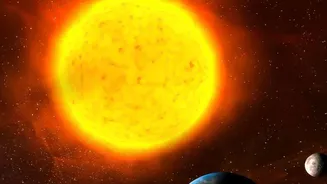
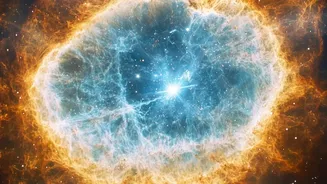
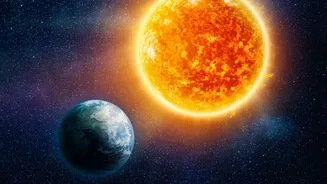
Like all stars, our Sun has a finite lifespan. In about five billion years, it will exhaust the hydrogen fuel in its core. This will trigger a dramatic transformation. The core will contract and heat up, causing the Sun's outer layers to expand monstrously.
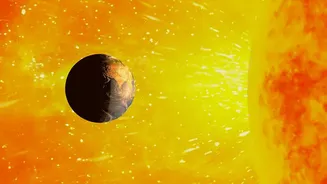
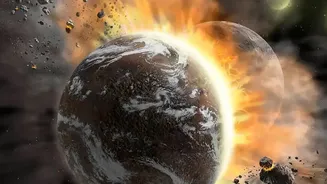
It will swell into a 'red giant', becoming so large that it will engulf Mercury, Venus, and possibly even Earth. After this phase, which will last about a billion years, the Sun will shed its outer layers, leaving behind a dense, hot, Earth-sized core called a white dwarf. This remnant will be about half the Sun's current mass.
A Weaker Grip on the Planets
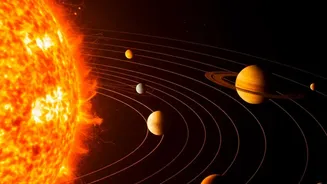
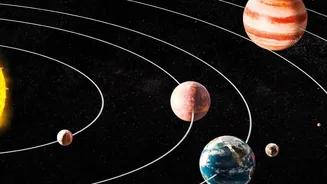
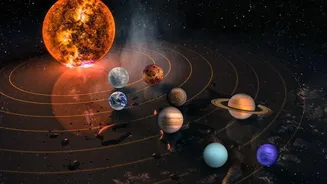
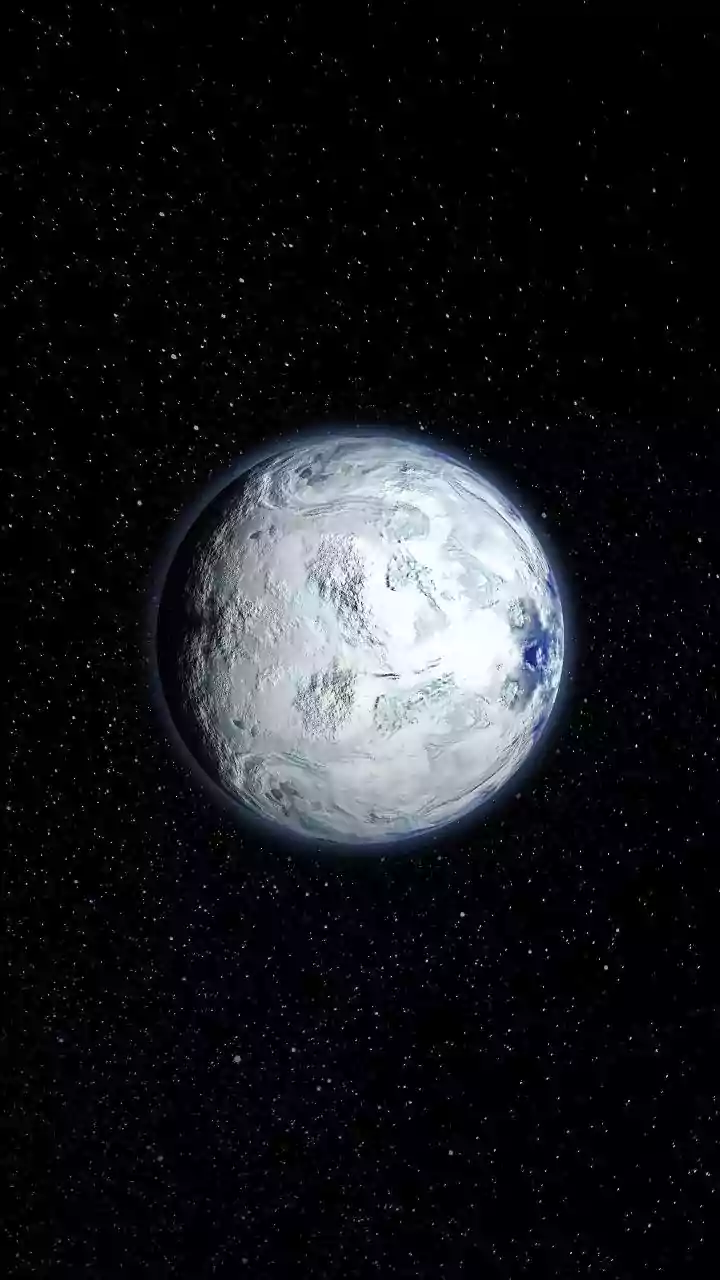
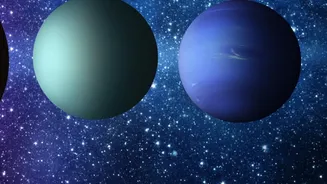
For a long time, astronomers believed this mass loss would be a smooth, gradual process. In that scenario, as the Sun's mass decreases, its gravitational pull on the remaining planets weakens. This would cause the orbits of Jupiter, Saturn, Uranus, and Neptune to expand, but remain stable and orderly. Previous models predicted this new, larger configuration of the solar system could last for an almost unimaginable length of time—up to 100 billion years or more, until a passing star eventually knocked things askew. This painted a picture of a peaceful, if much colder, future for our solar system's giants.
Not a Whimper, But a Bang
However, a recent study published in The Astrophysical Journal Letters challenges this peaceful conclusion. Researchers now believe the Sun won't lose mass smoothly. Instead, it will happen in violent, uneven bursts. As the dying star ejects massive clumps of its material in random directions, it will create a series of 'kicks' that nudge the star itself. Each of these kicks, though small, will send gravitational ripples through the solar system, disturbing the delicate orbital dance of the giant planets. This new model suggests the Sun's death won't be a quiet fade-out but a chaotic, system-shaking event.
A New, Shorter Timeline
This chaotic process dramatically shortens the lifespan of the outer solar system. By running hundreds of simulations, researchers found that the previous timeline of 100 billion years was far too optimistic. The new models show that in many scenarios, the planetary arrangement becomes unstable much, much sooner. According to the research, there's a significant chance for disruption even before the Sun fully becomes a white dwarf. In about 90% of the simulations, the outer solar system fell into chaos within three billion years of the Sun becoming a white dwarf—a tiny fraction of the quintillion years previously estimated.
The Great Unraveling
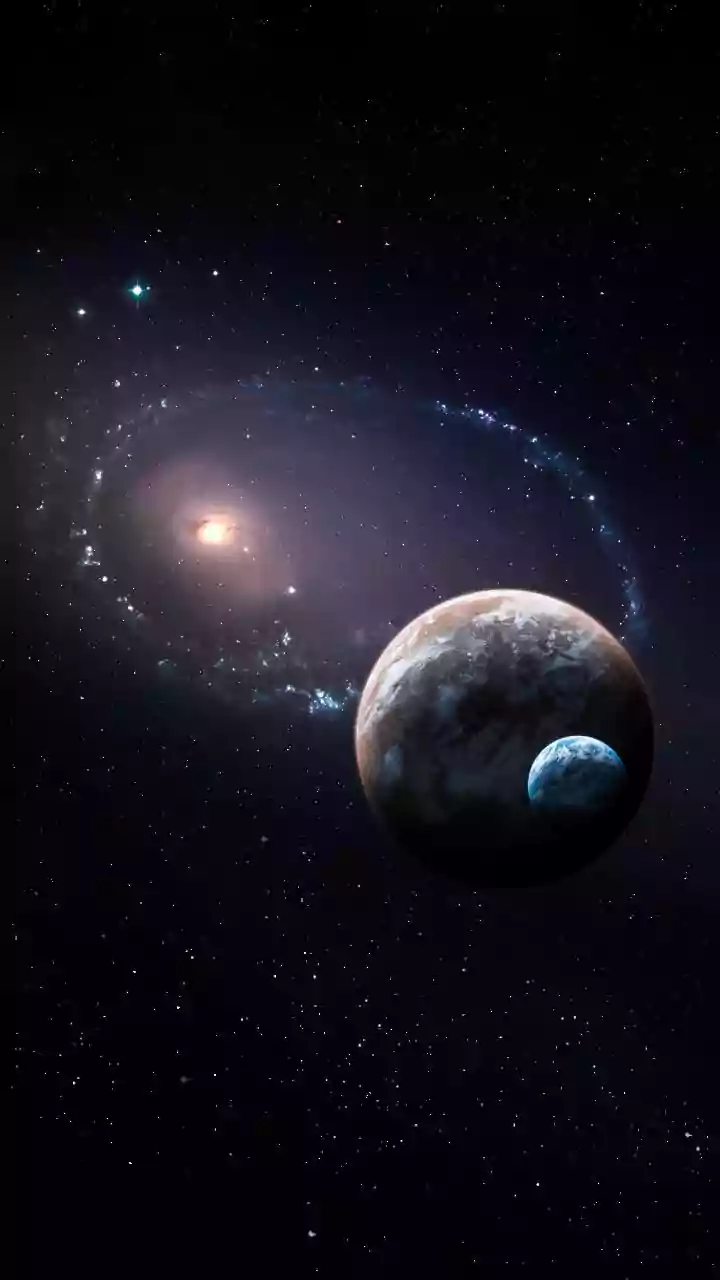
The consequences of this instability are dramatic. The simulations showed a variety of grim outcomes for the gas giants. In some scenarios, planets are ejected from the solar system entirely, doomed to wander interstellar space as rogue worlds. In others, the gravitational jostling is so intense that Uranus and Neptune actually swap their orbits. The once-orderly system descends into a game of cosmic pinball, with its largest members being thrown around violently. This research suggests that instead of slowly fading, our solar system is destined to tear itself apart, with its own dying star delivering the final, fatal blows.