







From Replacement to Co-pilot
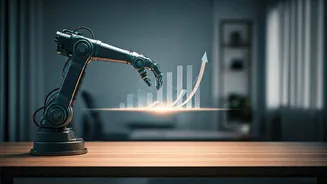
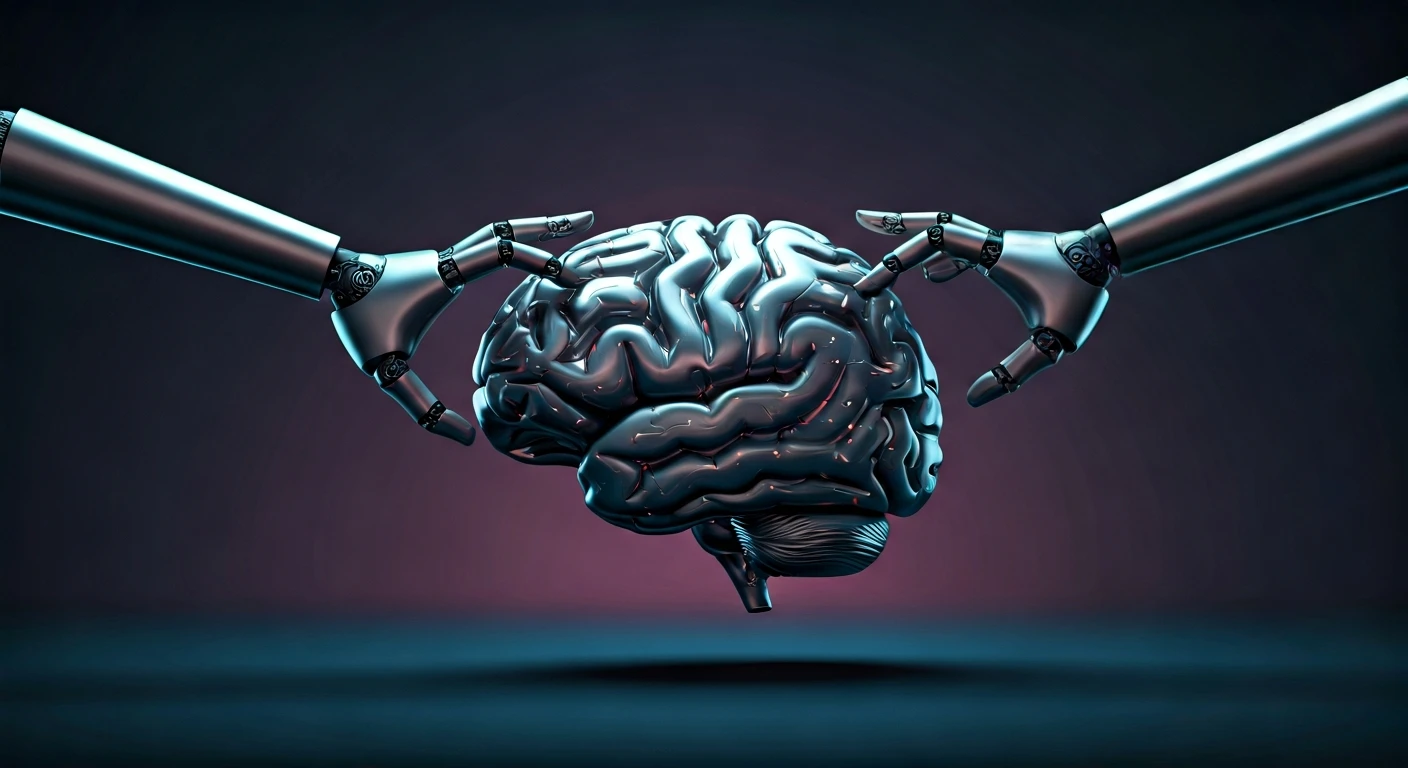
The common fear is that AI will make human workers obsolete. However, the data suggests a different trend is unfolding. Rather than outright replacing jobs, AI is automating specific tasks within them. Think of it less as a hostile takeover and more as the arrival
of a powerful co-pilot. A joint report from NASSCOM and Deloitte highlights this shift, noting that the impact is primarily role redefinition, not elimination. For instance, tasks like basic coding, data entry, and software testing are increasingly being handled by AI tools. This doesn't make the software tester or data analyst redundant; it frees them from repetitive work and shifts their role towards oversight, quality assurance, and managing exceptions—tasks that require human judgment. The most effective human-AI partnerships are emerging in higher-order activities like system architecture and data model design. In essence, AI is handling the 'what', allowing human professionals to focus on the 'why' and 'how'.
The Rise of New Collar Jobs
As AI reshapes existing roles, it's also creating entirely new ones that didn't exist a few years ago. India is seeing a surge in demand for roles like AI/ML specialists, data scientists, prompt engineers, and AI ethics officers. According to a report from Quess Corp, India saw nearly 3.5 lakh AI-related job openings in a recent 90-day period, underscoring the explosive demand. One study projected that emerging technologies could create as many as 2.73 million new tech jobs in India by 2028. These "new collar" jobs often prioritise specific, measurable skills over traditional degrees. The demand is particularly high for specialists in advanced areas like large language models (LLMs) and generative AI. This has created a significant talent gap, with NASSCOM projecting a shortfall of over a million AI professionals by 2026 if upskilling efforts aren't accelerated.
India's Evolving Skill Imperative
The shift in the job market brings a clear mandate: upskilling is no longer optional. With AI handling routine tasks, uniquely human skills are becoming more valuable than ever. Employers are increasingly looking for a blend of technical and soft skills. The in-demand technical skills, often called the "holy trinity," are AI/ML, data analytics, and cloud computing. Proficiency in programming languages like Python and R is also crucial. However, technical expertise alone is not enough. Critical thinking, creativity, adaptability, leadership, and communication are the soft skills that complement AI's capabilities. Professionals who can combine domain knowledge with AI fluency are the ones who will thrive. Reports show that a significant majority of Indian workers recognize that acquiring AI skills will enhance their career prospects.
The Opportunity for India Inc.
For India, this technological shift presents a massive opportunity. The country already has one of the world's largest AI talent hubs, and Indian enterprises are outpacing global peers in the large-scale adoption of AI. Adoption is particularly strong in sectors like retail, manufacturing, financial services (BFSI), and healthcare. While this rapid adoption creates challenges, including a significant capability gap, it also signals a strategic shift from experimentation to embedding AI into core business functions. Even the MSME sector is seeing a sharp rise in demand for AI skills, indicating that the digital transformation is widespread. By fostering collaboration between the government, academia, and industry to build a robust talent pipeline, India is positioning itself to become a global powerhouse in the AI-driven economy.