




A Crucial Hurdle Cleared
The latest in a string of successes is the second Integrated Air Drop Test (IADT-02), a critical exercise designed to validate the parachute system of the Gaganyaan crew module. This test, conducted at Sriharikota, is not just a routine check; it is a complex
simulation of one of the most perilous phases of any human spaceflight mission: the return to Earth. The successful completion of this and other recent qualification tests—covering everything from the module’s ability to right itself after splashing down in the ocean to the flawless separation of key components during re-entry—demonstrates the reliability of the systems designed to protect the crew. For a mission where human lives are at stake, these exhaustive validations are non-negotiable milestones on the path to launch.
Simulating a Safe Return
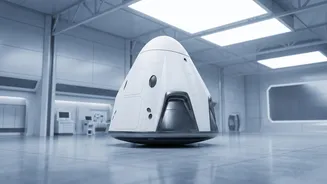
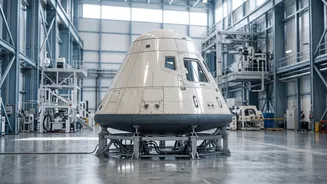
So, what exactly happens during an Integrated Air Drop Test? In essence, it's a high-stakes dress rehearsal for landing. An Indian Air Force Chinook helicopter lifts a simulated crew module, weighing several tonnes, to an altitude of a few kilometres and drops it over the sea. From there, a complex sequence of ten parachutes deploys automatically to drastically slow the module's descent, ensuring it splashes down at a safe speed. The system includes smaller drogue parachutes to stabilize the capsule, followed by massive main parachutes to handle the final braking before touchdown. These tests are designed to prove the robustness of the entire deceleration system, which is paramount for the safe recovery of the 'Gaganyatris' upon their return from orbit.
More Than Just Parachutes
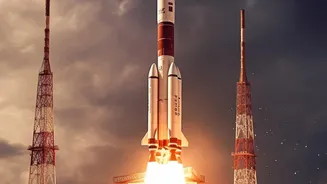
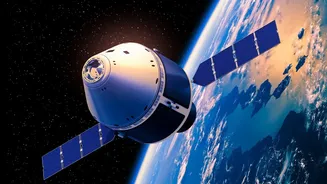
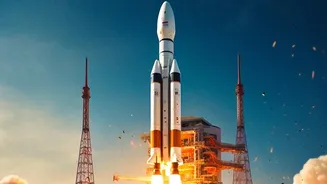
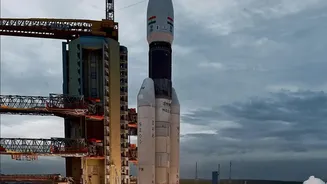
While parachute tests are visually dramatic, they are part of a much larger web of safety protocols. ISRO has also recently qualified the Crew Module Up-righting System (CMUS), which uses inflatable bags to ensure the capsule stays upright after it lands in the sea, and the system that manages the clean separation of the service module before re-entry. Another critical component is the Crew Escape System (CES), a set of powerful, quick-acting motors that can pull the crew module and its occupants safely away from the rocket in case of a launch emergency. Every single one of these technologies, from the life support systems inside the capsule to the human-rated LVM3 rocket that will carry it, must be tested and proven reliable before astronauts strap in for the historic flight.
The Road to a Crewed Launch
With these test approvals, ISRO is methodically ticking the boxes on its ambitious checklist. The next major step is the first uncrewed test flight, designated G1, which is expected in late 2026. This mission will send the humanoid robot Vyommitra into orbit to check life-support and safety systems under real spaceflight conditions. Following the G1 mission, at least one more uncrewed flight is planned to validate all systems end-to-end. Only after these precursors are successfully completed will India proceed with its first crewed mission, currently targeted for 2027. The four astronaut-designates, all decorated Indian Air Force test pilots, are continuing their mission-specific training in Bengaluru.
India's Place Among the Stars
The Gaganyaan programme is more than a technological demonstration; it's a statement of national ambition. Upon successful completion, India will join the elite club of nations—currently comprising the United States, Russia, and China—capable of independently sending humans into space. The mission aims to send a crew of three to an orbit of 400 kilometres for a short duration before bringing them safely back to Earth. Beyond this initial flight, the programme is expected to pave the way for a sustained human presence in space, with long-term goals including the establishment of an Indian space station, the 'Bharatiya Antariksh Station', by 2035.