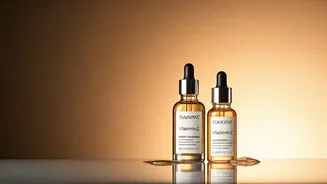









The Powerhouse Pair: Vitamin C and Niacinamide
The two ingredients at the center of this debate are Vitamin C and niacinamide. They are both superstars in the skincare world for good reason, offering a wide range of benefits that can lead to a healthier, more radiant complexion. The confusion stems
from outdated research from the 1960s, which suggested that when mixed under high heat, the two could create a new compound that causes skin redness. However, modern skincare formulations are far more stable and sophisticated. Today's products are created in a way that allows these two ingredients to coexist peacefully and effectively on your skin, without the extreme conditions of a decades-old lab experiment. In fact, many dermatologists and cosmetic scientists now agree that using them together is not only safe but can be highly beneficial.
Spotlight On: Vitamin C
Vitamin C is a potent antioxidant that plays a crucial role in skin health. Its primary claim to fame is its ability to protect the skin from environmental stressors like UV rays and pollution. It does this by neutralizing harmful free radicals that can accelerate aging. But its benefits don't stop there. Vitamin C is essential for promoting collagen production, the protein that keeps skin firm and helps reduce the appearance of fine lines and wrinkles. It's also celebrated for its brightening effects; it can help fade dark spots and hyperpigmentation, leading to a more even and luminous skin tone. With consistent use, it can also improve hydration and overall skin texture.
Spotlight On: Niacinamide
Niacinamide, a form of Vitamin B3, is a true multitasker. It's known for its ability to strengthen the skin's natural barrier, which helps lock in moisture and protect against external irritants. This makes it an excellent ingredient for calming redness and inflammation, especially for those with sensitive or acne-prone skin. Niacinamide also helps regulate oil production, which can lead to fewer breakouts and less congestion. One of its most popular benefits is its power to visibly reduce the appearance of enlarged pores. By improving skin elasticity and texture, it helps pores look smaller and more refined. It also contributes to a brighter complexion by helping to treat dark spots and fine lines.
How to Layer Them Like a Pro
So, how do you incorporate both into your routine? The golden rule of skincare layering is to apply products from the thinnest consistency to the thickest. Most experts recommend applying your Vitamin C serum first, right after cleansing in the morning. This allows the potent antioxidant to get to work protecting your skin from daytime aggressors. Give it a minute or so to fully absorb into the skin. Following that, you can apply your niacinamide product, which could be a serum or part of your moisturizer. Niacinamide can be used both morning and night. If you have particularly sensitive skin, you might consider using Vitamin C in the morning and niacinamide in the evening to give each ingredient its own space to work. And no matter how you layer, the final and most critical step of any morning routine is a broad-spectrum sunscreen with at least SPF 30 to protect your skin and the efficacy of the ingredients you've applied.
Listen To Your Skin
While using Vitamin C and niacinamide together is safe for most people, everyone's skin is unique. If you are new to active ingredients, it's always wise to introduce them one at a time. This helps your skin acclimate and allows you to identify if a particular product is causing irritation. A patch test is always a good idea before applying a new product to your entire face. Signs that your layering is working well can include a brighter, more even skin tone, smoother texture, and reduced appearance of pores after several weeks of consistent use. If you experience persistent redness or irritation, it may be a sign that the combination (or a specific product's formulation) isn't right for you, or that you're using too many actives at once.