
The Challenge of Thin Air
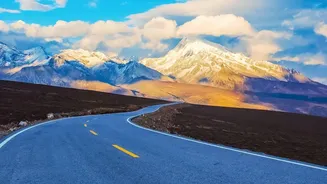
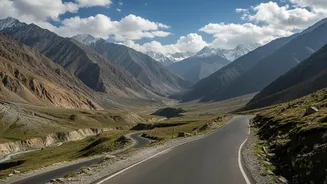
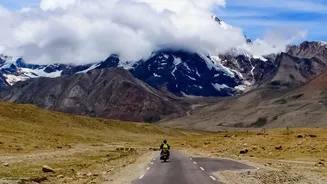
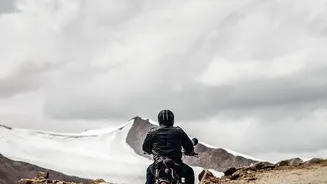
The single greatest risk on the Manali-Leh highway isn't road quality; it's the altitude. The route crosses several passes above 16,000 feet, including the formidable Tanglang La at approximately 17,480 feet. At these elevations, the oxygen level is significantly
lower than what most people are used to, leading to a condition called Acute Mountain Sickness (AMS). Symptoms can range from a persistent headache, nausea, and dizziness to more severe, life-threatening conditions like High-Altitude Cerebral Edema (HACE) and High-Altitude Pulmonary Edema (HAPE). A study of tourists arriving in Leh found that those who traveled by road from Manali had the highest prevalence of mild AMS, at 57%. This highlights that driving this route is one of the most demanding ways to reach Ladakh in terms of altitude stress.
The Golden Rule: Acclimatise Properly
To combat AMS, acclimatisation is not optional. Your body needs time to adjust to the decreasing oxygen levels. Rushing the journey in two days, especially with an overnight stay at Sarchu (around 14,070 feet), is a common but risky practice that frequently leads to altitude sickness. A much safer and more widely recommended approach is to break the journey over three days. The most crucial stop is on the first night. Instead of pushing on to Sarchu, plan an overnight stay at a lower altitude location like Jispa or Keylong, both situated around 10,500 feet. This allows your body a gentler introduction to the altitude before you tackle the higher passes on the second and third days of your drive. Remember the climber's mantra: climb high, sleep low. By staying in Jispa, you give your body a vital night to adjust before ascending further.
The Great Fuel Desert
The second major logistical challenge is fuel. After leaving Manali, the last reliable petrol pump is in the Lahaul Valley. While historically Tandi was the famous last stop, a pump is now also operational in Keylong, about 10km further. After Keylong, there are no official fuel stations for a massive stretch of approximately 320-345 kilometers until you reach Karu, which is about 30-35 km before Leh. This section of the highway is often referred to as a 'fuel dead zone'. Running out of petrol here, on a remote mountain pass with no mobile network, can turn an adventure into a genuine emergency. While you might find fuel being sold informally from barrels at dhabas in places like Sarchu or Pang, the quality is questionable and the prices are heavily inflated. This should only be considered an absolute last resort.
A Bulletproof Fuelling Strategy
A sound fuel plan is simple. First, get a full tank in Manali. Second, top up again in Tandi or Keylong, even if your tank is still half full. This is a non-negotiable step. Third, you must carry extra fuel. For motorcycles, a minimum of 4-6 litres in a secure jerry can is recommended. For cars, while many have a large enough tank to cover the distance, carrying a 10-litre jerry can provides a crucial safety buffer. It's important to remember that vehicle mileage can drop by as much as 25-35% at high altitudes due to the thinner air, which can throw off your range calculations. Always plan for the worst-case scenario; the extra weight of the fuel is a small price to pay for peace of mind.
Planning Your Itinerary
A well-structured itinerary integrates both acclimatisation and fuel strategy. The recommended three-day plan looks something like this: Day 1: Manali to Jispa/Keylong. This covers the first leg and positions you at a safe altitude for the night, just after the last fuel stops. Day 2: Jispa/Keylong to Sarchu or Pang. This is a day of crossing high passes like Baralacha La, with your vehicle fully fuelled and your body better acclimatised. Day 3: Sarchu/Pang to Leh. You'll cross the Gata Loops and the highest pass, Tanglang La, before descending towards Upshi and Karu, where you can finally refuel before rolling into Leh. This measured pace not only keeps you safe from AMS but also ensures you have enough fuel and enough energy to truly appreciate one of the world's most spectacular road trips.