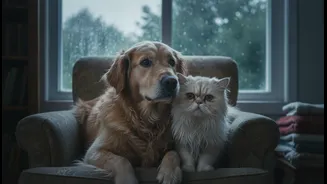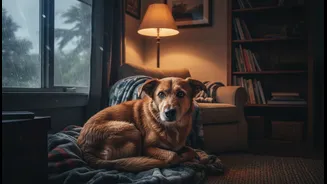





Understanding Monsoon Anxiety in Pets
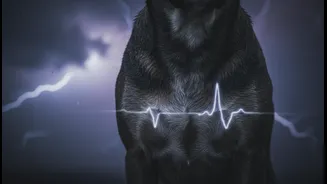
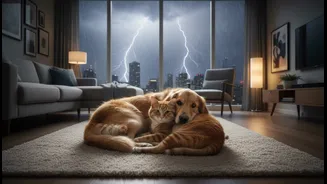
For dogs and cats, the monsoon isn't just about getting wet; it's a sensory overload. Their hearing is far more sensitive than ours, making the boom of thunder feel much more intense. It's not only the noise. Pets can also be sensitive to changes in barometric
pressure and static electricity in the air, meaning they can often feel a storm approaching long before we can. This combination of loud noises, flashing lightning, and atmospheric changes can trigger what is known as noise phobia or aversion, a condition that can range from mild nervousness to severe panic.
Recognising the Signs of Distress
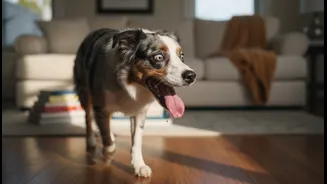
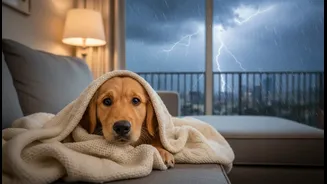
Anxious pets communicate their fear through a variety of behaviours, some obvious and others quite subtle. Keeping an eye out for these signs is the first step in acknowledging the problem. Common signs include trembling or shaking, excessive panting, and hiding in unusual places like under furniture or in closets. You might also notice your pet becoming more vocal with whining or barking, showing restlessness by pacing, or becoming unusually clingy. In more severe cases, pets can become destructive, chewing on furniture or scratching at doors, or even have accidents in the house. Recognising these behaviours as signs of fear, not bad behaviour, is crucial.
How to Create and Use an Anxiety Log
A behaviour journal is your most powerful tool for understanding your pet's anxiety. It doesn't need to be complicated; a simple notebook or a note-taking app on your phone will work perfectly. The goal is consistency. For every instance of anxiety, try to log the details. This practice helps you move from feeling helpless to proactively gathering information that can lead to a solution. The aim is to build a clear picture over several weeks, identifying what specifically triggers your pet and how their anxiety manifests each time.
Key Details to Document
To make your log effective, focus on recording specific data points for each event. Note the date and time the anxiety started. Describe the weather: Was it light rain, a sudden clap of thunder, or sustained heavy wind? List the specific behaviours your pet exhibited—for example, 'started panting and pacing at 4 PM after the first thunderclap.' Record the duration of the episode and, importantly, what seemed to help calm them down. Did creating a 'safe space' in a quiet room work? Did turning on music or a fan to create white noise help? Also note what didn't work. This detailed information will reveal patterns over time.
Analysing Patterns and Finding Triggers
After a few weeks of consistent logging, you can start to analyse the data. You might notice that your pet's anxiety doesn't start with the rain itself, but with the first distant rumble of thunder. Or perhaps it's the flashing lightning that is the primary trigger, not the sound. This journal can help you pinpoint the exact triggers. Understanding these nuances is essential. Does the anxiety get worse when they are left alone during a storm? Is it more intense at night? Identifying these patterns allows you to anticipate your pet's needs and be proactive rather than reactive.
From Documentation to Action
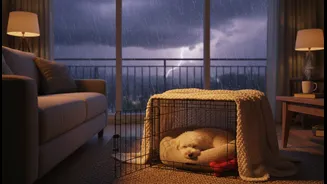
Your detailed log is not just an academic exercise; it's a practical tool for getting your pet the right help. With this documented evidence, you can have a much more productive conversation with your veterinarian or a certified animal behaviourist. Instead of just saying, 'My dog is scared of storms,' you can provide specific examples, triggers, and durations. This information allows a professional to recommend targeted strategies, which might include creating a secure den, behaviour modification techniques like desensitisation, or calming aids such as pheromone diffusers or anxiety wraps. In some severe cases, medication may be necessary to keep your pet safe and reduce panic, a decision best made with a vet's guidance.