







What Exactly is Changing?
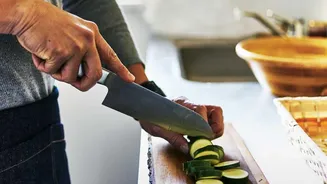
The Food Safety and Standards Authority of India (FSSAI) has issued a directive that specifically targets the condition and quality of knives, blades, and other cutting equipment used by food business operators (FBOs). This isn't about the sharpness for
a perfect cut, but about public health. The rule mandates that all such tools must be 'food-grade', non-toxic, and corrosion-resistant. This means businesses must immediately remove and replace any cutting instruments that are rusted, chipped, cracked, painted, or damaged in any way that could lead to food contamination. The advisory reinforces standards that were already part of the Food Safety and Standards Regulations of 2011 but tightens enforcement due to observed compliance gaps.
The Hidden Risks on the Cutting Board
Why this sudden focus on knives? The FSSAI has warned that using degraded equipment poses a serious risk of physical, chemical, and microbiological contamination. Physical contamination can occur when tiny fragments of metal from a chipped blade or flakes from a painted handle break off and end up in the food. Chemically, rusted or non-food-grade metals can leach harmful substances into ingredients, especially acidic ones. Microbiologically, cracks, crevices, and corroded surfaces on a knife can harbour bacteria, making them impossible to clean and sanitise effectively. This creates a perfect breeding ground for pathogens that can cause foodborne illnesses, turning a simple tool into a significant health hazard.
Who Needs to Comply?
This directive applies to all FBOs across the country. This includes a vast range of businesses, from large-scale food processing plants and packaged food manufacturers to restaurants, hotel kitchens, caterers, and even street food vendors. Essentially, if a business is involved in the handling, preparation, processing, cutting, or slicing of food, it must adhere to these standards. The FSSAI has instructed state Food Safety Commissioners and its own regional directors to maintain strict vigilance during inspections to ensure compliance. Businesses found using unsuitable equipment will face action under the Food Safety and Standards Act, 2006, which can include significant fines.
Part of a Bigger Picture for Hygiene
This focus on knives is a component of FSSAI's broader mission to regulate all 'Food Contact Materials' (FCMs). An FCM is any material that can be reasonably expected to come into contact with food, including utensils, cutting boards, machinery, and packaging. The underlying principle is that these materials must be sufficiently inert to prevent any harmful transfer of substances to the food. The recent directive on knives aligns with other regulatory efforts, such as establishing standards for cookware and banning harmful chemicals like PFAS and BPA in packaging materials. The goal is to create a holistic food safety ecosystem where every stage, from production to packaging, meets stringent hygiene benchmarks, aligning Indian standards with global best practices.
What This Means for You, the Consumer
For the average person, this is unequivocally good news. Stricter enforcement on the tools used in commercial kitchens translates directly to safer food on your plate. It reduces the invisible risks of contamination that can lead to food poisoning and other health issues. This move by the FSSAI aims to build greater consumer confidence in both packaged foods and meals served at restaurants. It empowers food safety officers to hold establishments accountable for not just the cleanliness of their floors, but the integrity of their most basic equipment. When you eat out, you can have greater assurance that the establishment is paying attention to the small details that are critical for your health and safety.