





The Blueprint for Belief: Superman (1978)
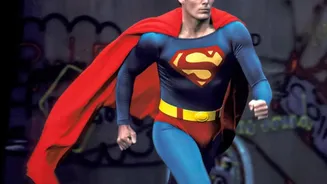
Before 1978, superhero movies were often seen as B-grade entertainment for children. Richard Donner’s “Superman” changed that forever. With a then-massive budget, an A-list cast including Marlon Brando, and the confident tagline, “You’ll believe a man can
fly,” it treated the source material with unprecedented respect. The film’s sincerity, groundbreaking special effects, and John Williams’ soaring score proved that a comic book adaptation could be a prestigious, epic cinematic event. It established a blueprint for the modern blockbuster, demonstrating that audiences were ready to embrace these mythic characters on a grand scale. Every serious superhero film that followed owes a debt to the conviction and ambition of this first true masterpiece of the genre.
The Genre Deconstructed: Watchmen (1986)
While Superman made superheroes soar, Alan Moore and Dave Gibbons’ 12-issue comic series “Watchmen” brought them crashing down to earth. Published in 1986, this graphic novel deconstructed the very idea of the superhero, presenting them as deeply flawed, psychologically complex, and morally ambiguous figures in an alternate, anxiety-ridden Cold War America. “Watchmen” introduced a literary depth and political commentary previously unseen in mainstream comics, tackling themes of power, fascism, and humanity. It legitimized the graphic novel as a serious art form, becoming the only one to appear on Time magazine's list of the 100 best novels. Its influence, often called the “Dark Age” of comics, led to a wave of gritty, realistic stories, forever changing the tone of what a superhero story could be.
The Blockbuster as High Art: The Dark Knight (2008)
Christopher Nolan’s “The Dark Knight” was not just a sequel; it was a cultural phenomenon that elevated the superhero movie into the realm of serious crime drama. The film was praised for its mature themes, exploring post-9/11 anxieties, morality, and chaos. However, it was Heath Ledger's iconic, terrifying performance as the Joker that cemented its legacy. His posthumous Academy Award for Best Supporting Actor was a landmark moment, the first time a major Oscar was awarded for a comic book film. The film's critical and commercial success—grossing over $1 billion—forced both audiences and the Academy to take the genre seriously, altering the perception of what a blockbuster could achieve.
The Universe Assembled: The Avengers (2012)
While individual superhero films had succeeded before, Marvel Studios' “The Avengers” accomplished something entirely new: it perfected the shared cinematic universe. After meticulously building up characters in solo films like “Iron Man” and “Thor,” the 2012 team-up was the ultimate payoff. It was a high-wire act that could have easily failed, but director Joss Whedon's witty script and masterful handling of the ensemble cast turned it into a triumphant, joyous spectacle. The film shattered box office records, becoming the first Marvel production to earn over $1 billion and proving that audiences would follow interconnected stories across multiple franchises. This success didn't just create a dynasty for Marvel; it sent every other studio scrambling to replicate its universe-building model, fundamentally changing the business of Hollywood.
The Multiverse Unleashed: Spider-Man: Into the Spider-Verse (2018)
Just when the superhero formula seemed set, “Spider-Man: Into the Spider-Verse” swung in and redefined the possibilities of both animation and storytelling. The film’s groundbreaking visual style blended classic comic book aesthetics—like Ben-Day dots and speech bubbles—with fluid, cutting-edge CGI. It created a look that was wholly unique and felt like a living comic book. But its true genius was its heartfelt story centered on Miles Morales, which confidently introduced mainstream audiences to the concept of the multiverse. By celebrating multiple versions of its iconic hero, it argued that anyone can wear the mask. Its subsequent Oscar win for Best Animated Feature was a validation of its artistic audacity, inspiring a new wave of stylistic creativity in animation and proving that superhero stories could still offer something completely new.