


In a universe of cosmic wonders, supermassive black holes feel like the ultimate giants. But what if something even bigger is lurking in the dark? Scientists have a name for them: Stupendously Large Black Holes, and the hunt for them is on.
Beyond Supermassive: A New Class of Giant
Astronomers
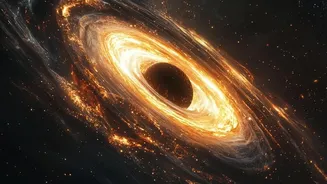
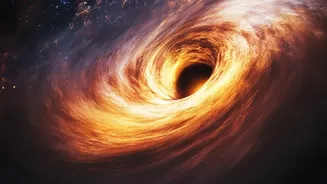
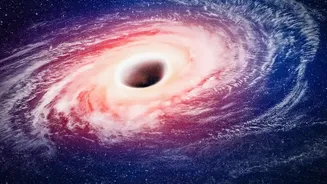
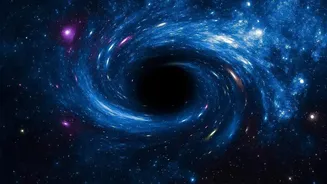
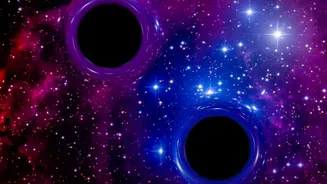
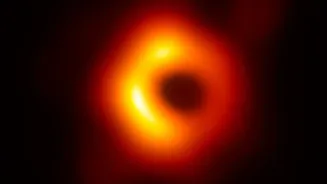
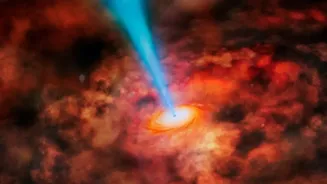
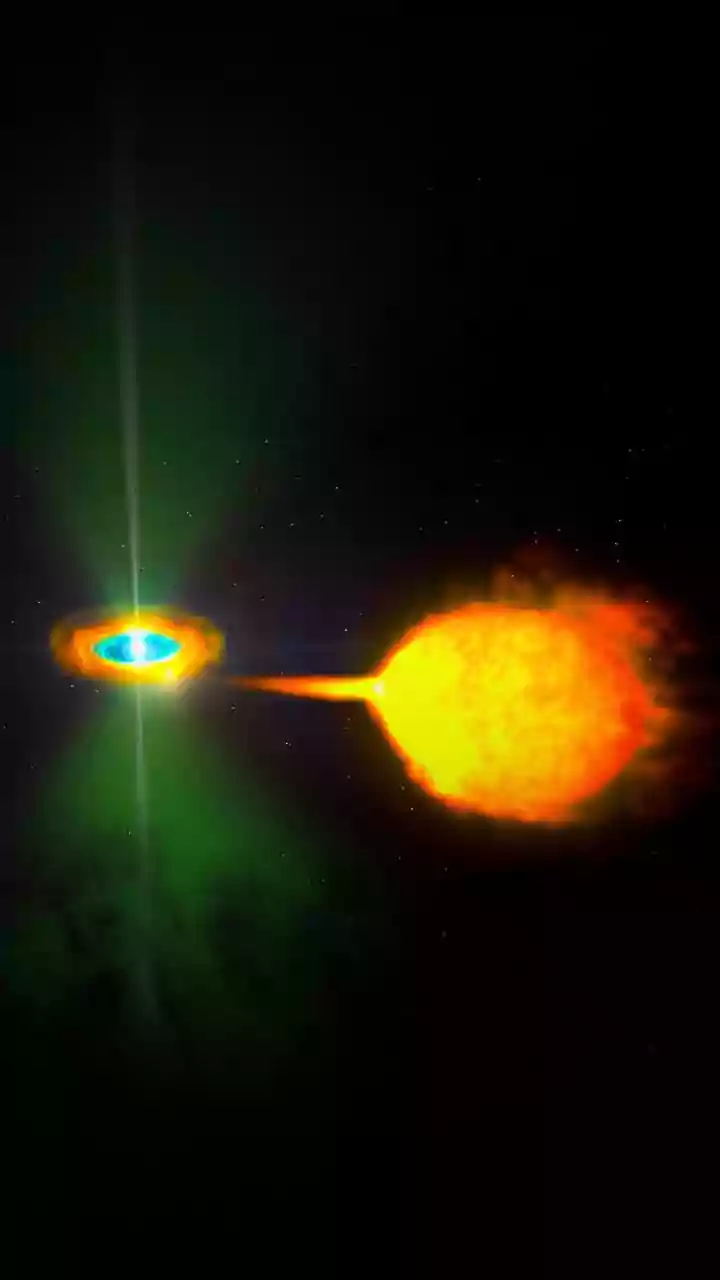
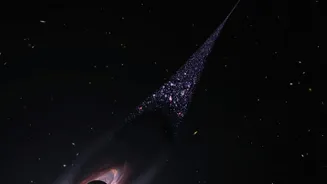
have long been comfortable with the idea of 'supermassive' black holes (SMBHs). These cosmic titans, with masses millions or even billions of times that of our sun, sit at the heart of most large galaxies, including our own Milky Way. The largest confirmed black hole, TON 618, weighs in at a staggering 66 billion solar masses. But some theories predict the existence of an even larger, almost incomprehensible class of object: a Stupendously Large Black Hole, or SLAB. These are hypothetical giants with masses starting at 100 billion suns and potentially reaching into the trillions, making them more massive than their entire host galaxies. Unlike SMBHs that form and grow with galaxies, SLABs are thought to be primordial, possibly formed from immense density fluctuations in the fiery moments after the Big Bang.
The Cosmic Puzzle They Could Solve
Why even imagine such monsters? The existence of SLABs could offer a neat, if partial, solution to one of cosmology's greatest mysteries: dark matter. For decades, scientists have known that some unseen substance provides the extra gravitational pull needed to hold galaxies together. While most theories suggest dark matter is a new type of particle spread thinly across the universe, another possibility is that it's composed of massive, compact objects like black holes. Primordial black holes of various sizes are considered candidates. SLABs, existing in the vast voids between galaxies, could account for some of this missing mass without disturbing the visible structures we see. Their immense gravity would bend light from distant objects, and finding them would not only confirm a wild theory but also reshape our understanding of the universe's composition.
The Search and the Silence
If SLABs are out there, they should leave a signature. One of the most promising ways to hunt for them is to look for their 'shadow' against the oldest light in the universe, the Cosmic Microwave Background (CMB). The CMB is a faint afterglow of the Big Bang, bathing the entire sky. A stupendously massive object floating in intergalactic space would block this light, creating a noticeable cold spot. Recent studies have used this exact method, analyzing CMB data for the tell-tale 'grainy' texture or large shadows that a population of SLABs would create. Researchers meticulously scan the sky, looking for gravitational lensing effects or temperature dips that can't be explained by other cosmic phenomena. Despite the elegant theory, these searches have consistently come up empty.
An Absence of Evidence Is Not Evidence of Absence
So far, the data shows no definitive signs of SLABs. The Cosmic Microwave Background appears smoother than it would if it were filled with these gargantuan objects. This lack of evidence has allowed scientists to place increasingly tight constraints on their existence. The latest findings don't completely rule out SLABs, but they do significantly narrow the possibilities. Researchers have concluded that these giants cannot be a major component of dark matter. Essentially, the universe just isn't 'lumpy' enough on the largest scales to support the idea of many SLABs existing. However, this doesn't mean they are impossible. It may be that they are incredibly rare, or exist in a mass range that current detection methods are not yet sensitive enough to find. The search has ruled out certain scenarios but has not closed the book on the concept entirely.