
For decades, we've been told that 95% of the universe is made of mysterious dark matter and dark energy. Now, University of Ottawa researchers are challenging this entire picture with a model that could rewrite cosmology as we know it.
The Universe's 'Dark' Problem
The standard model
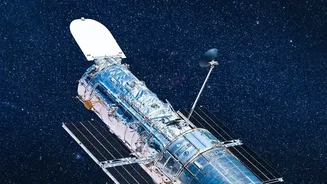
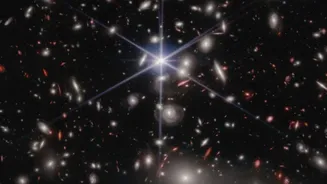
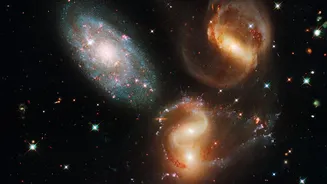
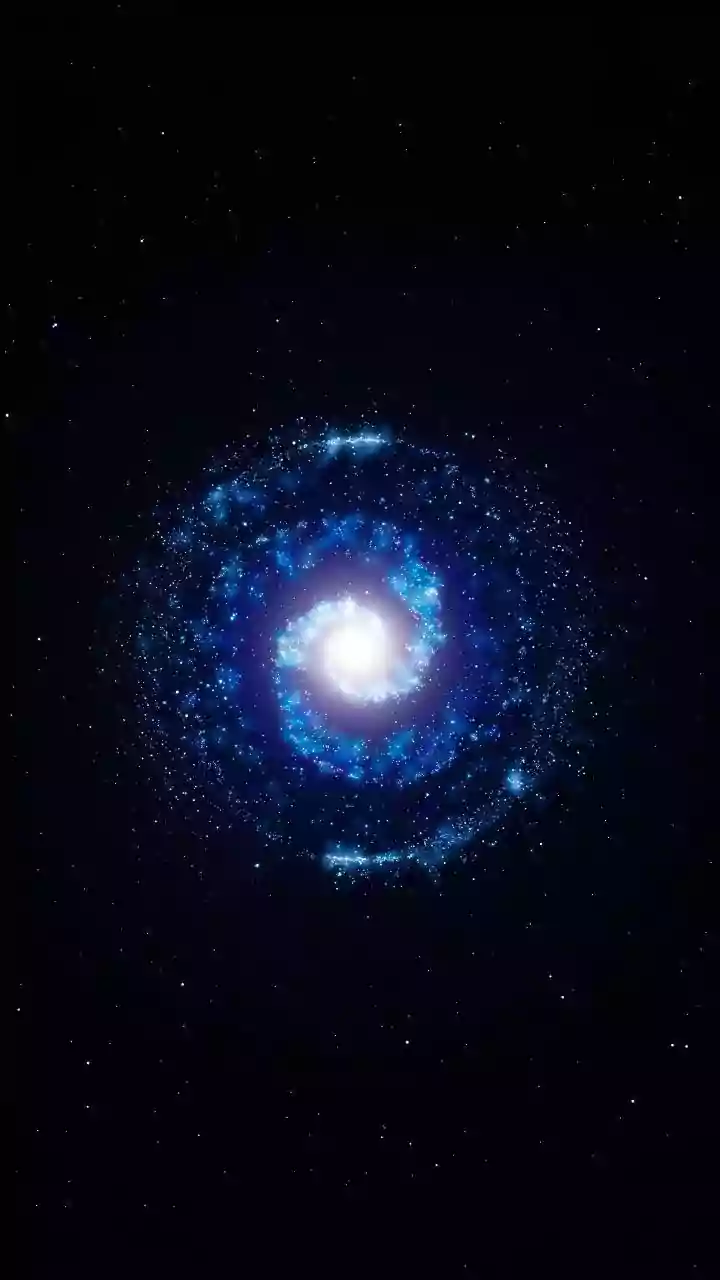
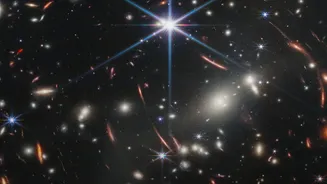
of cosmology, known as Lambda-CDM (ΛCDM), has been remarkably successful. It explains countless observations, from the afterglow of the Big Bang (the cosmic microwave background) to the vast web-like structure of galaxies. But it has a huge catch: to make the math work, it requires two completely mysterious ingredients. 'Dark matter' is the invisible gravitational glue thought to keep galaxies from flying apart, while 'dark energy' is the enigmatic force believed to be pushing the universe to expand at an accelerating rate. Together, they are said to make up about 95% of the cosmos, yet neither has ever been detected directly despite decades of searching. This has created a persistent puzzle, especially as new instruments like the James Webb Space Telescope (JWST) spot ancient galaxies that appear too massive and mature to have formed so quickly in a 13.8-billion-year-old universe.
An Alternative from Ottawa
Enter Rajendra Gupta, a physics professor at the University of Ottawa. He and his colleagues are proposing a radical alternative that does away with both dark matter and dark energy. Their model, called CCC+TL, combines two ideas. The first is 'Covarying Coupling Constants' (CCC), which proposes that the fundamental constants of nature—the forces that govern how particles interact—might not be constant after all, but instead evolve over time. The second is a new take on an old idea called 'Tired Light' (TL), which suggests that light particles (photons) lose energy as they travel across cosmic distances. By combining these concepts, Gupta argues that the effects we attribute to dark matter and dark energy are actually just consequences of these changing physical laws.
A Universe Twice as Old
One of the most startling implications of the CCC+TL model is that it doubles the age of the universe. Instead of the widely accepted 13.8 billion years, Gupta's calculations point to an age of 26.7 billion years. This solves the 'impossible early galaxy problem' observed by the JWST. In the standard model, the universe was only a few hundred million years old when these first galaxies appeared, not enough time for them to grow so large and structured. In Gupta’s model, however, the universe at that same observational point would already be about 4.6 billion years old, providing plenty of time for galaxy formation. As Gupta puts it, 'Impossible early galaxies become predictable galaxies'.
Testing the Theory
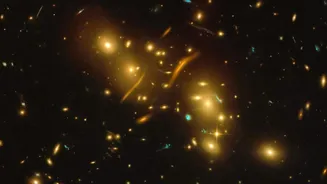
A new idea is one thing, but it must stand up to scrutiny. Gupta and his team have been testing their CCC+TL model against key cosmological observations. They report that their framework successfully predicts the rotation speeds of 175 different galaxies without needing to add dark matter. They have also shown it aligns with measurements of the light elements created just after the Big Bang and can explain the accelerating expansion of the cosmos without dark energy, attributing it instead to the weakening of natural forces over eons. The team has even looked at the Bullet Cluster, a famous collision of galaxy clusters often cited as direct proof of dark matter, and argues their model can explain its structure without any invisible matter.
The Scientific Verdict
While the CCC+TL model has passed several early tests, it remains a highly unconventional and provocative proposal. The standard Lambda-CDM model continues to be the dominant framework in cosmology because it successfully explains a vast range of astronomical data. Gupta's theory challenges fundamental assumptions, and any new model must explain not just a few anomalies but everything the old model does, and more. Critics point out that ideas like 'tired light' have been largely dismissed in the past for conflicting with observations, and that extraordinary claims require extraordinary evidence. The scientific community will need to see much more research, independent verification, and predictive power before considering such a dramatic shift in understanding.