



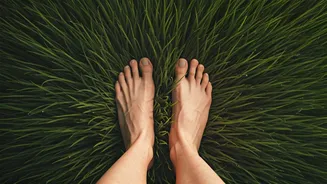



The Rise of Grounding
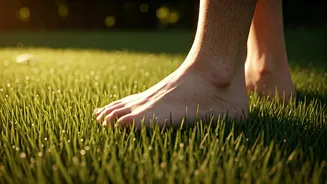
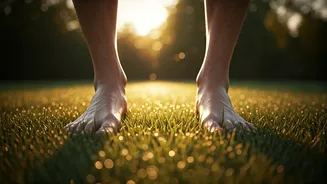
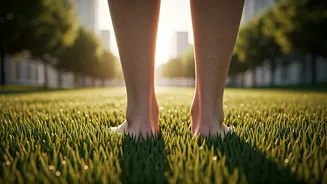
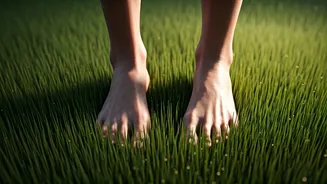
In a world saturated with high-tech fitness trackers, expensive supplements, and complex biohacking routines, the appeal of something so primal and free is undeniable. The practice of walking barefoot on natural surfaces—be it grass, dirt, or sand—is
being rediscovered by a modern audience and repackaged as 'grounding' or 'earthing.' The core idea is that direct physical contact with the vast electrical charge of the Earth can have a stabilizing effect on our own bodies. While it sounds a bit mystical, it’s part of a broader cultural shift towards simpler, more intuitive forms of self-care. It’s a quiet rebellion against the notion that wellness has to be complicated or costly. All this trend asks for is a few minutes, a patch of green, and a willingness to kick off your shoes.
What's the Science?
Proponents of grounding believe the Earth's surface is rich with free electrons that can be absorbed by the body upon contact, acting as powerful antioxidants that neutralize damaging free radicals. A handful of small-scale studies have explored these claims, with some suggesting potential benefits like reduced inflammation, better sleep, and lower stress. For example, a review published in the Journal of Environmental and Public Health noted that grounding could be a 'simple, natural, and accessible' health strategy. However, it's crucial to note that much of this research is considered preliminary by the wider scientific community, which calls for larger, more rigorous studies to confirm these effects. While the jury is still out on the electrical benefits, the psychological impact is harder to dispute. The simple act of feeling the cool, damp earth under your feet is a powerful sensory experience that can pull you into the present moment, serving as a form of walking meditation.
More Than Just Electrons
Even if you set aside the 'earthing' theory, walking barefoot offers other, more tangible benefits. Your feet contain a dense network of nerves and pressure points, and walking on varied, natural terrain can stimulate them in ways that rigid shoes can't. This practice, known as proprioception, helps improve your sense of balance and body awareness. It also allows the small muscles in your feet, ankles, and calves to move and flex more naturally, potentially strengthening them over time. Podiatrists often note that spending too much time in overly supportive shoes can act like a cast, weakening the foot's intrinsic muscles. A short, barefoot walk is like a mini-workout for your foundation. Furthermore, the act of connecting with nature, even for just five minutes in your backyard, has been widely shown to boost mood and reduce levels of the stress hormone cortisol. This 'biophilia' effect—our innate tendency to seek connections with nature—is perhaps the most reliable benefit of all.
Before You Kick Off Your Shoes
While the idea is appealingly simple, a dose of common sense is required. The modern world is not the pristine wilderness of our ancestors. Before you start, visually inspect the area for sharp objects like glass, thorns, or rocks. Be mindful of pesticides, fertilizers, and animal waste. It's best to practice grounding in a safe, familiar space like your own backyard, assuming you know it's untreated with harsh chemicals. Start with just five or ten minutes a day to allow your feet to adapt. Afterward, be sure to wash and check your feet for any cuts or scrapes. People with diabetes or any condition that causes poor circulation or reduced sensation in the feet (neuropathy) should exercise extreme caution or consult their doctor before trying it, as even small injuries can lead to serious complications.