



The Universe’s Coldest Spot
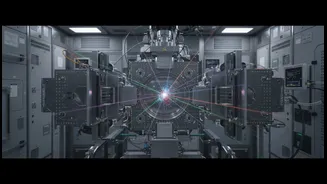
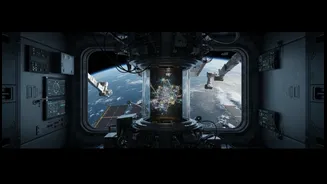
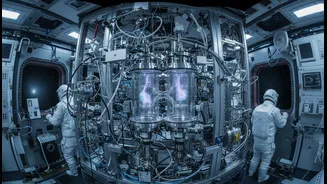
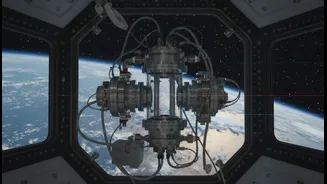
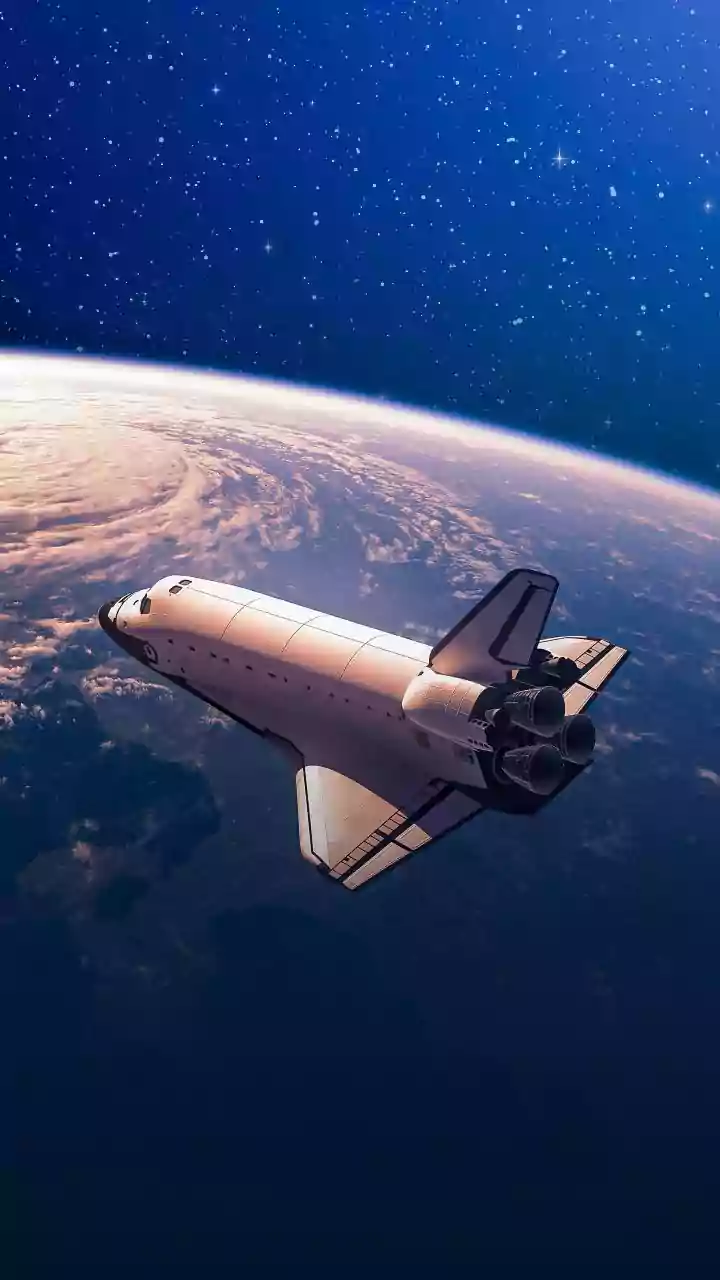
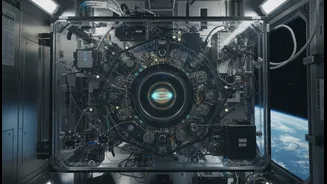
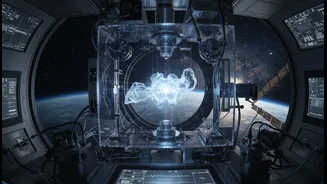
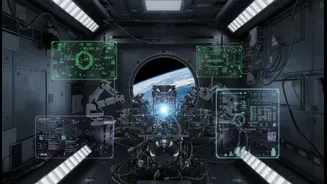
Aboard the International Space Station (ISS) floats a facility about the size of a mini-fridge that is officially the coldest known place in the universe. It’s called the Cold Atom Lab (CAL), and its purpose is to study the weird and wonderful world of quantum
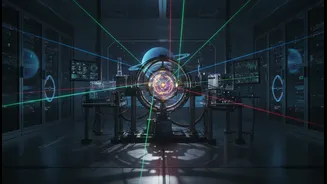
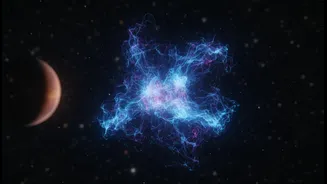
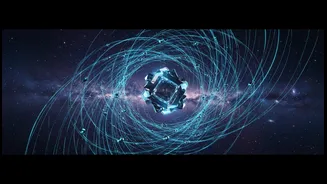
physics. By using lasers and magnetic fields, CAL chills atoms of elements like rubidium to temperatures just a fraction of a degree above absolute zero—the theoretical point where all atomic motion stops. This process is so effective that the atoms become about 10 billion times colder than deep space. In this extreme state, clouds of atoms transform into a bizarre fifth state of matter known as a Bose-Einstein Condensate (BEC), where thousands of individual atoms start behaving like a single, unified quantum wave. This unique environment allows scientists to observe quantum phenomena on a scale and for a duration impossible to achieve on Earth, where gravity quickly pulls the delicate condensates apart.
A Quantum Upgrade
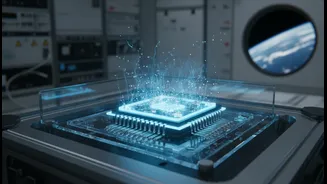
The Cold Atom Lab has been operational since 2018, but it recently received its fourth major upgrade, which was switched on in June 2026. Astronauts installed a new science module containing several key improvements. These include a redesigned magnetic trap that offers greater flexibility in shaping the quantum gas clouds and improved metal strips that act as the source for the atoms. According to Kamal Oudrhiri, the lab's project manager at NASA's Jet Propulsion Laboratory, this enhancement pushes the boundaries of controlling the quantum world even further. The upgrade allows for the creation of larger condensates and enables a new technique called atom interferometry, which is central to its potential for navigation. This demonstrates NASA's ability to mature space-based quantum instruments for future missions.
Making Waves with Atoms
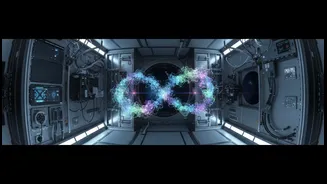
The key to this new navigation potential lies in atom interferometry. Think of it like a highly advanced motion sensor. The process uses lasers to split an atom cloud (the Bose-Einstein Condensate) in two, send the two clouds along different paths, and then recombine them. Because atoms act like waves in the quantum world, they create an interference pattern when they merge, similar to the ripples created by two pebbles thrown into a pond. Any external force, such as acceleration or rotation, will minutely alter the paths of the atom waves. This change is precisely recorded in the final interference pattern. By analyzing this pattern, scientists can measure acceleration and rotation with astonishing precision. It’s this ability to measure movement from within that forms the basis of a new type of inertial navigation system.
Beyond GPS
For decades, we have relied on the Global Positioning System (GPS), which uses signals from a network of satellites orbiting Earth. While incredibly useful, GPS has its limitations. The signals are weak, easily blocked by buildings, tunnels, or water, and can be jammed or spoofed. This makes it unreliable for many critical applications, from submarine navigation to deep-space exploration. Navigation systems based on atom interferometry would be a game-changer because they are entirely self-contained. They don't need to communicate with any external source. Instead, they calculate position by precisely tracking their own movement—acceleration and rotation—over time. This offers a path to creating navigation systems that are unjammable and can function anywhere, from the deepest oceans to the vastness of space between planets.
From Deep Space to Down on Earth
The immediate applications for this technology are in space. Future spacecraft could use these quantum sensors as a kind of internal compass, navigating autonomously to the Moon or Mars without constantly 'phoning home' to Earth for location data. The same technology can be used for fundamental science, like testing Einstein's theory of general relativity or searching for dark matter. But the implications don't stop there. As the technology matures and becomes more compact, it could revolutionize navigation on Earth. Imagine unjammable navigation for military ships and aircraft, precise positioning for autonomous vehicles in urban canyons where GPS fails, or tools for mapping Earth's gravitational fields with unprecedented detail to monitor climate change. While a quantum compass in your smartphone is still many years away, the experiments being conducted on the ISS are laying the essential groundwork for this future.