



Deconstructing the New Freight Tariffs
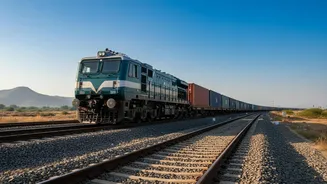
While there hasn't been a single, across-the-board rate hike announced in early August 2026, Indian Railways has been focused on optimising its revenue and operations. Recent performance data from July 2026 shows a significant 9% year-on-year growth in freight
loading, reaching 141.3 million tonnes. This surge is driven by strong demand for commodities like iron ore, coal, and fertilisers. Such increases in demand often prompt Railways to use dynamic pricing strategies, such as peak and off-peak tariffs or surcharges on specific commodities, to manage traffic flow. These adjustments, while technically price increases for certain users, are designed to influence shipping patterns. The goal is to nudge companies to transport non-essential goods during less congested periods, freeing up precious network space for critical cargo like coal for power plants, which saw a 20% increase in supply in July.
A Network Straining Under Pressure
India's economic ambitions are running up against the physical limits of its railway infrastructure. Many of the country's high-density routes are operating far beyond their ideal capacity, with some lines running at over 115% to 150% utilisation. This extreme congestion has a domino effect: it slows down average freight train speeds to just 25 kilometres per hour, creates bottlenecks, and leaves little time for essential track maintenance, leading to delays and reliability issues. For decades, freight has been subsidising passenger travel, leading to some of the highest freight tariffs in the region. This has pushed a significant share of cargo onto India's roads, which now handle around 65-70% of the nation's freight, despite rail being more cost-effective and environmentally friendly. The current system is a paradox: a network that is both congested and losing market share in key areas.
How a Price Hike Can Improve Efficiency
This is where strategic pricing comes in. By making it more expensive to ship certain goods at certain times, Railways can use tariffs as a demand-management tool. Think of it like surge pricing for ride-hailing apps; it incentivises users to travel during off-peak hours. For the freight sector, this means a company might delay a shipment of a less time-sensitive commodity to avoid higher peak-period charges. This frees up a slot for a time-critical shipment, such as food grains or coal destined for a power plant, improving the overall efficiency and reliability of the network. This mechanism helps ration the limited track capacity, ensuring that essential goods get priority without the need for complex administrative controls. It's a market-based solution to a physical constraint, using price signals to moderate demand and prevent the entire network from grinding to a halt.
The Ripple Effect on the Economy
Of course, these price adjustments are not without consequences. The costs are inevitably borne by core sectors like steel, cement, power, and agriculture, which rely heavily on rail transport. These industries may absorb the cost, impacting their profitability, or pass it on to consumers in the form of higher prices for electricity, construction materials, and everyday goods. This is the central trade-off: improved railway efficiency versus higher logistical costs for the economy. For this strategy to be considered a 'useful check' rather than just a burden, the efficiency gains—such as faster transit times and more reliable wagon availability—must be significant enough to offset the increased expense for businesses.
The Long Road to Modernisation
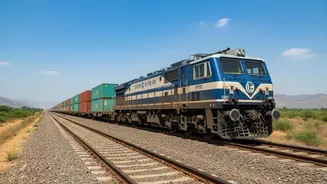
Ultimately, pricing is a short-term lever. The long-term solution to India's freight capacity crunch lies in massive infrastructure upgrades. The government is heavily invested in this through the development of Dedicated Freight Corridors (DFCs). The Western DFC and Eastern DFC are now largely operational, already boosting freight speeds and capacity. The July 2026 performance on the DFC network, which saw its highest-ever monthly freight movement, demonstrates their impact. Further, new corridors like the East-West DFC, announced in the 2026-27 Union Budget, are in the pipeline. These projects are designed to create separate, high-speed arteries exclusively for goods movement, decongesting the main network. Until this pan-India network is complete, strategic pricing will remain a crucial, if imperfect, tool to keep India's economic engine running on time.