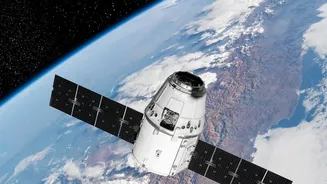






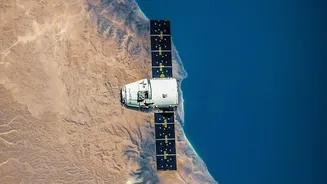
The science fiction dream of massive data centers in orbit is inching closer to reality, with SpaceX's ambitions drawing significant attention. The concept promises to solve Earth's growing energy and land constraints for AI, but it also faces colossal
engineering hurdles.
The Final Frontier for Data
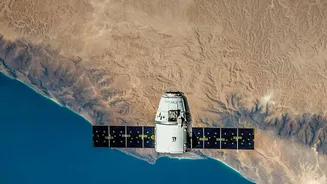
The explosive growth of artificial intelligence is creating an insatiable demand for energy and land. Terrestrial data centers, the backbone of the digital world, are running into physical limits, facing multi-year queues for grid connections and consuming vast amounts of water for cooling. This has pushed some of the biggest names in technology to look skyward. The concept of orbital data centers involves placing massive, server-filled satellites in space to perform the heavy computational work of training and running AI models. Instead of competing for resources on Earth, these facilities would be decoupled from terrestrial constraints, harnessing the unique advantages of the space environment. It’s a radical solution to a rapidly growing problem, shifting the bottlenecks of AI scaling from earthly limitations to the challenges of space engineering.
Why Space? The Orbital Advantage
Operating in orbit offers several fundamental benefits. The most significant is access to near-continuous solar power. Satellites in a sun-synchronous orbit can generate power almost 24/7, far more efficiently than terrestrial solar panels, which are limited by weather and the day-night cycle. This eliminates the need for massive battery backups and dependence on strained power grids. Secondly, space provides an elegant solution to cooling. In the vacuum of space, there is no air for traditional cooling systems. Instead, heat is rejected through large radiator panels that radiate thermal energy into the cold vacuum of deep space, which sits at a frigid three degrees above absolute zero. This method avoids the enormous water consumption of Earth-based data centers. Finally, space offers nearly unlimited room for expansion without facing the zoning laws and land costs that plague terrestrial construction.
Enter Starship: The Heavy-Lift Enabler
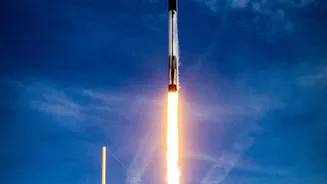
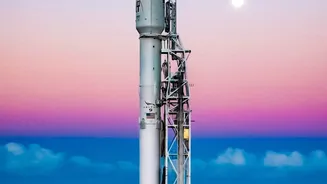
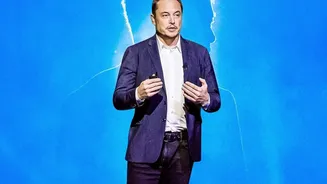
Until recently, the idea of launching data centers was economically unthinkable due to exorbitant launch costs. This is where SpaceX's Starship changes the equation. As a fully reusable heavy-lift rocket designed to carry over 100 metric tons to orbit per flight, Starship dramatically lowers the cost-per-kilogram to access space. This potential for cheap and frequent launches is the key enabling technology that makes orbital computing a serious consideration. Proponents, most notably Elon Musk, argue that the falling cost of launch will soon make it more economically viable to put compute infrastructure in orbit than to overcome the power and permitting constraints on Earth. SpaceX itself appears to be moving on this vision, with reports of FCC filings for a large-scale orbital data center constellation and the construction of a 'Gigasat Factory' to mass-produce AI satellites.
The Towering Engineering Hurdles
Despite the promise, the path to orbital AI is fraught with immense technical challenges. The first is thermal management. While radiating heat into deep space is efficient in theory, designing lightweight, deployable radiators large enough to cool racks of highperformance GPUs is a monumental task. In the vacuum of space, heat has nowhere to go but through radiation, a far less efficient process than the air and liquid cooling systems perfected on Earth. Another major obstacle is radiation. Outside Earth's protective atmosphere and magnetic field, electronics are bombarded by highenergy particles that can cause 'bitflips' (data corruption) or permanent damage. Shielding electronics or using 'radiationhardened' components is essential, but these specialized parts are incredibly expensive—often 10 to 100 times the cost of their commercial counterparts—and typically lag years behind the latest processor technology. Finally, there is the issue of repair and maintenance. If a GPU fails in orbit, you cannot simply send a technician to replace it, making reliability and redundancy paramount design concerns.