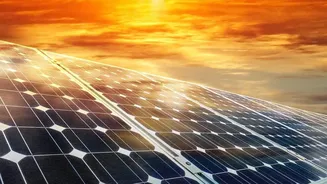







The Solar Panel's Heat Problem
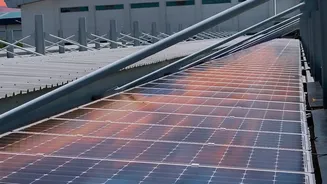
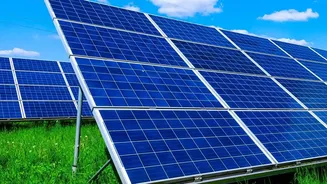
It seems counterintuitive, but too much sun can be a bad thing for solar panels. While they need sunlight to generate electricity, the intense heat that comes with it is a major drag on performance. For every degree Celsius above their optimal temperature
of 25°C (77°F), a typical solar panel's efficiency drops by as much as 0.5%. On a hot day, a panel's surface can reach temperatures of 65°C (149°F) or higher, potentially reducing its energy output by 10% to 25%. This happens because heat causes electrons within the photovoltaic cells to become overly agitated, which reduces the panel's overall voltage and, therefore, the amount of electricity it can produce. Over time, this chronic heat stress also accelerates the degradation of the panel's components, shortening its lifespan.
Nature's Ultimate Sunscreen: Melanin
Enter melanin, the natural pigment responsible for the colour of our skin, hair, and eyes. In nature, its primary job is to protect organisms from damaging ultraviolet (UV) radiation. It does this by being incredibly good at absorbing light across the entire spectrum and converting that energy into heat. This unique property, known as photothermal conversion, allows melanin to dissipate potentially harmful radiation safely. What makes bio-synthetic melanin so interesting to scientists is its remarkable combination of properties. It is a powerful UV absorber, a thermal insulator, and it can radiate heat away very efficiently, acting almost like a perfect 'black body' emitter. Researchers have found that bio-synthetic melanin can convert around 90% of the light it absorbs directly into heat, a level of efficiency that far surpasses many inorganic materials.
How Melanin Coatings Cool Panels
Applying a thin layer of bio-synthetic melanin to a solar panel works in a few clever ways. The coating is not applied to the front of the panel, where it would block sunlight from reaching the photovoltaic cells, but is instead being explored for use in the panel's encapsulation or backing layers. Here, its primary role is thermal management. The melanin layer can absorb stray UV light that gets through the panel's top layers and convert it to heat. More importantly, it excels at radiating this accumulated heat away from the panel as infrared energy. By efficiently shedding this excess heat, the melanin coating helps keep the photovoltaic cells closer to their optimal operating temperature. This directly combats the efficiency loss caused by overheating and helps the panel produce more consistent power, even on the hottest days.
Game-Changing Performance and Durability
The term "game-changing" is not used lightly. By mitigating heat-related efficiency losses, melanin coatings could significantly boost the energy yield of solar installations, especially in hot climates where solar potential is highest but so is the heat problem. A consistent 10% increase in output due to better temperature regulation would be a massive leap forward for the industry. Furthermore, melanin's protective qualities extend beyond just heat. The pigment is also highly effective at blocking the kind of high-energy radiation that degrades solar cell materials over time. By shielding the sensitive semiconductor layers, a melanin-based coating could extend the operational life of solar panels, protecting a significant infrastructure investment and reducing waste in the long run.
The Road to Commercialization
While the science is promising, melanin-coated solar panels are still in the research and development phase. Scientists are working on optimizing the methods for producing high-purity bio-synthetic melanin and applying it as a stable, durable coating. Companies are already engineering specialized melanin for technological applications, highlighting its potential in electronics and clean energy. Researchers in Mexico, for instance, have already demonstrated that combining melanin with porous silicon can improve a solar cell's optical properties. The next steps involve scaling up production, conducting long-term durability tests in real-world conditions, and ensuring the process is cost-effective enough to be integrated into the highly competitive solar panel manufacturing industry. If these hurdles can be overcome, we may soon see this amazing natural material playing a key role in the future of energy.