




The Rolling Revolution: Why It Works
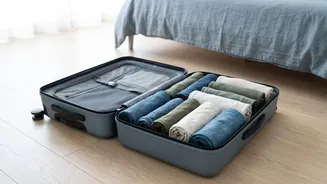
The debate between rolling and folding clothes is a classic among travellers, but frequent flyers and military members often swear by one method: rolling. The logic is simple. Rolling your clothes compresses them into tight, compact cylinders. This process
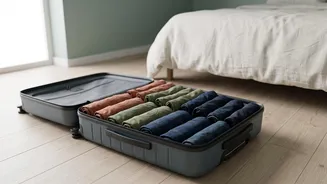
squeezes out the air trapped between fabric layers, significantly reducing the volume each garment takes up. Unlike neatly folded rectangles, which can leave awkward, unused gaps in your suitcase, these rolled logs can be packed tightly together, fitting into every nook and cranny of your bag like a puzzle. Beyond just saving space, this technique has another major benefit: fewer wrinkles. Folding creates hard creases that set into the fabric, but rolling distributes the tension evenly, preventing those deep-set lines. When done correctly, your clothes will arrive at your destination looking much fresher.
Your Step-by-Step Guide to the Perfect Roll
Mastering the basic roll is easy and transforms your packing game. Start by laying the item on a flat surface and smoothing out any wrinkles; packing a wrinkled shirt will only result in a wrinkled shirt at your destination. For a T-shirt, fold the sleeves inward toward the middle. Then, starting from the bottom hem, roll the shirt upwards as tightly as you can until you have a compact log. For trousers or jeans, fold them in half lengthwise, bringing one leg over the other. Smooth them out and then roll tightly from the cuff end up to the waistband. For bulkier items like sweaters, the principle is the same: fold the arms in and roll from the bottom up. The key to a successful roll is keeping it smooth and tight throughout the process.
The Ranger Roll: A Next-Level Technique
For maximum compression, consider learning the Ranger Roll, also known as the Army Roll. This method takes a little more practice but creates an even tighter bundle that won't come undone. To Ranger Roll a T-shirt, start by folding about two inches of the bottom hem inside out to create a cuff. Next, fold the shirt lengthwise into thirds, bringing the sides toward the centre. Then, roll the shirt as tightly as possible from the collar down to the cuffed end. Once you reach the bottom, use the cuff you created to wrap around the entire roll, locking it in place. The result is a self-contained, ultra-compact clothing burrito that’s perfect for maximizing space and keeping your bag incredibly organised. This technique can be applied to everything from socks to jackets.
Know Your Fabrics
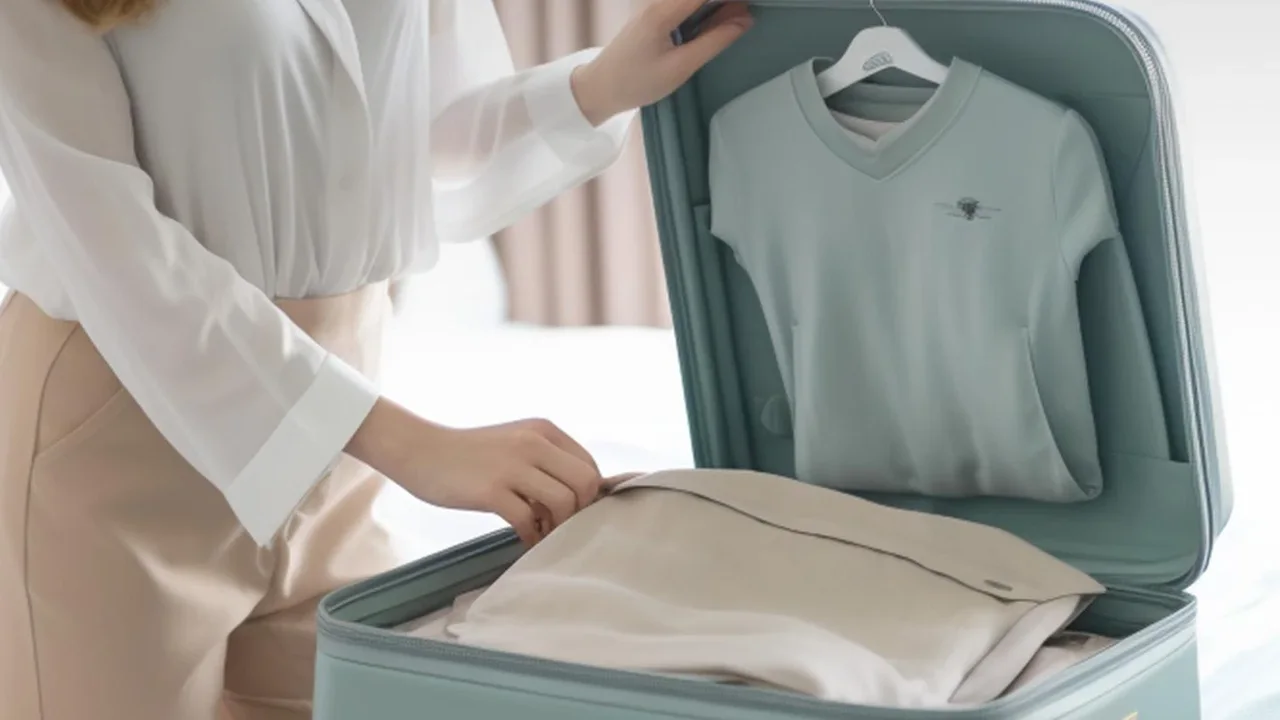
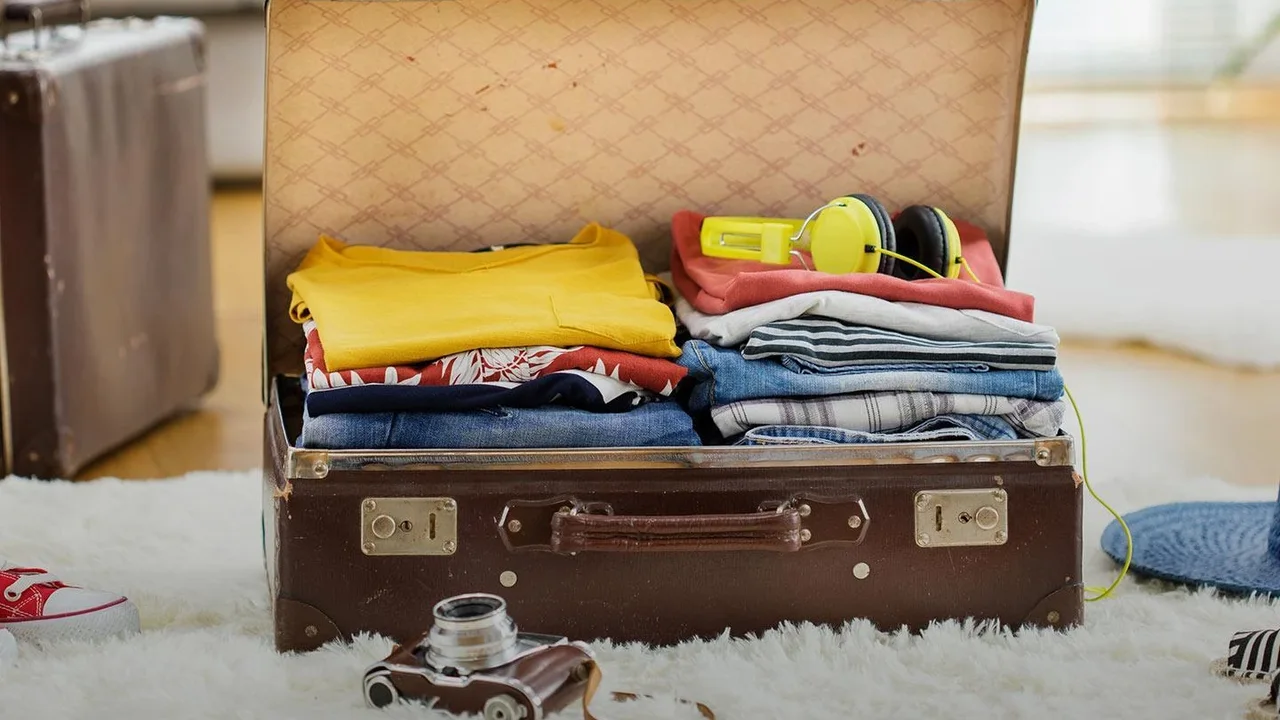
While rolling is a fantastic technique, it works best with certain types of fabrics. Casual clothing made from soft, flexible materials like cotton, knits, and synthetic blends are ideal candidates for rolling. These fabrics compress well and are less prone to wrinkling when rolled. However, for more structured or easily creased items like formal blazers, dress shirts made of stiff cotton, or linen garments, traditional folding might be a better option. Some travellers adopt a hybrid approach: rolling their casual wear to save space and carefully folding their more delicate or formal attire to keep it sharp.
Combine Rolling with Other Smart Hacks
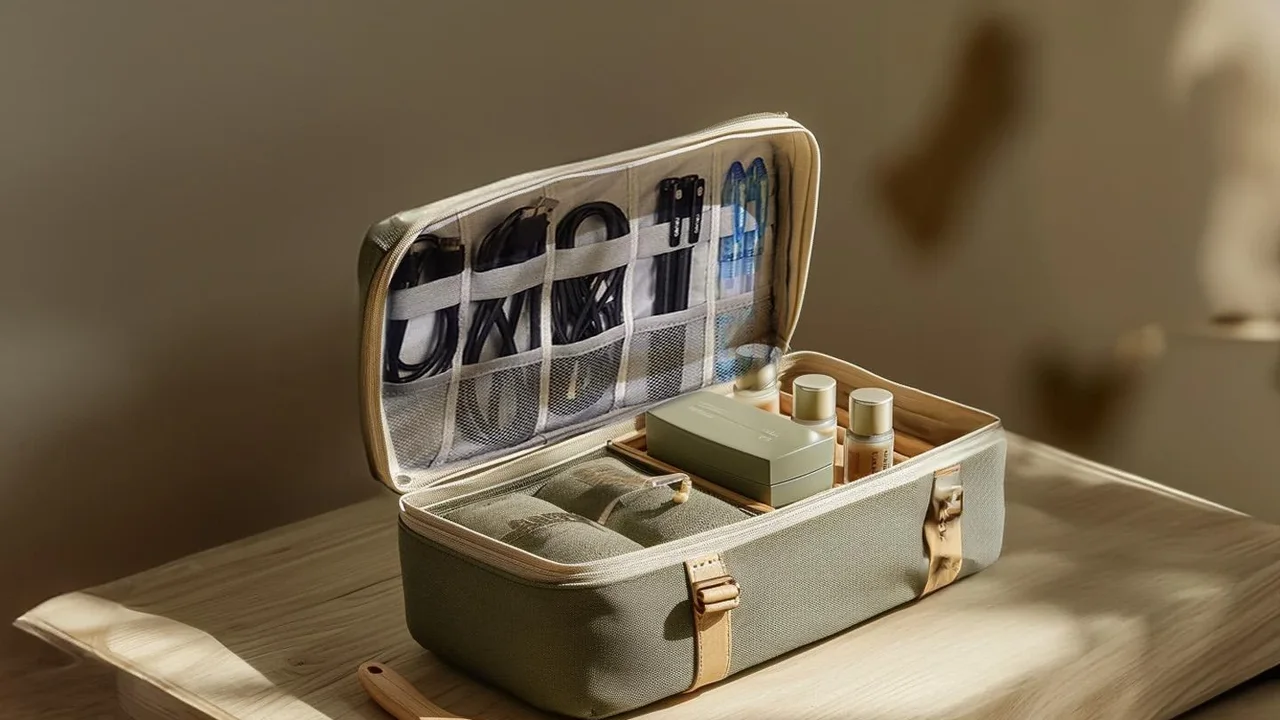
Rolling is a powerful tool, but its effectiveness is multiplied when combined with other smart packing strategies. Packing cubes are a game-changer for organisation; placing your rolled items into these cubes not only compresses them further but also compartmentalises your luggage. This allows you to group outfits or types of clothing together, so you can just pull out one cube instead of rummaging through your entire bag. To truly maximise every inch of space, don’t forget the basics. Wear your bulkiest items, like boots and heavy coats, on the plane. Stuff smaller rolled items like socks and underwear inside your shoes to fill that empty space. By combining these methods, you can transform from an over-packer into a carry-on pro.