




The Pothole Problem We Know Too Well
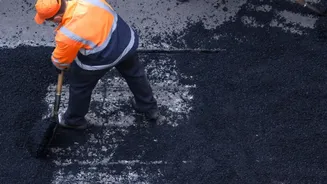
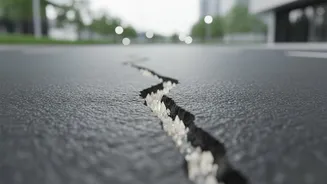
Every driver in India knows the jarring thud of hitting an unexpected pothole. These craters are more than just an annoyance; they are a significant national issue. They cause vehicle damage, lead to traffic congestion, and pose serious safety risks,
contributing to accidents and injuries. The cycle of road damage, particularly during the monsoon season, followed by costly and disruptive patchwork repairs, is a constant drain on public funds. The cost isn't just in repairs; it's also measured in lost economic activity due to traffic delays, which can be up to ten times higher than the direct maintenance costs. This recurring problem highlights the urgent need for a more durable and sustainable solution for our nation's infrastructure.
Introducing a Living Concrete Solution
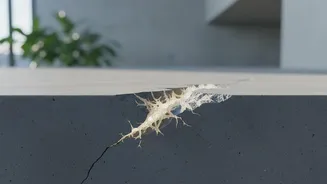
Imagine a road that, when it cracks, simply mends itself. This is the promise of self-healing concrete, an innovative material that uses biology to perform repairs. The concept involves embedding specific, harmless bacteria into the concrete mix. These microorganisms, often from the resilient Bacillus genus, lie dormant within the structure, waiting to be activated. When a crack forms and allows moisture to seep in, the bacteria awaken and get to work, effectively turning the concrete into a living material capable of autonomous repair. This breakthrough could shift infrastructure maintenance from a reactive, manual process to a proactive, built-in feature.
How Bacteria Rebuild Roads
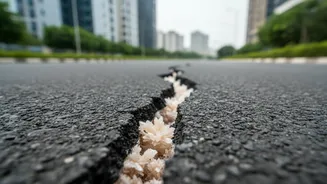
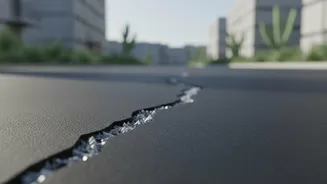
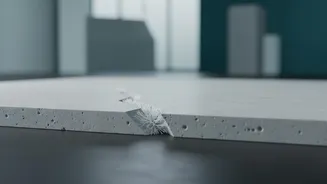
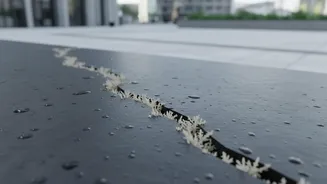
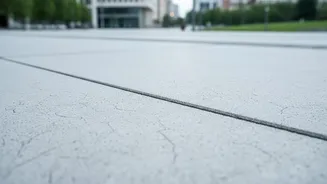
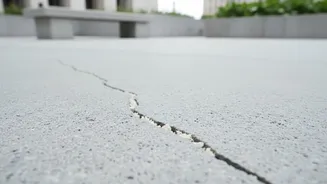
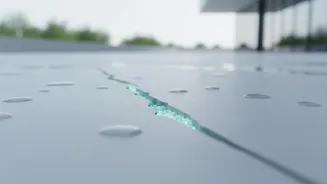
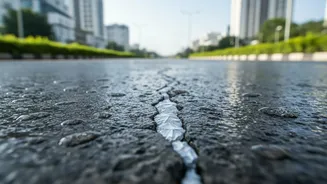
The science behind bacterial concrete is both simple and ingenious. During the mixing process, spores of bacteria like Bacillus subtilis are added along with a food source, typically calcium lactate. These are often protected in tiny, brittle capsules or clay pellets. The mixture is then used like regular concrete. For years, the bacteria can remain inactive. However, the moment a stress fracture forms and rainwater or moisture enters, the capsules break. This provides the bacteria with the water and nutrients they need to activate. Through their metabolic process, they consume the calcium lactate and precipitate calcium carbonate—essentially limestone—as a waste product. This limestone fills the fissure, sealing the crack and preventing further water ingress and corrosion. This process can heal cracks up to nearly 1mm wide, restoring the concrete's integrity without human intervention.
Benefits Beyond a Smoother Ride
The advantages of self-healing concrete extend far beyond just eliminating potholes. By autonomously repairing micro-cracks, the material significantly extends the lifespan of roads, bridges, and buildings, potentially by decades. This leads to a massive reduction in long-term maintenance costs; some estimates suggest that lifetime repair costs could be cut by up to 50%. The environmental benefits are equally compelling. The production of cement is a major source of global carbon dioxide emissions. By making concrete structures last longer, we reduce the need for frequent repairs and replacements, thereby lowering the demand for new cement. This results in a smaller carbon footprint, enhanced structural safety, and more resilient infrastructure overall.
The Road Ahead: Trials and Challenges
While the technology is incredibly promising, it is not yet standard practice. The primary hurdle is cost. Currently, bacterial concrete can be anywhere from 10% to 40% more expensive than conventional concrete, though some analyses suggest it can be much higher depending on the specific formulation. Researchers are actively working to bring this cost down by finding more affordable nutrient sources for the bacteria. Furthermore, ensuring the bacteria are distributed evenly and survive the harsh mixing process are technical challenges that need to be perfected for large-scale production. Pilot projects and trials are underway globally, including in Germany and the US, to test the material's performance under real-world conditions. As research accelerates and manufacturing is scaled, we may see this technology become a viable and common choice for major infrastructure projects in India and around the world within the next decade.