



The Challenge of the Lunar Night
Anyone who has seen their phone die on a cold day knows that batteries and extreme temperatures don't mix. Now imagine the Moon. At its South Pole, where NASA plans to send Artemis astronauts, temperatures can swing wildly from a scorching 100 degrees
Celsius in the sun to a mind-numbing minus 200 degrees Celsius during the 14-day lunar night. Conventional lithium-ion batteries, which contain a liquid electrolyte, would freeze solid, get damaged, and become useless in such cold. To operate on the Moon long-term, especially during the extended darkness when solar power isn't an option, NASA needs a power source that is both resilient and reliable. This is the fundamental problem that has limited long-duration missions and is a major hurdle for creating a sustainable lunar base.
Enter SPEARS: A Solid Solution
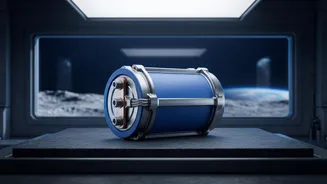
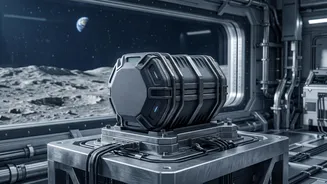
NASA's answer to this challenge is a project called SPEARS, which stands for Solid Power for Extreme Environment Adaptability and Resilience in Space. The core innovation is to replace the volatile liquid electrolyte found in typical batteries with a solid material, such as a special ceramic or polymer. This creates what is known as a solid-state battery. The primary advantage is its incredible resilience. While these batteries still need to be warmed up to operate, their solid interior means they don't get permanently damaged by the extreme cold. They can essentially 'hibernate' through the lunar night and be ready to work once warmed by small, efficient heaters. This dramatically reduces the need for bulky and energy-intensive thermal management systems that would otherwise be required to keep conventional batteries constantly warm, saving precious mass and power on lunar missions.
Powering Rovers and Emergency Kits
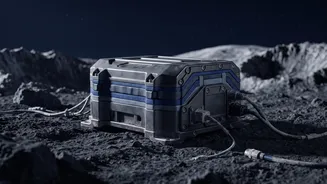
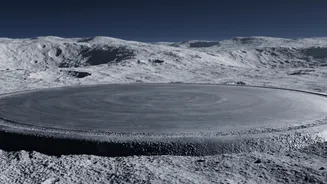
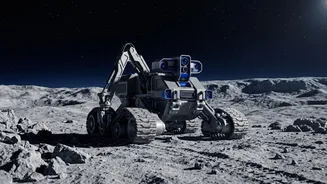
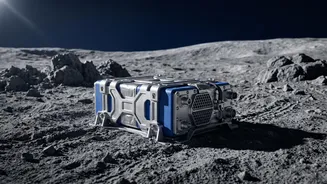
The applications for SPEARS technology are vast and critical for the Artemis program's success. One of the main uses will be for lunar rovers. Future rovers will need to explore permanently shadowed craters—areas of great scientific interest that may hold water ice but are, by definition, perpetually dark and cold. SPEARS batteries could allow these vehicles to venture into these extreme environments and survive. Beyond mobility, this technology is essential for astronaut safety and mission operations. They could be used in portable emergency power packs for astronauts, ensuring they have a reliable lifeline if other systems fail. The batteries could also power scientific instruments and even handheld tools, like drills, that need to function in the Moon's harshest conditions.
From Prototypes to a Lunar Grid
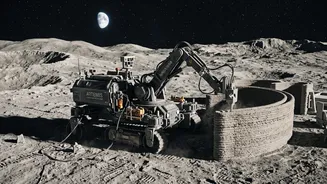
Currently, the SPEARS project is in the research and testing phase. Engineers at NASA's Langley Research Center have been putting small, coin-sized prototype cells through their paces in thermal vacuum chambers that simulate the lunar environment. Recent tests showed the prototypes could survive temperatures from minus 170 to 100 degrees Celsius and operate effectively down to minus 80 degrees Celsius. While there is still work to do in scaling these small cells up into larger, mission-ready battery packs, the initial results are highly encouraging. The development of SPEARS is a crucial piece of a much larger puzzle: building a lunar power grid. This technology, along with other power sources like solar arrays and potential small-scale fission reactors, will form the backbone of a system that can support habitats, resource processing plants, and a long-term human presence on the Moon.