

A Faint Discovery Years in the Making
The newest member of Uranus’s celestial family, provisionally named S/2023 U1, was first spotted on November 4, 2023. The discovery was made by astronomer Scott S. Sheppard using the powerful Magellan telescopes in Chile. Confirming the existence of such
a faint and distant object wasn't simple; it required special image-processing techniques to make the tiny moon visible against the darkness of space. After follow-up observations, the discovery was officially announced by the International Astronomical Union in February 2024. This marked the first new moon found around Uranus in more than 20 years, a significant addition to the planet’s known satellites. The confirmation process even involved locating the moon in older images taken back in 2021, showcasing the meticulous work required to map our solar system.
Introducing S/2023 U1
So, what do we know about this newcomer? For starters, it is incredibly small. With an estimated diameter of just eight kilometres, it is likely the smallest of Uranus's known moons. To put that in perspective, you could drive across its entire surface in the time it takes to get a coffee. It also has a very long year, taking about 680 Earth days to complete a single orbit around Uranus. Like the other outer moons of Uranus, it will eventually be named after a character from one of William Shakespeare's plays, continuing a long-standing astronomical tradition.
The Uranian Family Portrait
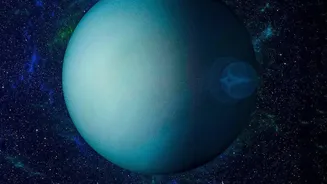
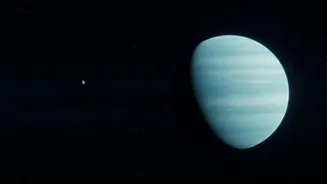
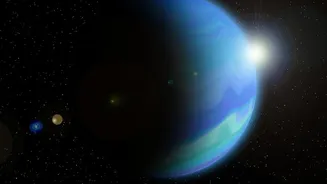
The discovery of S/2023 U1 brings the total number of known Uranian moons to 28. These satellites are generally divided into three distinct groups. The first is a collection of 13 inner moons, which are small, dark bodies that orbit closely to the planet and are intertwined with its faint ring system. Next are the five major moons: Miranda, Ariel, Umbriel, Titania, and Oberon. These are much larger, spherical worlds, some of which show evidence of geological activity like canyons and volcanism. The final category is the irregular moons, a group of objects in distant, eccentric orbits. Before this discovery, there were nine known irregulars.
Where Does the New Moon Fit?
S/2023 U1 fits squarely into that third category, becoming the tenth irregular moon in the Uranian system. Unlike the inner and major moons that likely formed from the same disk of gas and dust as Uranus itself, irregular moons are thought to be captured objects. These are asteroids or other small bodies that wandered too close to the ice giant billions of years ago and were pulled into orbit by its immense gravity. This explains their unusual paths; they have highly inclined, elliptical, and often retrograde (backwards) orbits that set them apart from their home-grown siblings. In fact, S/2023 U1 belongs to a specific orbital cluster with two other irregular moons, Caliban and Stephano, suggesting they may share a common origin from a larger object that broke apart.
Why These Tiny Discoveries Matter
Finding a tiny speck of rock nearly three billion kilometres away may seem minor, but each discovery helps to paint a more complete picture of our solar system's history. The orbits of captured moons like S/2023 U1 provide valuable clues about the chaotic environment of the early solar system and the processes that shaped the giant planets. These faint, distant moons are the last remnants of the planet-formation era. Studying their populations around different planets helps scientists test their theories of planetary evolution. It is a reminder that even in our own cosmic neighbourhood, there are still secrets waiting to be found, hiding in the dark until a keen eye and powerful technology can finally bring them to light.