

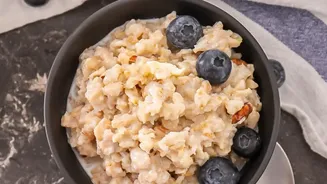
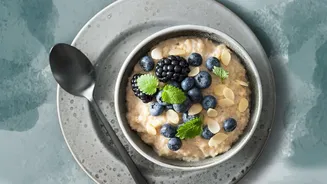
Why Bother Batch Cooking?
The primary benefit of batch cooking your porridge is time. Instead of simmering oats every morning, you can have a wholesome breakfast ready in under three minutes. This simple Sunday ritual frees up your weekday mornings and ensures you start your day with
a high-fibre meal that keeps you full for hours. Beyond convenience, it's also economical and reduces food waste. By preparing a large batch, you can use ingredients efficiently and have perfectly portioned meals ready to go, avoiding the temptation of less healthy, last-minute options. Plus, a plain-cooked base allows for endless customisation, so you never get bored.
Steel-Cut vs. Rolled Oats: What's the Difference?
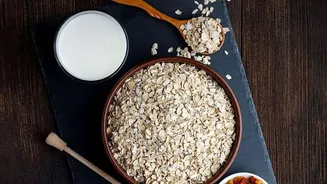
All oats begin as whole oat groats, but their processing determines their texture and cooking time. Steel-cut oats, also called Irish oats, are oat groats that have been chopped into a few pieces. They have a firm, chewy texture and a nutty flavour but traditionally take the longest to cook, around 25-30 minutes. Rolled oats, or old-fashioned oats, are steamed and then rolled flat. This process gives them a softer texture and a much shorter cooking time. Because they absorb liquid more readily, their batch-cooking and reheating methods differ slightly from their steel-cut counterparts. Instant oats are the most processed and are not recommended for batch cooking, as they tend to become mushy.
The Method for Perfect Steel-Cut Oats
The key to great batch-cooked steel-cut oats is getting the right texture from the start. A common ratio is one part steel-cut oats to three or four parts liquid (like water, milk, or a mix). Bring the liquid and a pinch of salt to a boil, stir in the oats, then reduce the heat and simmer for about 25-30 minutes, stirring occasionally to prevent sticking. The oats should be tender but still have a slight chew. For an even easier method, you can use an overnight soak. Bring the water to a boil, add the oats, turn off the heat, cover the pot, and let it sit on the counter overnight. In the morning, they will be perfectly cooked and just need a quick reheat.
Batch Cooking Simple Rolled Oats
Rolled oats are much quicker to prepare in a large batch. The process is similar to making a single bowl, just scaled up. Use a standard ratio of one part rolled oats to two parts liquid. Bring the liquid to a simmer in a large pot, stir in the oats, and cook for about 5-7 minutes until the porridge is creamy and has reached your desired consistency. Some experts suggest cooking the oats slightly less than you normally would, as they will continue to soften as they cool and are stored. This prevents the final reheated product from becoming too soft or gluey.
Cooling, Storing, and Freezing
Proper storage is crucial. Once cooked, allow the porridge to cool slightly. For refrigerator storage, you can either keep the entire batch in one large airtight container or portion it into individual jars or containers for grab-and-go ease. Cooked oats will last for up to five days in the fridge. For longer-term storage, freezing is an excellent option. A popular method is to pour the cooled oatmeal into jumbo muffin tins. Once frozen solid, pop out the 'pucks' of oatmeal and store them in a large freezer-safe bag. They can be kept in the freezer for up to three months.
Reheating for a Creamy Finish
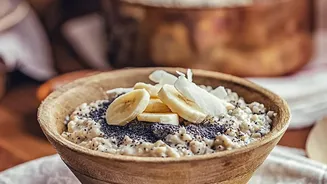
Reheating oatmeal correctly is what makes meal prep a success. The stovetop method is reliable for a creamy texture: place the oatmeal in a small pot with a splash of milk or water to loosen it, and heat on low, stirring until warm. For a quicker option, use the microwave. Place a portion in a microwave-safe bowl, add a tablespoon or two of liquid, and heat for 1-3 minutes, stirring halfway through. Frozen oatmeal 'pucks' can be reheated the same way, though they may need slightly longer in the microwave. The added liquid is key to reviving the porridge and preventing it from becoming dry or thick.