



The Audacious 'Double Catch' Plan
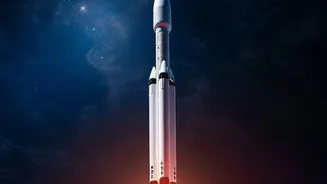
The fifteenth integrated flight test of the Starship system was the most ambitious yet. The plan was deceptively simple in its description but staggering in its complexity: launch the world's most powerful rocket, send the upper stage into orbit, and
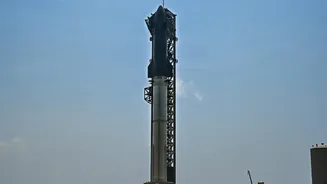
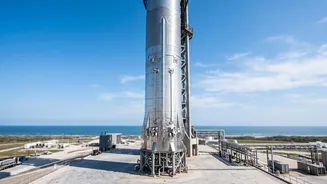
then bring both the massive Super Heavy booster and the Starship spacecraft back to the launch site to be caught in mid-air by the giant mechanical arms of the launch tower. This so-called 'double catch' has been described as a critical step toward making the entire launch system fully and rapidly reusable, a feat never before accomplished in the history of rocketry. Success would mean turning a rocket launch into something more like an airline operation, with fast turnarounds between flights. While SpaceX had previously caught three Super Heavy boosters, this was the first attempt to do the same with the Starship upper stage, let alone both on the same flight.
A Historic Success: The Starship Is Caught
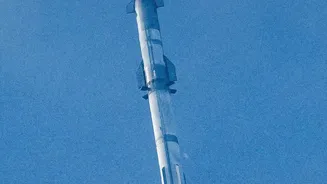
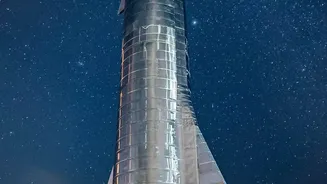
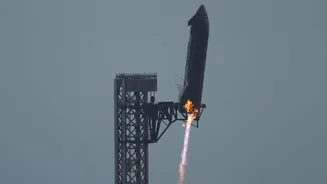
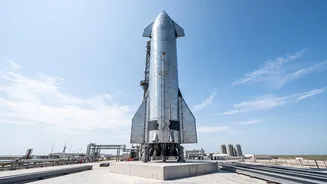
The mission's crowning achievement came nearly a full day after its Friday launch from Starbase, Texas. After deploying a batch of 26 Starlink satellites and completing 14 orbits of Earth over 22.5 hours, the Starship vehicle, known as Ship 42, began its fiery descent back through the atmosphere. Onlookers and millions watching online saw the 171-foot-tall spacecraft execute a 'belly-flop' maneuver to slow itself before relighting its Raptor engines for a final, powered descent. It then settled gently into the waiting 'chopstick' arms of the launch tower, a system nicknamed 'Mechazilla'. The moment, which SpaceX commentators called 'the Holy Grail of spaceflight', marked the first time a spacecraft had ever been caught after returning from orbit. The success proves the viability of one of the most challenging parts of SpaceX's reusable architecture.
The Setback: Super Heavy's Fiery Demise
The triumph of the Starship catch was contrasted by the fate of its booster. Just minutes after a successful liftoff and stage separation on Friday, the Super Heavy booster began its boostback burn to return to Starbase. However, the return did not go as planned. According to SpaceX, the booster experienced an early shutdown of its boostback burn due to what CEO Elon Musk later clarified was a low fuel level. The rocket's autonomous safety systems correctly identified that it could not safely make it back to the launch tower and diverted it to a contingency splashdown zone in the Gulf of Mexico. The booster performed a landing burn over the water before its flight termination system was activated, resulting in a massive explosion. No one was harmed, but the loss of the booster meant the 'double catch' was not achieved.
Why Reusability Is the Ultimate Goal
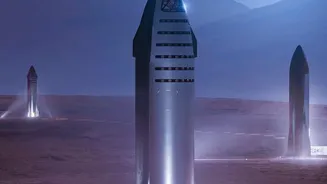
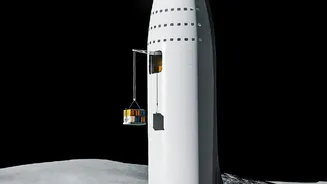
Attempting to catch two multi-storey rocket stages with a tower might seem like science fiction, but it is central to SpaceX's business model. Eliminating the need for rockets to carry heavy landing legs and associated hardware, and instead moving that mass to the ground-based catch tower, allows for a lighter and more efficient vehicle. More importantly, catching the stages directly on the launch mount is designed to dramatically speed up inspection, refurbishment, and relaunch. The goal is airplane-like reusability, which could drastically lower the cost of access to space. This is essential for SpaceX's two primary long-term objectives: deploying thousands more satellites for its Starlink internet constellation and, ultimately, building a self-sustaining city on Mars. NASA is also watching closely, as it has a multi-billion dollar contract with SpaceX to use a version of Starship as the lunar lander for its Artemis program to return humans to the Moon.