





The Danger of Waterlogged Roads
One of the most common monsoon hazards is waterlogging, which affects cities and highways alike. These pools of standing water are deceptive; it's impossible to gauge their depth or see what lies beneath. Hidden dangers can include deep potholes, open
manholes, or sharp debris that can damage your vehicle. Driving through deep water can cause your engine to stall if the air intake is submerged, leading to expensive repairs. In worst-case scenarios, the force of moving water can be strong enough to sweep a vehicle away. If you encounter a flooded road, the safest option is to find an alternative route rather than risking the unknown.
Reduced Visibility from Heavy Rain and Fog
Heavy downpours, fog, and spray from larger vehicles can drastically reduce visibility, making it difficult to spot hazards, pedestrians, or other cars. It is essential to use your low-beam headlights—not high beams—even during the day to ensure you can see and be seen. High beams reflect off raindrops and fog, which can worsen visibility for you and oncoming drivers. If conditions become so poor that you can't safely see the road ahead, pull over to a secure location away from traffic, turn on your hazard lights, and wait for the weather to improve.
Landslides in Hilly and Ghat Regions
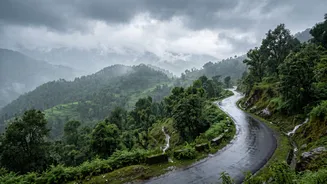
For those planning a trip through mountainous areas like the Himalayas or the Western Ghats, landslides are a serious and frequent risk. Intense rainfall saturates the soil on steep slopes, which can give way without warning, blocking roads with mud, rocks, and uprooted trees. States like Uttarakhand, Himachal Pradesh, Maharashtra, Karnataka and Kerala are particularly vulnerable during this season. These events can cut off routes for hours or even days. Always check local weather forecasts and news for any landslide warnings before you travel through these regions.
The Risk of Hydroplaning and Skidding
Wet roads significantly reduce tyre traction, increasing braking distances and the risk of skidding. Hydroplaning is a particularly dangerous phenomenon that occurs when a layer of water builds up between your tyres and the road surface, causing the vehicle to lose contact and glide uncontrollably. To avoid this, reduce your speed significantly during heavy rain; experts suggest staying below 60 kmph on wet surfaces. Ensure your tyres have adequate tread depth to effectively channel water away. Avoid sudden braking or sharp turns, as these manoeuvres can easily cause you to lose control on a slippery surface.
Hidden Potholes and Damaged Roads
Monsoon rains are notorious for creating and concealing potholes. Water seeps into small cracks in the asphalt, which then break down under the weight of traffic, forming deep craters. A road that was perfectly smooth just a few days prior can become a minefield after a heavy shower. These potholes, often hidden by waterlogging, can cause severe damage to your vehicle's tyres, wheels, and suspension. Hitting a deep one at speed can even cause a driver to lose control. Driving slower than usual is the best defence, giving you more time to spot and navigate around these hazards.
Essential Vehicle Checks Before You Go
Before starting any monsoon road trip, a thorough vehicle check is non-negotiable. Ensure your brakes are in excellent condition, as stopping distances increase on wet roads. Check that your tyres have sufficient tread depth to maintain grip. Test your windshield wipers and replace them if they leave streaks. Finally, confirm all your lights—headlights, tail lights, and indicators—are working correctly to maintain visibility. Keeping your fuel tank topped up is also a wise precaution, as you may face long, unexpected traffic jams due to weather-related disruptions.