
The Sun’s 11-Year Rhythm
The Sun operates on a roughly 11-year cycle, marked by a “solar minimum” and a “solar maximum”. During the solar minimum, the Sun is quiet, with very few visible disturbances. But as the cycle progresses, activity ramps up towards the solar maximum, a period
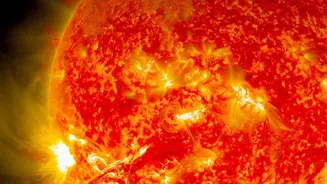
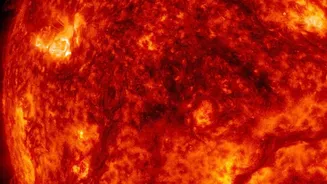
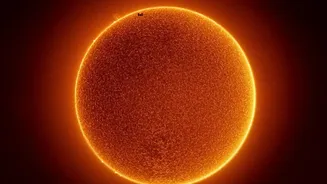
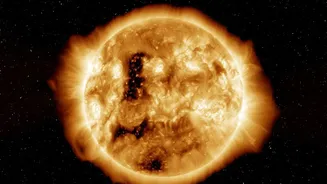
of intense magnetic storms. We are currently in the solar maximum of what is known as Solar Cycle 25, which began in December 2019. This peak is defined by the proliferation of sunspots across the solar surface. These aren't just cosmetic blemishes; they are the primary indicators of the Sun's turbulent mood and the source of potentially disruptive space weather events.
Sunspots: The Source of Solar Storms
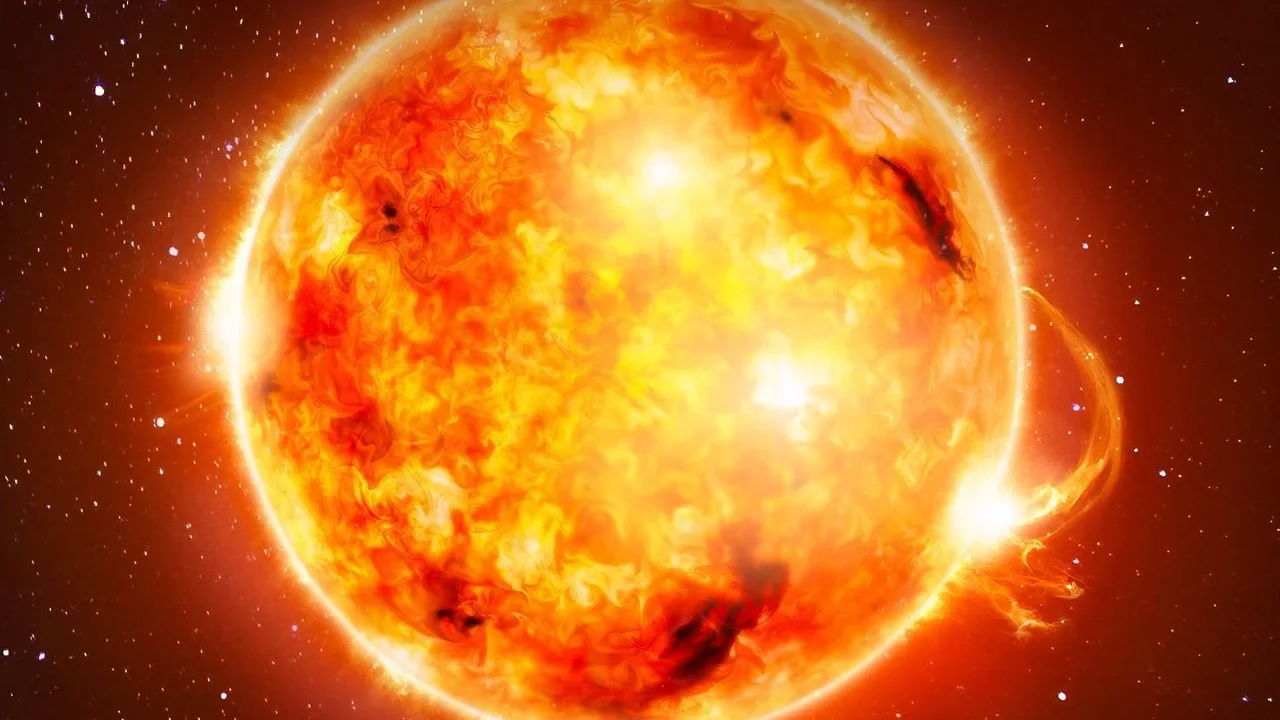
Sunspots are dark, often planet-sized regions on the Sun’s surface that appear dark only because they are cooler than their intensely bright surroundings. This coolness is a side effect of powerful, tangled magnetic fields. These complex magnetic zones act like tightly wound springs, storing enormous amounts of energy. When these magnetic field lines suddenly snap and realign, they can release that energy in two major forms: solar flares and coronal mass ejections (CMEs). Scientists monitor the number, size, and magnetic complexity of sunspots because these factors help them forecast the likelihood and intensity of solar storms. The more complex a sunspot group, the higher the chance of a major eruption.
Flares and Ejections Explained
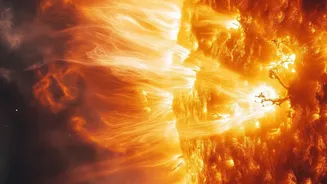
A solar flare is an immense burst of radiation, primarily X-rays, that travels at the speed of light. If a flare is aimed at Earth, its effects are felt within about eight minutes, mainly impacting the upper atmosphere. A Coronal Mass Ejection, or CME, is a different beast. It is a colossal eruption of solar matter—billions of tonnes of plasma and embedded magnetic fields—flung into space. CMEs are slower, taking one to three days to reach Earth, but their impact can be far more significant. Think of a flare as the bright muzzle flash and a CME as the cannonball that follows. While both originate from active sunspot regions, it's the CME's collision with Earth's magnetic field that causes the most concern.
Why This Matters for Our Tech-Heavy World
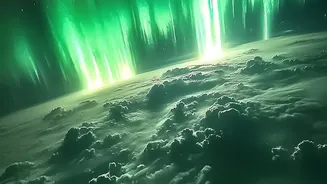
A few centuries ago, a solar storm was little more than a curiosity, producing beautiful auroras, or Northern Lights, visible in unusual places. Today, the story is different. Our global society is built on a scaffolding of vulnerable technology. When a CME strikes Earth's magnetic field, it can induce powerful electrical currents in the ground. These geomagnetically induced currents (GICs) can flow into long conductors like power lines, overloading transformers and potentially causing large-scale blackouts. For a nation like India, with its rapidly expanding digital infrastructure and economy, the stakes are high. Power grids, banking systems, and transport networks all rely on stable electricity.
Satellites and Communications at Risk
Beyond the power grid, our orbital infrastructure is on the front line. The high-energy particles from a solar storm can damage the sensitive electronics of satellites. This threatens a wide array of services we take for granted, from the GPS that guides our navigation apps to the satellites that enable credit card transactions, weather forecasting, and television broadcasts. Organisations like ISRO depend on a healthy fleet of satellites for everything from disaster management to national security. Solar flares can also disrupt high-frequency radio communications, which are still vital for aviation and emergency services. By tracking sunspots, scientists can provide advance warnings, giving satellite operators time to put their spacecraft into a protective safe mode and grid operators a chance to brace their systems.