



What Exactly Is Arrowroot Flour?
Arrowroot flour, also known as arrowroot powder or starch, is a fine, white powder extracted from the root of a tropical plant called Maranta arundinacea. This tuber, native to the Caribbean and South America, is harvested, washed, and ground into a pulp
to separate the starch. The resulting powder is naturally gluten-free, grain-free, and paleo-friendly, making it a popular choice for those with dietary restrictions. Unlike many other starches, its extraction process is often simpler, avoiding high heat or harsh chemicals. This results in a pure, versatile ingredient that's easily digestible and a go-to for clean cooking.
The Neutral Flavour Advantage
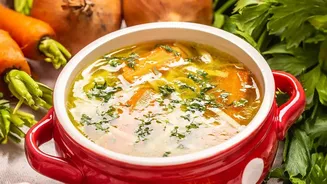
The primary benefit of using arrowroot in a delicate vegetable soup is its completely neutral flavour. Thickeners like wheat flour can impart a 'pasty' or raw taste if not cooked long enough, while cornstarch can sometimes add a subtle, starchy note that dulls the brightness of fresh ingredients. Arrowroot is virtually tasteless and odourless, allowing the carefully layered flavours of your vegetables, herbs, and broth to remain the star of the dish. It thickens without interfering, ensuring that your soup tastes exactly as you intended—just with a richer, more satisfying texture.
A Clear, Glossy Finish
Beyond its neutral taste, arrowroot offers a distinct visual advantage. While cornstarch and flour can make a soup cloudy or opaque, arrowroot creates a beautiful, clear, and glossy sheen. This makes it particularly well-suited for light-coloured vegetable broths or clear soups where appearance matters. The silky finish enhances the visual appeal, making your homemade soup look as good as it tastes. This quality also makes arrowroot a favourite for fruit glazes and pie fillings, where clarity is key to showcasing the vibrant colours of the fruit.
How to Use Arrowroot Correctly
Using arrowroot effectively requires a specific technique. Never add the powder directly to hot liquid, as it will instantly form clumps that are impossible to whisk out. The correct method is to create a 'slurry'. For every cup of soup you want to thicken, start by mixing about one tablespoon of arrowroot flour with two tablespoons of cold water in a small bowl. Whisk until the mixture is completely smooth and free of lumps. Slowly pour this slurry into your simmering soup, stirring constantly. The soup will begin to thicken as it continues to simmer. It's best to add arrowroot toward the end of the cooking process, as prolonged exposure to high heat can cause the starch to break down and lose its thickening power.
Arrowroot vs. The Alternatives
Compared to cornstarch, arrowroot thickens at a lower temperature and has about twice the thickening power, so you may need less. A common rule of thumb is to use about two teaspoons of arrowroot for every one tablespoon of cornstarch required. Arrowroot also holds up better in acidic mixtures and freezes and thaws exceptionally well, whereas cornstarch-thickened sauces can become watery after freezing. However, arrowroot is not ideal for dairy-based cream soups, as it can create a slimy texture; cornstarch or a traditional flour-and-butter roux are better choices in those cases.