








A Landmark Announcement
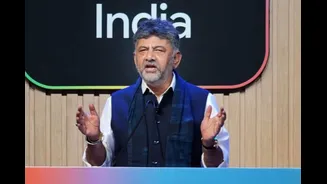
During the Google I/O Connect India 2026 event in Bengaluru, Chief Minister D.K. Shivakumar unveiled an ambitious plan to establish India's first government-driven university dedicated entirely to Artificial Intelligence. The vision, as stated by the Chief Minister,
is to make Karnataka an "AI-native state" where technology is integrated into governance, public services, and daily life. This initiative is not just about a new building; it's about creating an entire ecosystem, including a dedicated AI Hub that will serve as an incubation centre for startups, researchers, and established companies. The goal is to foster deep collaboration between academia, industry, and the government to accelerate AI innovation.
Addressing the National AI Talent Gap
The timing of this announcement is critical. India is facing a significant and growing shortage of skilled AI professionals. Reports from industry bodies like NASSCOM have consistently highlighted a widening gap between the demand for AI experts and the available supply. One 2024 report indicated an immediate industry requirement of 600,000 AI professionals against an available pool of about 420,000. This demand is projected to exceed 1.25 million by 2027. While many tech companies are running massive internal upskilling programs, these efforts alone are not enough to bridge the gap. A dedicated university aims to create a foundational pipeline of 'AI-native' talent—professionals with deep, specialised knowledge, rather than just surface-level proficiency with AI tools.
More Than Just a University
The proposed institution is envisioned as a multi-faceted entity. Beyond offering specialised undergraduate, postgraduate, and research programmes in AI, machine learning, and data science, it will be the anchor of a larger innovation cluster. The plan includes a 100-acre main campus in Bengaluru with regional centres across the state in key hubs like Mysuru, Mangaluru, and Hubballi-Dharwad. A key component is the 'AI Hub', which will function as an incubator, providing resources and a collaborative environment for new ventures. This structure is designed to ensure that academic research translates directly into practical applications and commercial products, creating a self-sustaining cycle of innovation and employment.
Building the Ecosystem for an AI Future
Karnataka's strategy extends beyond the university itself. The government also announced plans to establish next-generation green data centres along the coast and near Bengaluru to provide the massive computing infrastructure required for a thriving AI economy. This aligns with India's national AI mission, which focuses on creating robust computing infrastructure, accessible datasets, and skilling programmes to make the nation a global AI leader. Chief Minister Shivakumar has emphasized that the goal is for AI to deliver tangible benefits across sectors—helping teachers teach better, doctors diagnose diseases earlier, and farmers improve their yields. By inviting tech giants like Google to partner in developing solutions for healthcare, agriculture, and urban mobility, the government is signalling a public-private partnership approach.
The Road Ahead
While the announcement has generated significant excitement, the journey from vision to reality will have its challenges. Key details regarding the university's governance, curriculum structure, admissions process, and timeline are yet to be disclosed. Attracting and retaining world-class faculty in a globally competitive field like AI will be a primary hurdle. Furthermore, ensuring the curriculum remains agile and responsive to the lightning-fast evolution of AI technology will require constant industry collaboration. The success of this ambitious project will depend on sustained political will, significant investment, and the active participation of India's vibrant tech industry. If successful, however, it could create a blueprint for other states to follow.