





A Discovery Deep in the Earth
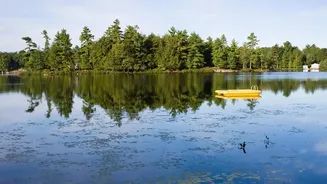
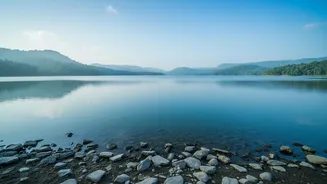
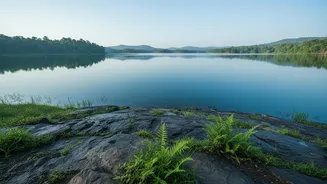
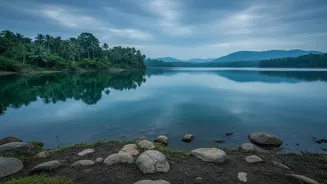
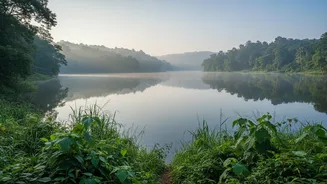
Scientists from the Birbal Sahni Institute of Palaeosciences (BSIP) in Lucknow have uncovered a remarkable climate archive hidden in plain sight. By drilling into the muddy bed of Raja Rani Lake in Chhattisgarh’s Korba district, they extracted a 40-centimetre-long
sediment core. This seemingly simple tube of mud holds a continuous environmental record stretching back approximately 2,500 years. The location is critically important, as it sits within India's Core Monsoon Zone (CMZ), the region most sensitive to the fluctuations of the Indian Summer Monsoon (ISM), which accounts for the vast majority of the country's annual rainfall. By studying this area, researchers can gain direct insight into the historic strength and character of this continent-spanning weather system.
Pollen: The Tiny Timekeepers
The key to unlocking the lake's secrets lies in palynology—the study of ancient pollen. As plants grow, they release pollen grains, which are incredibly durable. Many of these grains settled in the lake, becoming trapped in layers of sediment over centuries. Each layer represents a different time period, with the deepest layers being the oldest. By identifying the types of pollen in each layer, scientists can reconstruct a detailed picture of the vegetation that grew around the lake thousands of years ago. A landscape dominated by pollen from forest-loving plants suggests a warm, wet climate with plenty of rain, while a higher proportion of pollen from grasses and herbs points to drier, more arid conditions. This allows vegetation to act as a direct proxy for the climate of the past.
A Stronger Medieval Monsoon
The pollen record from Raja Rani Lake revealed a surprising story. It showed that between roughly 1060 and 1725 CE, the region was dominated by dense mixed tropical deciduous forests. This indicates a period of intense and sustained rainfall, pointing to an Indian Summer Monsoon that was significantly stronger than previously believed for that era. This period of heightened monsoon activity corresponds with a global climate phase known as the Medieval Climate Anomaly (MCA), a time when many parts of the world experienced unusually warm temperatures. The study suggests the powerful monsoon was driven by a combination of factors, including La Niña-like conditions in the Pacific Ocean, which are typically associated with stronger Indian monsoons, and increased solar activity.
Why Ancient Climate Matters Now
Understanding that the monsoon was capable of such intensity in the past provides a crucial baseline for modern climate scientists. These palaeoclimate records—data from natural archives like lake sediments, ice cores, and tree rings—are essential for testing and refining the computer models used to predict future climate scenarios. By accurately simulating past climate events like the strong monsoon during the MCA, scientists can have more confidence in their models' projections for the 21st century and beyond. As the world grapples with global warming, knowing the natural range of monsoon variability helps distinguish human-caused changes from natural cycles. This research from Chhattisgarh provides a vital piece of the puzzle, improving our ability to forecast future rainfall patterns and prepare for potential shifts that could impact agriculture, water resources, and the lives of millions.