


The Return of El Niño
El Niño, a Spanish term for 'the boy child', refers to the periodic warming of sea surface temperatures in the central and eastern equatorial Pacific Ocean. This seemingly distant phenomenon has a powerful and often disruptive influence on global weather
patterns. For India, its effects are felt most acutely during the southwest monsoon, which delivers about 80% of the country's annual rainfall. Forecasts from global agencies in 2026 have been unequivocal, predicting a strong El Niño event that is expected to persist through the winter and into early 2027. This has put climate and weather authorities on high alert, as historically, strong El Niño years have been linked to weaker monsoons and drought conditions across the subcontinent.
A Monsoon Under Threat
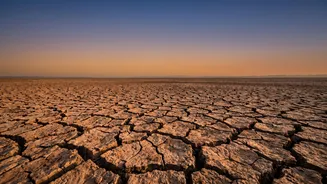
The connection between El Niño and the Indian monsoon is a critical concern for the nation's agriculture-dependent economy. A warmer Pacific Ocean can alter atmospheric circulation, leading to suppressed rainfall over India. As of September 2026, the country is on track for its driest monsoon in over a decade, with cumulative rainfall running significantly below the long-term average. The India Meteorological Department (IMD) had already forecast a below-normal monsoon season, assigning a high probability to deficient rainfall. This shortfall has direct consequences for key kharif crops like rice, pulses, and cotton, raising concerns about reduced yields and a potential rise in food prices. The impact is not uniform, but large parts of the country face the risk of a significant moisture deficit.
India's Pre-existing Water Stress
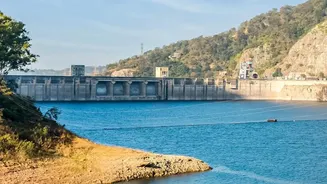
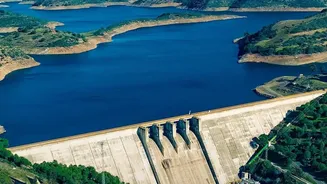
The threat of a poor monsoon comes at a time when India is already grappling with significant water challenges. The country supports nearly 18% of the world's population with only 4% of its freshwater resources. Many regions already face high to extreme water stress, with rampant groundwater depletion and declining water levels in major reservoirs. Even before the 2026 monsoon, water levels in many of the nation's reservoirs were below the 10-year average, a situation compounded by a rainless winter in several states. This underlying vulnerability means that a weak monsoon doesn't just create a new problem; it amplifies an existing crisis, threatening everything from drinking water supplies to hydropower generation.
A Proactive Governance Stance
In response to the looming threat, the Indian government has adopted a stance of 'preparedness, not panic'. National and state agencies are activating contingency plans. The National Disaster Management Authority (NDMA) is coordinating drought preparedness, while the agriculture ministry has identified districts that are most vulnerable to a rainfall deficit. These contingency plans include advising farmers on alternative crops, promoting drought-tolerant seed varieties, and preparing for stage-wise interventions based on how the rest of the monsoon season unfolds. The focus is on using the advance warnings from agencies like the IMD to get ahead of the crisis and provide actionable guidance to those on the ground.
Building Long-Term Resilience
Beyond immediate contingency plans, the El Niño threat is accelerating a broader shift in India’s approach to water management. There is growing recognition that infrastructure alone is not enough. National initiatives like the Jal Jeevan Mission, aimed at providing piped water, are being complemented by efforts to improve water conservation and recharge groundwater. Programs such as the Atal Bhujal Yojana and the National Water Mission are promoting community-led water budgeting, where villages assess their water availability and plan crop patterns accordingly. Innovations are also being sought through initiatives like the MAHA Water Mission, which aims to connect researchers, startups, and communities to develop and deploy new technologies for water management. These efforts reflect a deeper understanding that long-term water security depends on a combination of technology, community participation, and sound governance.