


The Hidden Dangers in Synthetic Colours
The brightly coloured powders readily available in markets may seem like an easy choice, but they often contain a cocktail of harmful industrial chemicals. Substances like lead, mercury, chromium, and cadmium are used to create vibrant hues. These heavy
metals, along with other additives like mica and even glass powder for shimmer, can pose significant health risks. Inhaling these fine powders can trigger respiratory issues like asthma and bronchitis, while direct contact can cause skin allergies and eye irritation. Doctors have warned that exposure to these toxins is particularly concerning for children and pets, who are more likely to play with the powders and accidentally ingest them. Studies have linked some of these chemicals to severe long-term health problems, turning a joyous festive practice into a potential hazard.
The Timeless Elegance of Flower Petals
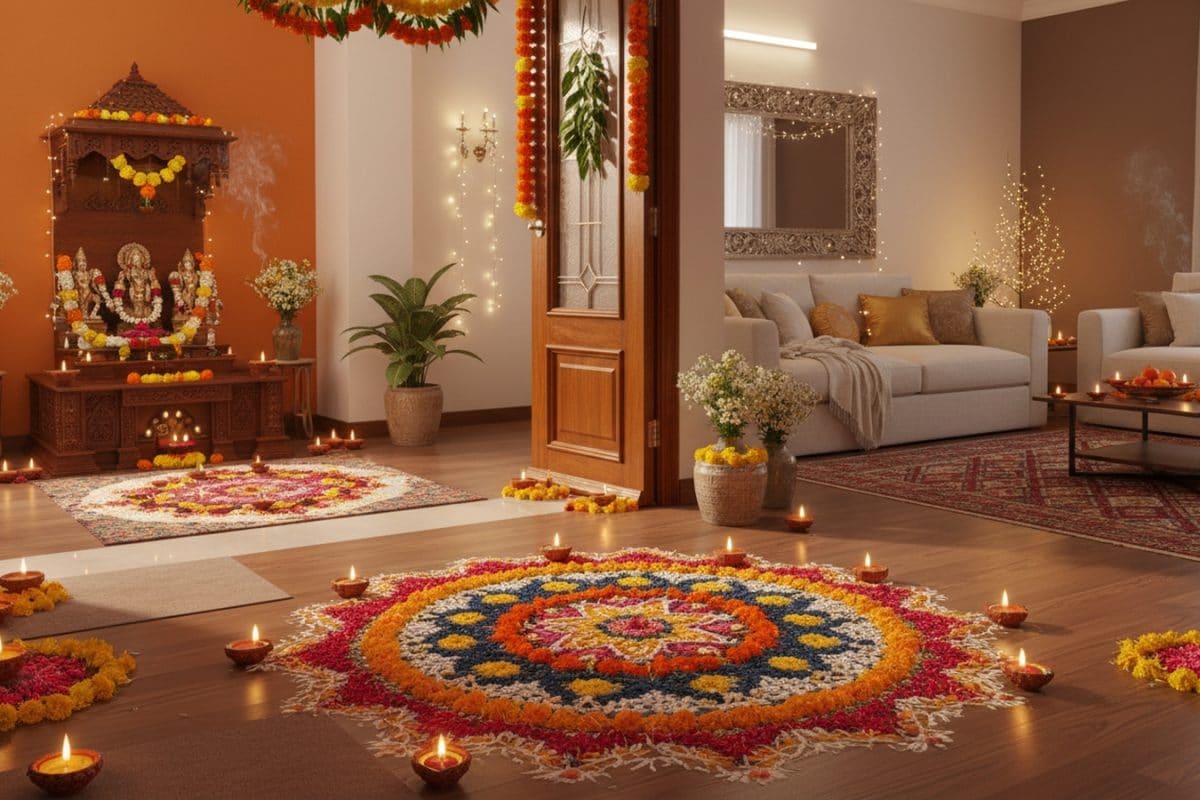
Turning to flower petals for your rangoli is not just an eco-friendly choice; it is an upgrade in artistry and sensory experience. The natural textures and gradients found in petals from marigolds, roses, chrysanthemums, and jasmine offer a visual richness that synthetic powders cannot replicate. Using flowers is a completely harmless and biodegradable option, ensuring that your decorations do not pollute the environment. Beyond their beauty, they add a natural fragrance to your home, enhancing the festive atmosphere. Creating a floral rangoli, or 'Pookalam', connects the celebration to the rhythms of nature, with each petal contributing to a design that is both stunning and ephemeral. Once the festivities are over, these petals can be easily composted, returning to the earth without a trace.
The Humble Power of Rice Powder
The use of rice powder or flour is the most traditional method of creating rangoli, rooted in a philosophy of generosity and coexistence. Historically, drawing a 'kolam' with rice flour at the entrance of the home was not merely for decoration. It was an offering, a 'Bhuta Yajna', meant to provide food for the smallest of creatures like ants, insects, and birds. This beautiful act embodies the principle of living in harmony with all beings. The pure white of the rice flour symbolises purity and auspiciousness, creating a sacred space to welcome positivity and deities like Goddess Lakshmi into the home. Its slightly granular texture makes it easy to handle for creating intricate, free-flowing lines and geometric patterns, forming the perfect base for any design.
Creating Your Natural Masterpiece
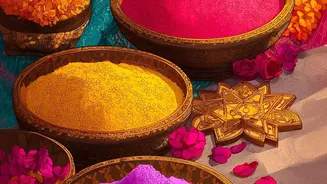
Combining flower petals and rice powder allows for endless creativity. Start by drawing your desired pattern with a base of white rice flour. This provides a clean outline and a bright canvas. Then, begin filling the sections with colourful petals. Use vibrant orange and yellow marigold petals for bold areas, soft rose petals for shades of pink and red, and delicate jasmine for highlights. You can even create your own natural colours to mix with the rice powder for more variety. Turmeric powder creates a brilliant yellow, while dried and powdered hibiscus or beetroot can produce shades of red. For green, simply grind dried spinach or mint leaves. This hands-on process can become a cherished family activity, allowing everyone to contribute to a beautiful, safe, and meaningful decoration.