





The Freedom of Endless Power
The digital nomad lifestyle promises ultimate freedom—the ability to work from anywhere with an internet connection. But a dead battery can tether you to the nearest café just as effectively as an office cubicle. This is where portable solar power changes
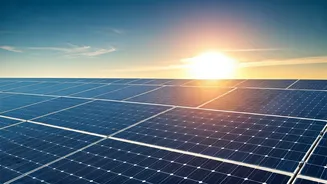
the game. It’s not about massive, roof-mounted installations. Instead, it’s a new generation of foldable, durable, and surprisingly efficient panels that can be packed in a rucksack or car boot, providing the electricity needed to run laptops, phones, and other essential gadgets far from any electrical grid. For these modern adventurers, solar isn't just a green choice; it's the fundamental technology that makes their entire lifestyle possible, transforming remote landscapes into productive workspaces.
Your Basic Solar Setup
A functional off-grid charging system consists of two main components: the solar panels themselves and a portable power station. Think of the panels as the generator and the power station as the wall socket. The panels, typically ranging from 50 to 200 watts for portable use, capture sunlight and convert it into direct current (DC) electricity. However, you can’t just plug your laptop directly into a panel. The electricity needs to be stored and converted. This is the job of the power station—a sophisticated battery pack equipped with an inverter. The inverter changes the DC power from the panels into the alternating current (AC) your laptop charger uses. The station also stores this energy, so you can charge your devices long after the sun has set.
Choosing the Right Panels
Not all portable panels are created equal. The most important specification to consider is wattage. A small 50-watt panel might be enough to slowly top up a power bank for your phone, but it will struggle to keep a laptop running, especially on a cloudy day. For serious remote work, most nomads opt for panels in the 100-watt to 200-watt range. These are often designed as foldable ‘blankets’ or rigid-frame suitcases that can be set up in minutes. Look for high-efficiency monocrystalline cells, which perform better in low-light conditions. Durability is also key. Models with ETFE lamination are more resistant to scratches and weather, ensuring they can handle the rigours of life on the road.
The Heart of the System: The Power Station
The power station is arguably more important than the panels. Its capacity, measured in watt-hours (Wh), determines how much energy you can store. A small 300Wh station might give your laptop one or two full charges, while a larger 1000Wh (1kWh) unit could power your entire mobile office for a day or more. When choosing, calculate your needs. A typical laptop uses 40-65 watts per hour. If you work for eight hours, you’ll need at least 320-520Wh of stored energy. It’s always wise to oversize your battery to account for cloudy days when your panels won’t be generating much power. Also, check the station’s output ports—ensure it has standard AC outlets for your laptop charger, as well as USB-A and USB-C ports for other devices.
Practical Realities and Costs
While liberating, a solar-powered work life comes with practical considerations. First is the weather. Your power generation is entirely dependent on sunshine; several overcast days can leave you with a depleted battery. Second is the setup. While portable, deploying panels and connecting them takes time. Third is the cost. A reliable entry-level setup, including a 100-watt panel and a 500Wh power station, can cost anywhere from ₹50,000 to over ₹1,00,000. While a significant investment, many nomads see it as a one-time cost that unlocks years of freedom and eliminates the daily hunt for power outlets. It’s an investment in autonomy.