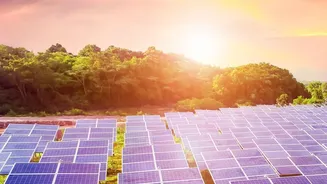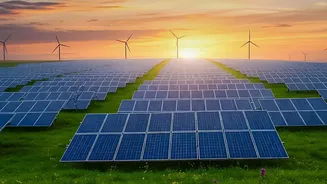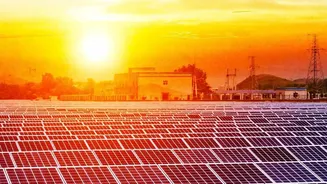





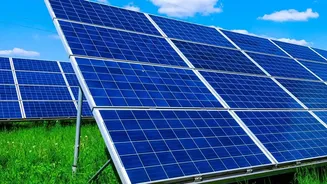
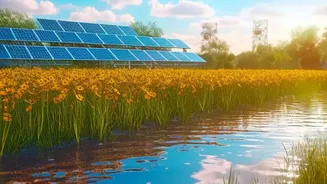
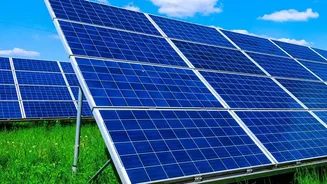
In a nation where farming sustains millions but faces immense pressure, and the demand for clean energy is soaring, a new solution is taking root. Agrivoltaics, a blend of agriculture and solar power, offers a path to prosperity for Indian farmers.
What is Dual-Use Farming?
Agrivoltaics,
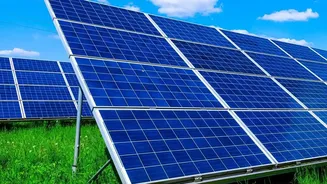
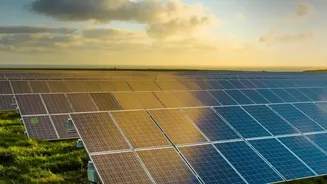
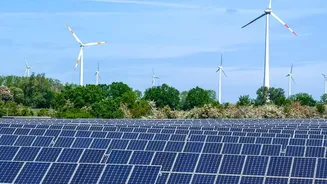
also known as agrisolar, is the practice of using the same piece of land for both agriculture and solar energy generation. Instead of choosing between a field for crops or a field for solar panels, this model combines them. Solar panels are mounted on elevated structures, typically 3 to 5 metres high, creating a canopy over the farmland. This setup allows enough sunlight to reach the crops below while enabling farm machinery to operate freely underneath. It’s an innovative answer to the growing conflict over land use, aiming to maximise the productivity of every acre.
A Two-Pronged Path to Prosperity
The primary allure of agrivoltaics for farmers is the creation of a second, stable income stream. While they continue to cultivate and sell their crops, they also generate electricity. This power can be used for on-farm needs like running irrigation pumps, reducing reliance on expensive diesel or an erratic grid supply. Crucially, any surplus electricity can be sold back to local distribution companies (DISCOMs), providing a steady, year-round revenue source that cushions them from the unpredictability of agricultural income. This turns farmland into a dual-purpose asset, generating both food and energy.
More Than Just Money: On-Farm Benefits
Beyond the direct financial gains, agrivoltaics creates a more resilient farming environment. The partial shade from the solar panels acts as a protective shield for crops, reducing heat stress during intense summers and protecting them from hail or heavy rain. This shade also lowers soil temperature and reduces water evaporation by up to 30-40%, a significant benefit in water-scarce regions. For certain shade-tolerant crops like tomatoes, herbs, and some pulses, this microclimate has been shown to improve yields. This makes farming more sustainable and less vulnerable to extreme weather events.
Government Support and Real_World Examples
The Indian government is actively promoting this transition through policies like the Pradhan Mantri Kisan Urja Suraksha evam Utthaan Mahabhiyan (PM_KUSUM) scheme. This initiative provides subsidies to farmers for installing solar pumps and building small, grid_connected solar plants on their land. Pilot projects are already demonstrating success. In states like Madhya Pradesh, Maharashtra, and Rajasthan, agrivoltaic farms are successfully cultivating multiple crop varieties while generating clean power. A project in Sagar, Madhya Pradesh, for instance, is cultivating over a dozen different crops under a 5 MW solar installation, serving as a replicable model for rural development.
The Hurdles on the Horizon
Despite its promise, the path to widespread adoption has challenges. The primary obstacle is the high upfront cost; agrivoltaic systems can be 25–40% more expensive than conventional solar farms due to the need for elevated structures. There is also a lack of awareness and technical expertise among many farmers. Furthermore, not all crops are suitable for growing in partial shade, and a one–size–fits–all approach won't work across India's diverse agro–climatic zones. Policymakers are currently working to create a framework that addresses these issues, ensuring that the model benefits small farmers without harming agricultural output.