


Perfect Your Batter Mix
The secret to a lighter pakora starts with the flour. While besan (gram flour) provides the classic flavour and binding, it can absorb a lot of oil. The game-changing addition is rice flour. Adding about one part rice flour to three parts besan creates
a batter that fries up significantly crispier and less greasy. Rice flour is lighter and doesn't absorb as much oil, resulting in a delicate, crunchy crust. Some recipes even suggest a touch of cornflour for a similar crispy effect. The key is to create a batter that lightly coats the ingredients rather than drowning them. A higher ratio of vegetables to batter is a reliable path to a lighter, airier pakora.
Control the Moisture
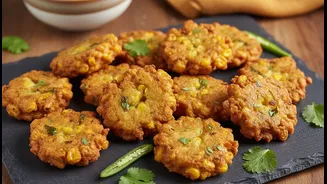
Excess water is the enemy of a crispy pakora. If your batter is too thin or your vegetables are too wet, the pakoras will steam from the inside, turn soggy, and absorb more oil. When using fresh corn, its natural juices are often enough to bind the batter without adding any extra water. For frozen corn, ensure it's thawed and patted thoroughly dry. A clever technique is to mix the dry ingredients with the vegetables first and let the mixture sit for 15-30 minutes. The vegetables will naturally release their own moisture, flavouring the batter and reducing the need for added water. If you must add water, use cold water, as it helps keep the batter from becoming dense.
Harness the Power of Leavening
For a truly light and fluffy texture, a tiny pinch of baking soda can work wonders. When heated in the oil, baking soda releases carbon dioxide gas, creating tiny air pockets within the batter. This leavening action makes the pakoras puff up, resulting in a finished product that's airy on the inside while remaining crisp on the outside. Be careful, though—a little goes a long way. Using too much can leave a bitter aftertaste. A quarter teaspoon for a standard batch of batter is usually sufficient. Some cooks also find that using carbonated water instead of regular water can have a similar aerating effect.
Master Your Frying Technique
How you fry is just as important as what you fry. The oil temperature must be just right—hot, but not smoking. If the oil is too cool, the batter will absorb it like a sponge, leading to greasy pakoras. If it's too hot, the outside will burn before the inside is cooked. Test the oil by dropping in a small bit of batter; it should sizzle and float to the top immediately. Another crucial rule is to not overcrowd the pan. Frying too many pakoras at once lowers the oil's temperature, leading to sogginess. Fry in small batches, allowing the oil to come back up to temperature between them. Finally, adding a couple of tablespoons of the hot frying oil into the batter just before you start frying can help make the pakoras softer on the inside and crispier on the outside.
Consider Healthier Cooking Methods
If you want to drastically cut down on oil, modern appliances offer fantastic alternatives to deep-frying. Air frying, in particular, has become a popular method for making pakoras. An air fryer works by circulating very hot air at high speed, creating a crispy exterior with minimal oil. To air fry pakoras, preheat your machine, place the batter portions in a single layer in the basket, give them a light spray of oil, and cook until golden brown, flipping halfway through. Similarly, you can bake pakoras in a conventional oven. While the texture won't be identical to their deep-fried counterparts, both methods produce a delicious and significantly lighter version of the classic snack.