








A New Kind of Time Capsule
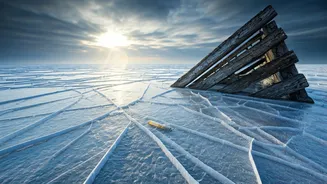
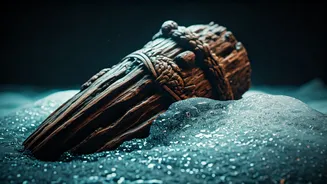
For millennia, high-altitude ice patches and glaciers have acted as perfect time capsules. Anything dropped by ancient hunters, traders, or travellers—a leather mitten, a wooden ski, an arrow—was quickly entombed in snow and ice, preserving it from the elements.
This created a unique archaeological record of organic materials that would have otherwise decayed and vanished centuries ago. Now, due to accelerating climate change, these natural deep freezers are thawing. This has given birth to a new and urgent field: glacial archaeology. Scientists are now scaling mountains not just for adventure, but to rescue the fragile story of our past as it melts into the present.
Treasures from the Ice
The discoveries are stunning. In Norway, a program called Secrets of the Ice has documented more than 4,500 artifacts from over 70 sites, accounting for more than half of all glacial finds worldwide. Discoveries include a 1,300-year-old pair of skis with their bindings intact, found seven years apart in the same ice patch, providing incredible insight into ancient travel at high altitudes. At the Lendbreen ice patch, once a bustling Viking-era mountain pass, everything from horse snowshoes to clothing and everyday tools have been found. These are not the golden treasures of kings, but the intimate, everyday objects of ordinary people, offering a tangible connection to lives lived over a thousand years ago.
The Race Against Decay
The immediacy of this new field comes from a simple, brutal fact: the moment these artifacts are exposed, they begin to disappear. Preserved for centuries in a frozen, low-oxygen environment, they are suddenly exposed to sun, water, and bacteria. Delicate organic materials like textiles, leather, and wood can degrade and vanish within a few years, or even months, if not recovered. This makes the work of glacial archaeologists a frantic race against time. Each find is a victory, but it's shadowed by the knowledge that for every artifact saved, countless others may be decaying on remote mountainsides, their stories lost forever. The teams must constantly monitor melting zones and act quickly to salvage what they can.
Beyond the Mountain Tops
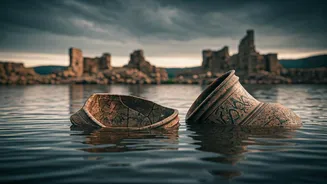
This phenomenon isn't limited to icy peaks. Across the Arctic, thawing permafrost is revealing everything from 57,000-year-old wolf puppies in Canada to entire Inuit sod houses that are now rotting away as the ground softens. In Siberia, the melt has exposed the remains of woolly mammoths. Meanwhile, on coastlines around the world, rising sea levels and more powerful storms are eroding archaeological sites at an alarming rate. Thousands of culturally significant locations, from Viking settlements to UNESCO World Heritage sites in Africa and the Mediterranean, are threatened with being washed into the sea. Studies predict that even a one-meter rise in sea level could destroy over 13,000 recorded archaeological sites in the United States alone.
A Warning from the Past
The paradox of climate-driven archaeology is that it delivers a gift wrapped in a crisis. We are gaining unprecedented, high-resolution insights into how our ancestors lived, travelled, and adapted. The discovery of ancient hunting grounds high in the mountains tells us about past climate shifts and human resilience. Yet, every one of these incredible finds is a direct result of the environmental changes threatening our own future. These artifacts are more than just historical curiosities; they are tangible data points illustrating the speed and scale of global warming. They connect our deep past with our immediate present, serving as a silent warning emerging from the ice and soil.