



From Science Fiction to Your Screen
The idea of tracking asteroids has long been the domain of professional astronomers and blockbuster movies. But as part of its Planetary Defence mission, the ESA has made its data and visualisation software available to everyone. Through the Near-Earth
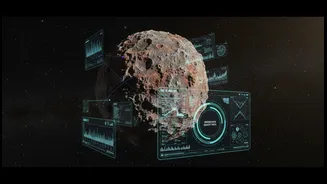
Object Coordination Centre (NEOCC), a suite of powerful online applications called the NEO Toolkit has been released, designed for professional and amateur astronomers, as well as anyone curious about our cosmic neighbourhood. These aren't simplified toys; they are sophisticated tools that allow you to visualise orbits, simulate close approaches to Earth, and even plan observations from your own backyard. This initiative brings the complex work of tracking potentially hazardous objects out of the observatory and onto your computer, making space science more accessible than ever before.
Why New Observations Matter
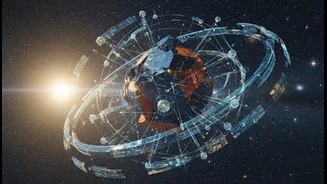
When an asteroid is first discovered, its orbit is a giant question mark. Astronomers might only have a few data points showing its movement against the backdrop of distant stars. Think of it like trying to guess a car's entire cross-country road trip after only seeing it drive down one street. This initial uncertainty creates a wide 'cone' of possible future paths. To narrow this down, astronomers need more data. Each new observation—a new photograph from a telescope that precisely measures the asteroid's position and the exact time—helps refine the orbital calculation. As more observations are added from observatories around the world, the cone of uncertainty shrinks, and the predicted path becomes much more precise. This process is crucial for determining whether an asteroid is just a passerby or poses a potential risk to Earth.
Getting Started with the NEO Toolkit
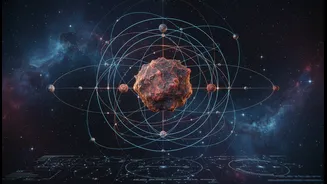
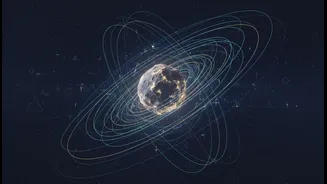
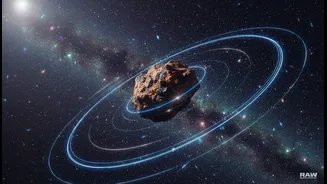
You can access the ESA's NEO Toolkit for free online. The toolkit is composed of several key applications. The Orbit Visualisation Tool is a great place to start. It allows you to display the orbits of different asteroid groups or individual objects in a 3D model of the Solar System. You can select famous asteroids like Apophis, which caused a brief stir in 2004, to see its path. The Flyby Visualisation Tool lets you produce high-precision simulations of asteroids as they make a close approach to our planet. For those with a telescope, the Observation Planning and Sky Chart Display tools are invaluable. They can calculate where a specific asteroid will be in the sky as seen from your exact location on Earth.
Visualising an Orbit Change
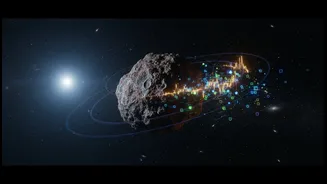
While the tools don't let you manually input new observations, they operate on the live, constantly updated database from the NEOCC. When new data comes in from observatories, the orbits you see in the visualisers are recalculated and updated. To see the effect of new data in action, you can monitor asteroids on ESA's Asteroid Risk List. This is a dynamic list of objects that have a non-zero chance of impacting Earth in the next century. Often, a newly discovered asteroid will appear on this list with a high degree of uncertainty. As astronomers conduct follow-up observations over days and weeks, you can watch through the toolkit as its calculated orbit becomes more defined. In most cases, the new, more accurate orbit shows that the asteroid will safely miss Earth, and it is removed from the risk list. This process demonstrates in near real-time how vital continuous observation is for planetary defence.
The Bigger Picture: A Global Effort
Using these tools isn't just a fascinating hobby; it's a window into a critical global effort. Agencies like ESA and NASA are constantly scanning the skies, cataloging objects, and assessing risks. The data you are exploring is the same data used for major planetary defence initiatives. A prime example is the DART (Double Asteroid Redirection Test) mission, where NASA intentionally crashed a spacecraft into the asteroid Dimorphos to alter its orbit. ESA's upcoming Hera mission will visit the same asteroid system to perform a detailed crash scene investigation. This is a real-world test of our ability to deflect a hazardous asteroid. By engaging with tools like the NEO Toolkit, the public can better understand the science, the risks, and the incredible work being done to protect our planet. Amateur astronomers even contribute valuable follow-up observations that help professionals.