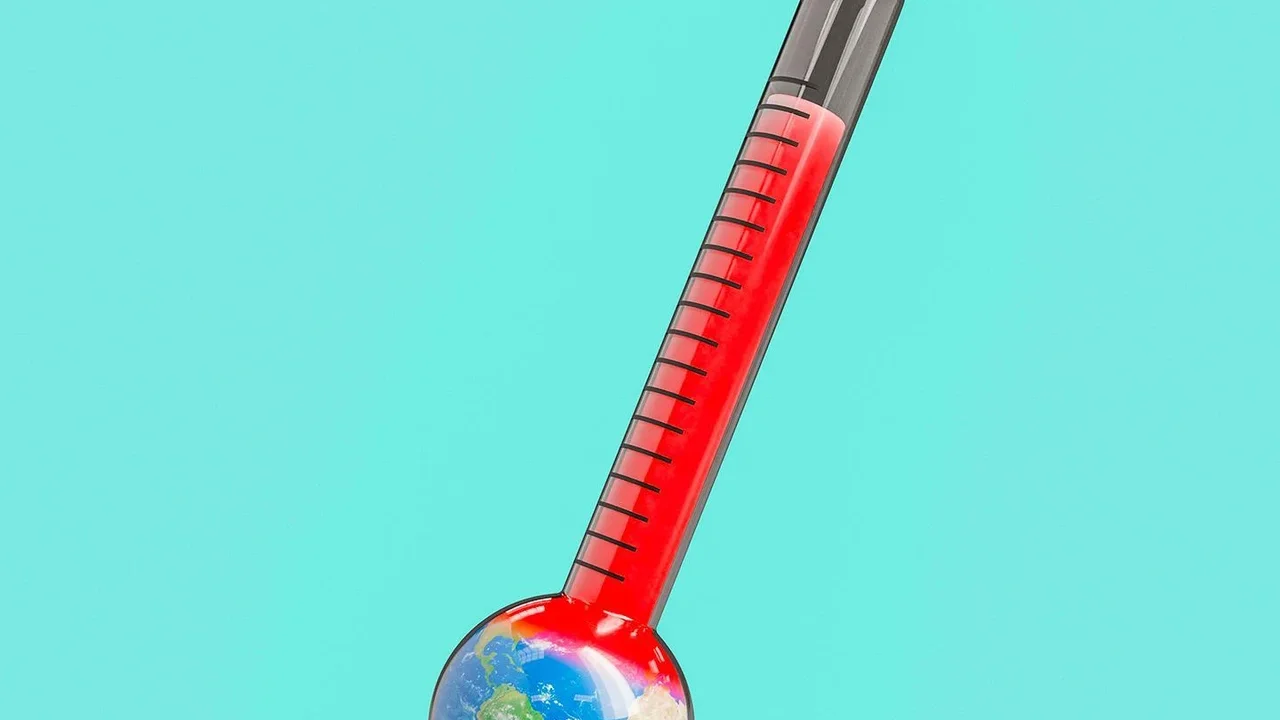





A powerful climate pattern is brewing in the Pacific Ocean, and scientists are sending a clear warning: the 2026 El Niño has a high probability of becoming one of the strongest ever recorded, with significant consequences for weather patterns worldwide.
What Exactly Is El Niño?
El Niño, which means 'The Little Boy' in Spanish, is a naturally occurring climate pattern characterized by the unusual warming of surface waters in the central and eastern tropical Pacific Ocean. This isn't just a localized ocean event; it's the warm phase of the El Niño-Southern Oscillation (ENSO), a massive ocean-atmosphere interaction that disrupts global weather. Normally, trade winds blow from east to west, pushing warm water towards Asia. During an El Niño, these winds weaken or even reverse, allowing the warm water to slosh back towards the coast of South America. This shift in ocean heat triggers a domino effect in the atmosphere, altering jet streams and storm tracks across the planet.
Just How Strong Is This Event?
Forecasters at major climate centers like the World Meteorological Organization (WMO) and the US National Oceanic and Atmospheric Administration (NOAA) are in strong agreement: this El Niño is exceptionally potent. By early November 2026, sea surface temperature anomalies in the key Niño-3.4 monitoring region had already reached levels classifying it as a 'very strong' event. Forecasters have noted a high probability that it could rival or even surpass the record-breaking El Niños of 1997-98 and 2015-16. The WMO has stated there is a near 100% likelihood that the event will persist through February 2027. This confidence comes from the tremendous amount of heat stored in the tropical Pacific and computer models showing a clear trajectory of intensification through the Northern Hemisphere winter.
What This Means for India
For India, an El Niño developing far away in the Pacific can have direct and significant consequences at home. Historically, strong El Niño events are correlated with a weaker southwest monsoon, which provides about 70% of the country's annual rainfall. The atmospheric changes can suppress the formation of rain clouds over the subcontinent, leading to below-normal rainfall, higher temperatures, and an increased risk of drought conditions. The impact is already being felt in late 2026, with deficit rainfall draining reservoirs and hindering the sowing of winter (Rabi) crops. This squeeze on the agricultural sector, which a majority of the rural population depends on, threatens to lower crop yields for staples like wheat and sugarcane, drive up food inflation, and strain water resources. This can also affect the energy sector by reducing output from hydropower and wind generation.
Is a Weak Monsoon Guaranteed?
While the link is strong, it's not a certainty. Other climate factors can influence the outcome. A key one is the Indian Ocean Dipole (IOD), a temperature see-saw in our own oceanic backyard. A 'positive' IOD, with warmer waters in the western Indian Ocean, can sometimes act as a shield, counteracting El Niño's drying effect and delivering more moisture to India. This is what happened during the powerful 1997 El Niño, when India received normal rainfall. However, when the IOD is neutral or negative, El Niño's impact can be more severe. The precise location of the warmest water in the Pacific also plays a crucial role. Forecasters monitor these interacting systems closely, but the dominant signal for the upcoming seasons remains the formidable strength of this El Niño.
A Global Phenomenon
India is not alone in feeling the effects. A strong El Niño is a global event with widespread impacts. While it can cause drought in some regions like Australia, Indonesia, and parts of Southern Africa, it often brings unusually heavy rainfall and flooding to others, such as Peru, Ecuador, and the southern United States. The current event is already being linked to drought conditions in parts of Africa and Southeast Asia. The release of so much ocean heat into the atmosphere also gives a significant boost to global average temperatures. The year following an El Niño peak is often a new record-holder for global heat, meaning 2027 is likely to be exceptionally warm.